

 InfoSearched
Hooded lids don’t need to fight the mirror once you know where the fold actually sits.
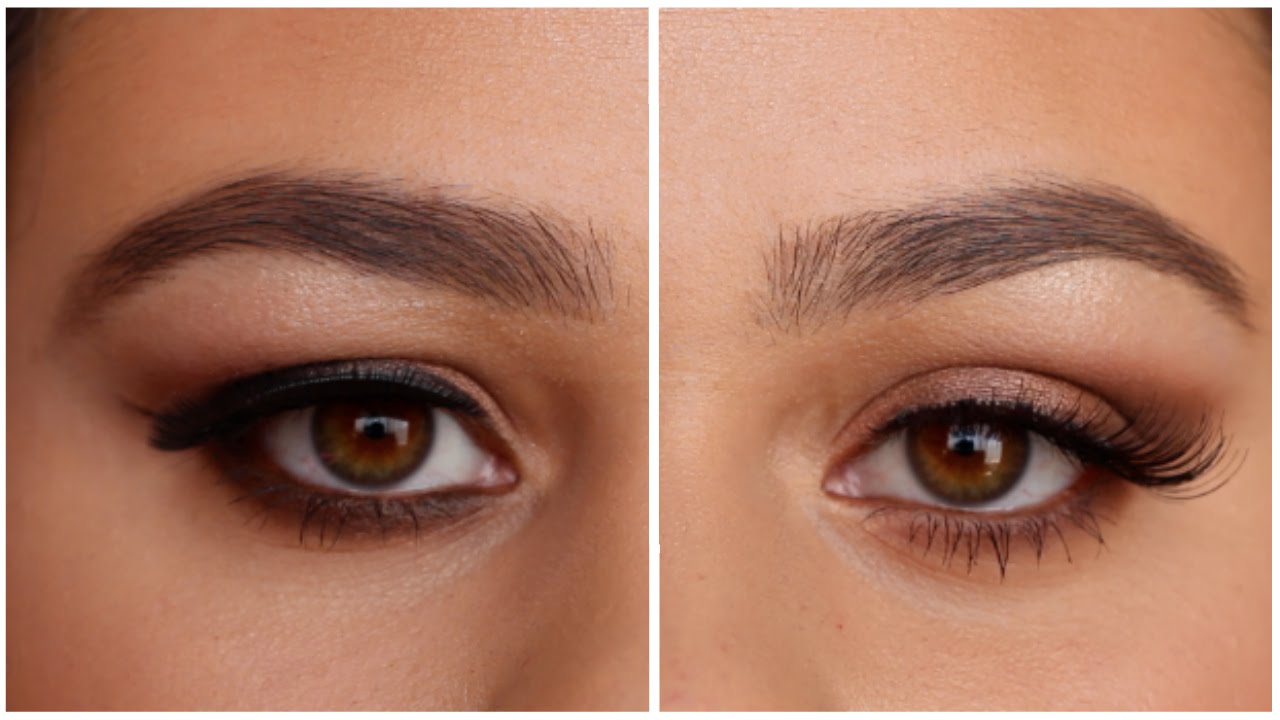
Melanie Brett’s tutorial “Hooded Eyes Do’s & Don’ts! ♡” runs just 6 minutes and 48 seconds, but it solves a problem that trips up a huge chunk of eyeshadow tutorials: the crease disappears the second the eye opens and looks straight ahead. Brett builds the whole video around that anatomical quirk, running side-by-side comparisons of common mistakes against the fixes that actually hold up once the lid relaxes.
Rather than treating hooded lids as a flaw to disguise, she treats them as a mapping problem — figure out where the color and liner will still be visible with eyes open, and build the look there instead of on the skin that folds away.
- Brett warns against thick eyeliner across the mobile lid, since it swallows the limited visible space and tends to transfer or smudge onto the fold.
- She recommends tightlining the upper waterline and keeping the wing thin along the outer edge so it doesn’t warp into the crease.
- For eyeshadow, she blends transition shades above the natural crease and onto the brow bone, reserving bright highlight tones for the inner corner and the exposed center of the lid.
The Eyeliner Problem
The don’t that opens the video is the one most beginners get wrong: drawing a heavy, thick line straight across the mobile eyelid. On a hooded eye, that line has nowhere to go once the eye is open — the excess skin folds right over it, smearing pigment into the crease and leaving a smudged shadow instead of a crisp shape. Brett’s fix is to tightline the upper waterline, filling the gaps between the lashes so the eye reads as lined without adding bulk to the lid itself.
For the outer corner, she keeps the application thin and precise rather than going for a thick wing. A slim line extended along the natural lash angle survives the fold; a thick one gets absorbed into it. Readers who already lean on eyeliner tricks for other features can compare notes with the broader 32 GENIUS BEAUTY TIPS FOR GIRLS roundup, which covers similar precision-over-volume logic for other parts of the face.
Depth-Mapping the Eyeshadow
Brett’s core eyeshadow instruction is to blend with eyes open and relaxed in the mirror — not squeezed shut, which is how most people apply shadow and exactly why the crease work vanishes the moment they open their eyes again. She places transition shades above the actual anatomical crease, carrying them onto the brow bone rather than stopping at the fold. That placement is what creates a faux crease that stays visible and lifts the appearance of heavy or drooping lids.
Keep your eyes open and relaxed in the mirror while you blend — if you close them to apply, you’re placing color exactly where it’s about to disappear.
She steers viewers toward soft matte tones instead of unblended metallics or dark all-over washes, which she notes can close the eye down visually rather than open it up. Bright and highlighting shades are reserved strictly for the inner corner and the exposed center of the lid — the two areas that stay visible regardless of how the fold sits.
A Guide, Not a Rulebook
Brett is explicit that none of this is meant as a strict rulebook. She tells viewers who genuinely love a dramatic winged liner to keep wearing it regardless of what the tutorial recommends — the video is framed as a practical demonstration of how to maximize the visible lid real estate on hooded eyes, not a mandate. That framing is part of why the tutorial resonated the way it did: it’s technique-first, not judgment-first.
The comparative, do/don’t structure also makes it easy to isolate exactly which habit is causing a specific problem — smudging, a shadow that “disappears,” or a wing that looks bent — rather than restarting an entire look from scratch. Viewers looking for more targeted fixes on techniques like this can find a similar side-by-side format in 8 Beauty Tips / Hacks I ACTUALLY Swear By!.
What makes the video stick is how specific the anatomy talk gets — Brett isn’t just saying “blend more,” she’s telling you exactly where the transition shade needs to land relative to a crease you can’t even see when your eyes are open. That’s the whole trick, and it’s why the comparison shots do more work than the voiceover ever could.




Total Body Workout + Weight Loss Tips!! Fat Burning Fitness Routine for Beginners, Home Exercise
Be Good To Your Stomach
The Hoarder Who Can’t Get Into His Own House | BRITAIN’S HIDDEN HOARDERS
MEETING THE ENEMY A feminist comes to terms with the Men’s Rights movement
37 AMAZING BEAUTY TIPS FOR GIRLS