

 InfoSearched
A patient flies from Southern California to Cincinnati for a facelift that skips general anesthesia entirely — and films every day of it.
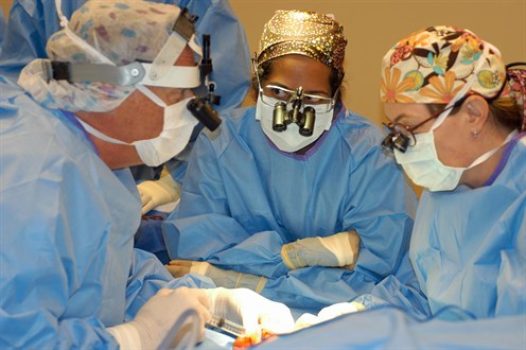
The video “My Advanced Facelift Journey from Southern California to Cincinnati with Dr. Jon Mendelsohn Day by” documents exactly what its title promises: a patient who bypassed local surgeons to travel across the country for a specific technique performed at Advanced Cosmetic Surgery & Laser Center. The day-by-day format tracks everything from the overnight compression dressing to the first mirror check the following morning, giving viewers a rare, unfiltered look at real facelift recovery rather than a polished before-and-after slideshow.
- The patient traveled from Southern California specifically to have Dr. Jon E. Mendelsohn perform his proprietary Advanced Facelift technique in Cincinnati, Ohio.
- The procedure is done under local anesthesia with epinephrine-assisted vasoconstriction, takes roughly 45 to 50 minutes after prep, and limits blood loss to a few teaspoons.
- The day after surgery, removing the compression dressing revealed early jawline definition and neck contouring, with typical “chipmunk cheeks” swelling but minimal bruising.
Cincinnati Technique Attracts Coastal Patients
Dr. Jon E. Mendelsohn, MD, FACS, is double board-certified — by the American Board of Facial Plastic and Reconstructive Surgery and the American Board of Otolaryngology — and serves as Medical Director of Advanced Cosmetic Surgery & Laser Center. His Advanced Facelift is built around SMAS plication and platysma neck muscle repair, the same anatomical targets most traditional facelifts address, but the delivery is different: no general anesthesia, no breathing tube, no groggy wake-up in a recovery bay.
That distinction is the reason a patient based in Southern California, presumably within reach of no shortage of facial plastic surgeons, chose to fly to Ohio instead. Local anesthesia with epinephrine for vasoconstriction keeps the operative field controlled and bleeding minimal, which Mendelsohn’s team ties directly to the compressed timeline — a case that would run several hours under general anesthesia gets done in under an hour here.
Inside the First 24 Hours
The video’s structure follows the patient hour by hour rather than skipping to a finished result. Immediately after surgery, the head is wrapped in a compression dressing that stays on overnight, and pain is managed with Tylenol or a low-dose Vicodin — not the heavier narcotic regimens associated with more invasive general-anesthesia facelifts.
Day one: the dressing comes off, the jawline is already visible, and the bruising just isn’t there.
That absence of significant bruising is the detail the video leans on hardest. Swelling is expected and shown on camera — the rounded “chipmunk cheeks” look that follows most SMAS work — but the localized, contained nature of it is presented as a direct result of the vasoconstriction and the shorter operative window under local anesthesia.
Tracking the Day-by-Day Recovery
Beyond the first 24 hours, the case study keeps returning to the same markers: incision healing, the slow easing of post-surgical tightness, and swelling that recedes in stages rather than all at once. The patient’s own commentary threads through each entry, comparing how the face and neck feel and look from one day to the next until a return to normal public activity becomes realistic.
For anyone weighing recovery timelines against other cosmetic procedures — the kind of practical comparison covered in pieces like how to treat thinning hair holistically without surgery — the appeal of a documented, day-by-day account is that it replaces guesswork with an actual visual record. That transparency is arguably the video’s real product: not just the surgical outcome, but proof of how the days in between actually feel.
The Case for Traveling for Surgery
Patients researching options increasingly weigh travel time and cost against a surgeon’s specific technique and track record, a calculation similar to the kind explored in staying healthy while traveling for medical care. In this case, the deciding factor wasn’t proximity — it was the combination of a shorter procedure, a lighter anesthesia profile, and a recovery arc the patient could verify on video before ever booking the flight.
Mendelsohn’s practice has built its out-of-state pull specifically around that documentation. Rather than asking prospective patients to take before-and-after photos on faith, the day-by-day format shows the swelling, the fading bruising, and the incision lines exactly as they progressed — the kind of granular evidence that’s harder to find from surgeons who only publish final results.






10 Signs of High Functioning Anxiety
Arnold Schwarzenegger Shows His Gym & Fridge | Gym & Fridge | Men’s Health
BEST 15 min Beginner Workout for Fat Burning (NO JUMPING HIIT!!!)
The Hoarder Who Can’t Get Into His Own House | BRITAIN’S HIDDEN HOARDERS
SPINE SURGEON reacts to Chiropractic Y-Strap Manipulations