

 InfoSearched
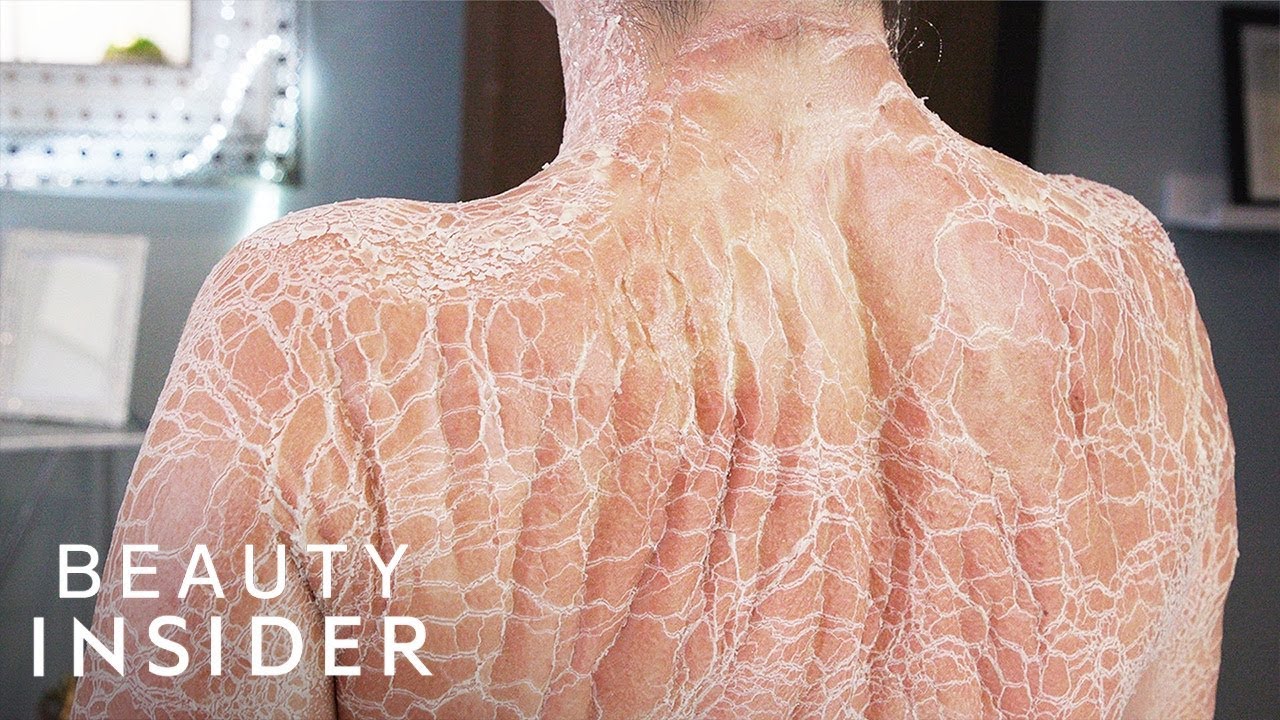
A clinical mask that hardens into a cast, then leaves your face crawling with visible capillaries.
DMK Enzyme Therapy isn’t the kind of facial you book for a quick glow before a night out. It’s a 45-minute treatment that turns solid on your skin, restricts your ability to talk or smile, and finishes by triggering something called the “Plasmatic Effect” — a temporary web of dilated capillaries that looks alarming but is, according to the aestheticians who use it, the entire point. Insider’s Caroline Aghajanian went to find out whether the science behind it holds up, testing both the facial and body versions on herself.
- Aghajanian tried Danné Montague-King (DMK) Enzyme Therapy at Tamara’s Skin Care Clinic in Yorba Linda, California, under aesthetician Tamara Petrucci, undergoing both the face and body applications.
- The mask uses transfer messenger enzymes, lipase, and the amino acids proline, lysine, and glycine to hydrolyze dead protein cells through reverse osmosis, then dries into a hardened cast over 45 minutes that compresses the vascular system.
- Treatments at Petrucci’s clinic start at $160 and increase based on how much surface area — face, neck, chest, or full body — gets treated for issues like acne, bacne, hyperpigmentation, and sluggish circulation.
Inside the Yorba Linda Treatment Room
Tamara Petrucci has built her practice around DMK, a line developed specifically for aestheticians rather than sold on drugstore shelves. When Aghajanian arrived at Tamara’s Skin Care Clinic, Petrucci brushed the enzyme formula directly onto her face, neck, and chest — the same protocol used for clients dealing with breakouts, dullness, or skin that’s lost its bounce. The mask doesn’t sit passively like a typical clay or charcoal treatment; it’s designed to actively pull cellular waste out through the skin while it sets.
DMK’s pitch rests on reverse osmosis: instead of pushing product into the skin, the enzyme formula draws fluid and toxins out from underneath, using amino acids proline, lysine, and glycine alongside lipase and transfer messenger enzymes to hydrolyze dead protein cells sitting on the surface. Petrucci walked Aghajanian through why that matters for acne and bacne specifically — clogged, inflamed skin holds onto dead cell buildup that a standard exfoliant can’t always reach.
The 45-Minute Hardening Cast
Once brushed on, the mask doesn’t stay soft. Over the course of 45 minutes it dries and tightens into what amounts to a rigid cast across the treated area, restricting movement enough that talking becomes difficult. That tightening isn’t a side effect Petrucci apologizes for — it’s the mechanism. As it hardens, the mask compresses the vascular system underneath, and the treatment is engineered around what happens the moment it comes off.
The mask hardens into a tight, pulsating cast that restricts movement and compresses the vascular system — then, when it’s removed, the skin erupts into the “Plasmatic Effect.”
That release triggers a visible surge: a temporary web of dilated surface capillaries that signals fresh, oxygenated blood and nutrients flooding back into the dermis. It’s not subtle — skin can look flushed and mottled immediately after removal — but Petrucci frames it as evidence the treatment worked, not a reaction to be worried about. Readers curious about what’s actually happening under breakout-prone skin can compare the mechanism against the basics covered in Types of Acne.
Body Application and the Bacne Pitch
Aghajanian didn’t stop at her face. She also underwent the body version of the treatment, which follows the same brush-on, dry-for-45-minutes, peel-off process but scales to larger areas like the back and chest. DMK markets this application specifically toward bacne, uneven pigmentation across the shoulders and torso, and skin that’s lost firmness — the same lymphatic-drainage logic applied to a bigger canvas.
Cost tracks with coverage: at Petrucci’s clinic, treatments start at $160 for smaller areas and climb as the surface area treated increases, which means a full-body session runs considerably more than a face-only visit. It’s a pricing structure that puts DMK closer to a clinical, results-driven service than a spa add-on, and it’s one reason aestheticians tend to position it alongside other targeted acne and skin-texture routines like those outlined in 8 Beauty Tips / Hacks I ACTUALLY Swear By!
Aghajanian Evaluated Experimental Hypotheses
The whole point of Aghajanian’s visit wasn’t just to describe the sensation — it was to test DMK’s specific claims: that the enzyme formula purifies clogged pores, calms inflammation, improves circulation, and contours skin by tightening it as the mask dries. Petrucci’s clinical setup, down to the exact ingredient list of transfer messenger enzymes and amino acids, is built to back up each of those claims one by one rather than sell a vague “glow.”
Whether the Plasmatic Effect fades into genuinely improved skin over repeat sessions, or is just a dramatic-looking flush that recedes within hours, is the kind of thing that only shows up after multiple treatments — not one sitting in a Yorba Linda clinic chair. For now, the hardened cast, the 45-minute wait, and that startling capillary map when it comes off remain DMK’s signature, and the reason Petrucci’s clients keep coming back at $160 a session and up.




Margot Robbie’s Beauty Routine Is Psychotically Perfect
Why One Meal A Day Is Good For You | The Unknown Secret
4-Minute Workout That Replaces 1 Hour in the Gym
3 Science-Based Tips to Lose Belly Fat
Secrets The Food Industry Doesn’t Want You To Know