

 InfoSearched
Choosing a narrower life on purpose beats losing it all to time by default.
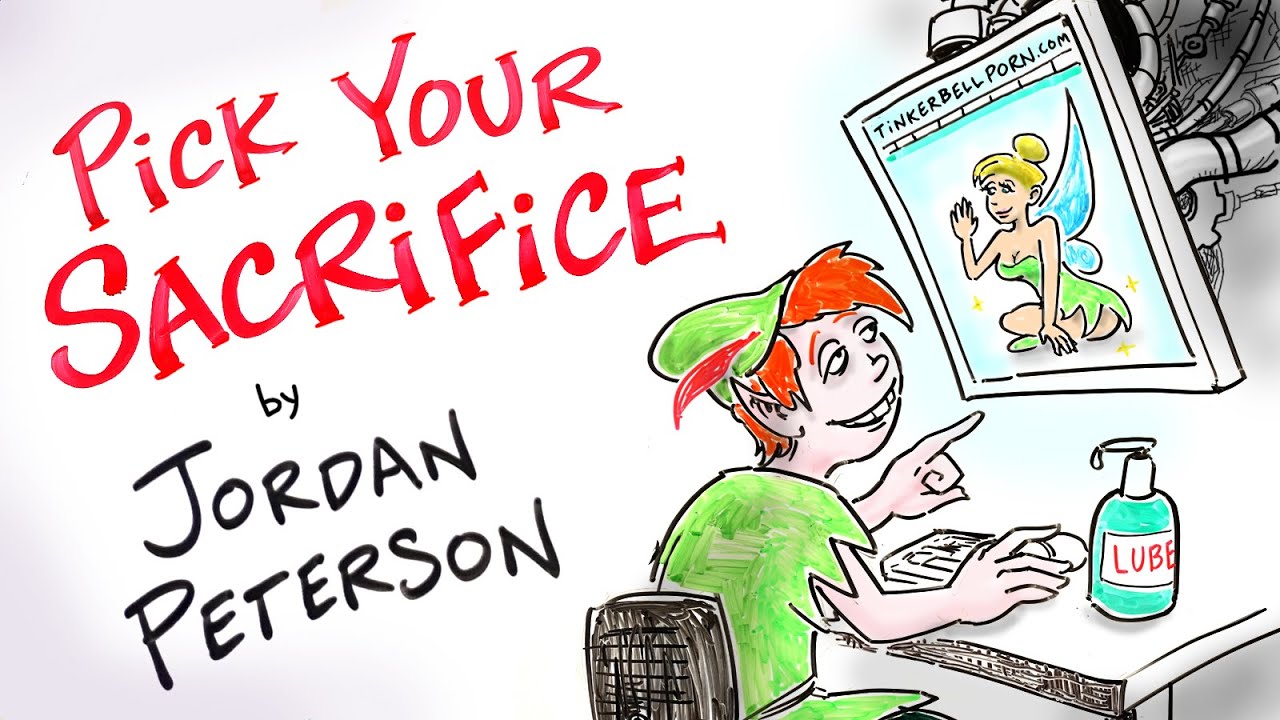
A whiteboard animation from the YouTube channel After Skool has spent the past several years building a devoted following by translating dense lectures into simple, hand-drawn sequences — and one of its most-watched entries takes on a single line from Jordan Peterson: choose your sacrifice, or time will choose it for you. The Canadian clinical psychologist and University of Toronto professor uses that phrase to unpack why so many young adults freeze up when it’s time to commit to a career, a partner, or a discipline.
- The video, titled “Choose Your Sacrifice – Jordan Peterson’s Best Advice to Young Adults,” illustrates an excerpt from a Peterson lecture on maturity and decision-making.
- Peterson’s central claim: refusing to pick a path doesn’t preserve your options — it just lets time strip them away, leaving you unformed rather than “full of potential.”
- He builds the argument around the Peter Pan archetype, arguing that the boy who never grows up eventually becomes Captain Hook — bitter, tyrannical, and chased by the crocodile of mortality.
The Sacrifice You Don’t Get to Skip
Peterson’s starting premise is blunt: sacrifice isn’t optional. Every hour spent training in one skill is an hour not spent on another. Every relationship chosen closes the door on countless others. Young adults, he argues, often treat this as a problem to be avoided rather than a fact to be managed — clinging to the idea that staying uncommitted keeps every door open.
That instinct, Peterson says, is exactly backwards. Declining to choose doesn’t freeze your potential in place. It just hands the decision to something with no interest in your well-being — the calendar. A twenty-two-year-old who refuses to specialize in anything isn’t preserving unlimited options; he’s aging out of most of them without noticing.
Peter Pan’s Ending Is Captain Hook
To make the point land, Peterson leans on the Peter Pan story — not as a children’s fable, but as a warning. Neverland, he notes, is a place that doesn’t exist, ruled by a boy who never has to grow up or answer for anything. The animation walks through why that fantasy has a shelf life: the person who never chooses a discipline, a trade, or a commitment doesn’t stay a carefree boy forever. He becomes Captain Hook.
Hook, in Peterson’s reading, is what’s left when childhood potential goes unclaimed for too long — a grown man ruling over nothing, guilt-ridden, tyrannical toward those around him, and permanently listening for the ticking crocodile closing in. It’s a sharper image than “wasted potential,” and it’s the reason the video has circulated so widely among viewers wrestling with the same question Peterson poses to lecture halls full of twenty-somethings.
Refuse to choose your sacrifice, and time chooses it for you — not by preserving your potential, but by quietly converting it into regret.
Specialization Enhances Professional Growth Opportunities
The harder sell in Peterson’s argument is that narrowing your focus isn’t a loss so much as a transfer. Getting genuinely competent in one difficult discipline — a trade, a craft, a body of knowledge — builds a psychological framework: discipline, tolerance for frustration, the ability to push through the part of any skill that’s boring before you’re good at it. That framework, he argues, transfers. The person who mastered one hard thing has a far easier time mastering the next one than the person who mastered nothing at all.
That reframes the whole fear driving Peter Pan syndrome. The twenty-something terrified of picking a lane isn’t wrong that specializing means giving something up. He’s wrong about what he gets in return for stalling — which, per Peterson, is nothing. Readers chasing more of this line of thinking can find it echoed in On Jordan Peterson & The Hidden Epidemic, and in the broader self-doubt material collected in How To Eliminate Self Doubt Forever & The Power of Your Unconscious Mind.
The Noble Aim as the Alternative to Decay
Peterson’s closing move is to frame the choice not as commitment versus freedom, but as a noble aim versus passive decay. Choosing a sacrifice — a career, a discipline, a person — on purpose gives it direction and meaning. Having it stripped away by drift and inaction gives you Captain Hook. The animation leaves viewers with that binary rather than a third, easier option, because in Peterson’s telling, there isn’t one.



5 More Easy Healthy Breakfast Ideas | In Under 5 Minutes
Super Lazy Vegan Snack Ideas! { healthy + easy }
9 Models on the Pressure to Lose Weight and Body Image | The Models | Vogue
Can This Chef Make A 3-Course Meal With A Rice Cooker? • Tasty
Reasons To Stop Worrying (Break The Habit of Excessive Thinking)