

 InfoSearched
A man born into slavery ended up handing modern psychology one of its founding principles.
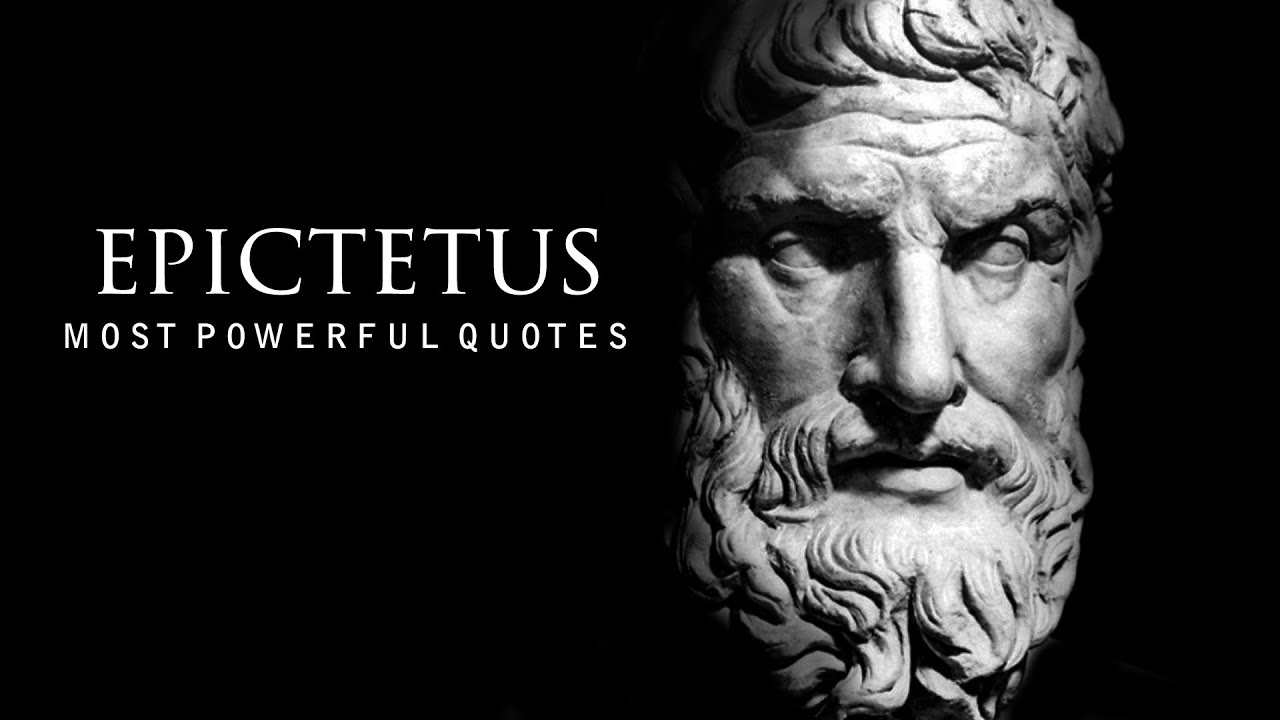
Epictetus never owned a pen worth mentioning, yet nearly two thousand years later a channel called Strong Mind Motivation is still mining his one-liners for a video titled “These Epictetus Quotes Will Change How You View Life (Stoicism).” The video pulls from a life that started in chains and ended in a lecture hall, distilling it down to a handful of maxims about what you can actually control and what you can’t. It’s a short watch, but the ideas inside it are the backbone of an entire school of ancient philosophy — and, as it turns out, a good chunk of modern therapy.
- Epictetus was born into slavery around 50 AD in Hierapolis, later gained his freedom in Rome, and founded a respected philosophical academy in Nicopolis, Greece.
- He never wrote his own teachings down; everything that survives comes through his student Arrian, who recorded them in the Discourses and the Enchiridion (Handbook).
- His central teaching, the “dichotomy of control,” separates external events — which we don’t control — from our own judgments, desires, and reactions, which we do.
From Slave to Stoic Teacher
The video doesn’t linger long on biography, but it’s worth sitting with: Epictetus spent part of his early life enslaved in Hierapolis before eventually being freed in Rome. Rather than treat that history as a wound to nurse, he built a philosophy around the idea that circumstances — even the worst ones — don’t get to dictate a person’s inner state. He went on to open an academy in Nicopolis that drew students from across the Roman world, teaching a version of Stoicism that was less about abstract debate and more about how to actually get through a day.
None of it comes to us in his own handwriting. Everything credited to Epictetus today exists because his student Arrian sat in on the lectures and wrote them down, compiling the Discourses and the shorter Enchiridion. That secondhand transmission is part of why his style reads less like a treatise and more like a teacher talking directly at you — because, in a sense, that’s exactly what it is.
The Dichotomy of Control
The video builds its whole argument around what scholars now call the dichotomy of control — Epictetus’s line between things outside your power and things inside it. Weather, other people’s opinions, your reputation, the outcome of most things you attempt: all external, all outside your jurisdiction. Your judgments, your desires, your choices about how to respond: those are yours, fully and completely, and Epictetus argued that treating them as anything less is where most human misery actually starts.
It’s the same territory covered in how not to take things personally, and it’s not a coincidence that Stoic thinking keeps resurfacing in conversations about emotional resilience. The pitch isn’t detachment for its own sake — it’s redirecting effort toward the one lever a person actually has access to.
Perception Remains the True Battlefield
The cornerstone quote the video leans on is Epictetus’s observation that “people are not disturbed by things, but by the view they take of them.” It’s a claim that sounds simple until you notice how much weight it’s carrying: the argument is that distress isn’t produced by the event itself, but by the judgment layered on top of it. That idea didn’t stay locked in antiquity — it’s the direct ancestor of Albert Ellis’s rational emotive behavior therapy and Aaron Beck’s cognitive behavioral therapy, two of the most widely used frameworks in modern clinical psychology.
“People are not disturbed by things, but by the view they take of them.”
That line does double duty in the video — it’s both a piece of ancient wisdom and, functionally, a preview of CBT’s core premise nearly two thousand years before the term existed.
Being Content to Look Foolish
The second maxim the video highlights cuts closer to ego than emotion: “If you want to improve, be content to be thought foolish and stupid.” Epictetus’s point is blunt — genuine progress requires tolerating other people’s judgment, including the moments where you look like a beginner because you actually are one. Refusing to look foolish, in his framing, is often just refusing to grow.
That thread runs through plenty of ancient material that still gets circulated for the same reason this video does — it’s why collections like some of the world’s greatest proverbs keep finding new audiences. The packaging changes, but the underlying instruction — swallow the discomfort, keep working — doesn’t.
Epictetus never asked anyone to debate his ideas at a dinner party; he wanted them practiced, which is exactly the pitch Strong Mind Motivation is making to a comment section full of people who’ve probably never opened the Enchiridion. Whether any of them actually go pick it up is the only part of this story that hasn’t been written yet.






THE BEST Healthy Food Prep!! Protein Granola, Healthy Carbs, Snacks & MORE!
10+ Best Exercises to Get Rid of Chest Fat
He Was Almost A School Shooter | Aaron Stark
I Tried Trippy BREATHWORK
8 Unbelievable Rapper Body Transformations… (Drake, Gucci Mane & MORE!)