

 InfoSearched
The French omelet lives or dies in the first ten seconds it hits the pan.
Rouxbe, the online culinary school that’s been training home cooks and professionals alike since 2005, breaks down that exact window in its instructional guide “How to make an Omelet.” The lesson isn’t about a diner-style folded egg with browned edges — it’s the classic French technique, where the goal is a pale, custard-soft cylinder with almost no color on the outside.
- Rouxbe’s method calls for 2 to 3 large eggs, salt, pepper, and about 1 tablespoon of unsalted butter, cooked in a 6- to 7-inch non-stick skillet.
- The pan is preheated over medium to medium-low heat — not high heat — specifically to prevent the butter from scorching before the eggs go in.
- The eggs are agitated rapidly with a heat-resistant spatula while the cook shakes the skillet, forming small curds instead of one solid sheet.
Importance of Medium-Low Heat
Most home cooks crank the burner and end up with a rubbery, browned omelet. Rouxbe’s approach does the opposite: medium to medium-low heat, butter added only once the pan is properly warmed, gives the cook enough time to control the curd formation instead of racing against a scorching surface. That’s the difference between a diner-style omelet and the French version, where any browning on the exterior is considered a flaw, not a feature.
The whisking step matters just as much as the heat. Rouxbe instructs cooks to whisk thoroughly enough to blend whites and yolks completely, but without beating in excess air — air bubbles turn the finished curd spongy rather than silky.
The Technique Inside the Pan
Once the butter melts and fully coats the skillet, the eggs go in and the real work starts. The spatula moves fast, breaking up curds as they form, while the other hand shakes the pan itself to keep the eggs moving evenly across the surface. It’s a two-handed motion happening in a matter of seconds, not minutes.
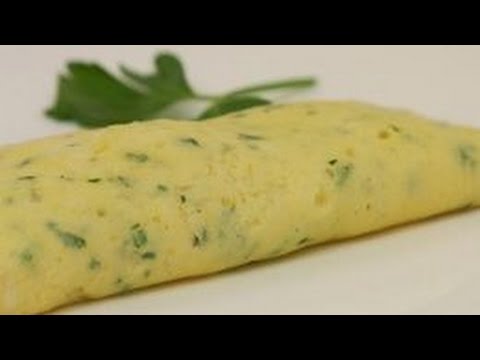
The finished dish is characterized by a smooth, uncolored exterior and a soft, moist interior.
As the eggs set into that creamy, custard-like sheet, any optional fillings — soft herbs, cheese, sautéed vegetables — go in the center. From there the cook rolls or folds the eggs into a tight, cigar-shaped cylinder toward the edge of the pan, then turns it out seam-side down onto the plate.
Building a Full Meal Around It
Because the technique is so lean on ingredients, an omelet built this way plays well with almost any breakfast lineup. Pair it with something like the everyday staples nutritionists recommend for a more complete plate, or add a pinch of turmeric to the eggs for both color and the anti-inflammatory boost detailed in this breakdown of the spice.
The whole technique — whisk, melt the butter, pour, agitate, fold, plate — runs under two minutes once you’ve done it a few times. Rouxbe’s point isn’t speed for its own sake; it’s that the fast, controlled motion is exactly what keeps the eggs from browning and turns three plain ingredients into something that looks like it came out of a Paris café kitchen.






6 month Insane Calisthenics Transformation
How To Remember Everything You Learn
Yoga To Shift Perspective | 20 Minute Yoga Flow
30 Days of Alternate-Day Fasting – 10lbs of Body Fat (Before & After)
7 Minute Fat Burning Morning Routine You Can Do Everyday