

 InfoSearched
Simon Sinek says the perks of leadership were never free — they were a down payment on sacrifice.
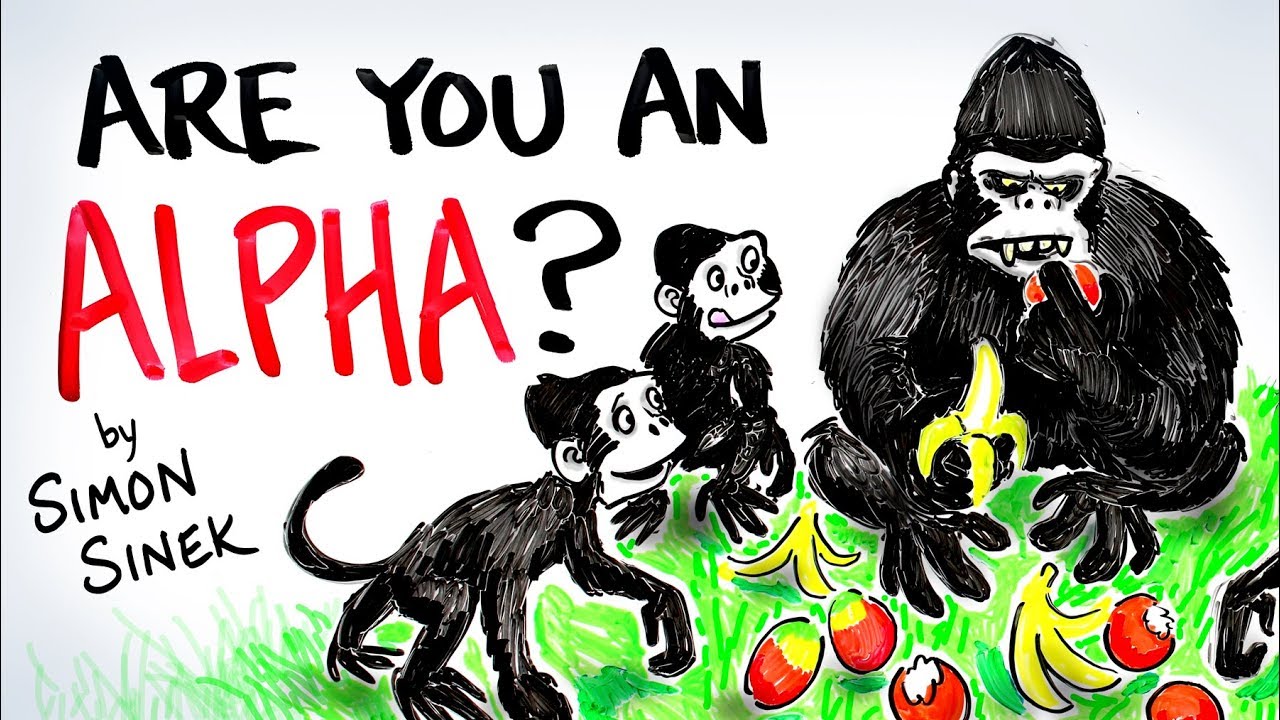
In an animated whiteboard breakdown from the educational channel After Skool, ethnographer and author Simon Sinek lays out the biological logic behind who gets to lead and why. Adapted from his 2014 bestseller Leaders Eat Last: Why Some Teams Pull Together and Others Don’t, the talk traces leadership back to hunter-gatherer bands and asks a blunt question: are you actually an alpha, or just someone enjoying alpha perks without paying the alpha price?
Sinek’s answer hinges on a trade our ancestors struck long before anyone had a title or a corner office. The group handed its strongest, most capable members first pick of food, elevated status, and mating priority — but only because those members were expected to run toward danger, not away from it, when the tribe was threatened.
- In primitive hunter-gatherer groups, alphas received first choice of food, superior status, and mating privileges in exchange for defending the tribe at the risk of personal injury or death.
- Sinek argues modern executives frequently keep the perks — high salaries, bonuses, elite privileges — while breaking the deal by sacrificing subordinates through layoffs or pay cuts to protect their own position.
- He points to the U.S. Marine Corps tradition of commanding officers eating last in the mess hall as the model for what he calls building a “Circle of Safety” around a team.
The Biological Bargain Behind Rank
Sinek’s framing is evolutionary, not corporate. He describes early human groups as small, exposed, and dependent on cooperation to survive predators, rival tribes, and scarcity. Granting one or a few individuals better food, higher status, and mating access wasn’t subservience — it was a practical arrangement, a way of paying the group’s strongest members to stand at the front line when a threat showed up.
That’s the part Sinek insists gets forgotten. The privileges were never unconditional. They were compensation for risk. An alpha who ate first but ran from danger wasn’t an alpha at all — the group’s expectation was that status came bundled with the obligation to absorb the danger everyone else couldn’t.
Modern Version Violates Core Terms
Sinek pivots from the savanna to the boardroom to make his real point. Contemporary executives, he argues, still collect the ancient perks — elevated pay, bonuses, status — but too often violate the other half of the contract, protecting quarterly profits and their own standing by cutting jobs or slashing pay for the people beneath them instead of absorbing the hit themselves.
The perks of rank were never free — they were payment for the promise to walk toward danger first.
According to Sinek, that broken bargain is the root of widespread distrust in institutions and their leadership. When people watch executives keep bonuses while a workforce absorbs layoffs, the biological contract that made “alpha” status legitimate in the first place has been abandoned — leaving authority without earned trust. It’s a dynamic worth pairing with pieces on how toxic dynamics take root inside teams, since Sinek’s argument is essentially a diagnosis of institutional distrust at scale.
Eating Last as Proof of Leadership
Sinek’s clearest illustration is the Marine Corps mess hall, where commanding officers eat last, after the lowest-ranking Marines have been served. It’s a small, literal ritual, but Sinek uses it to argue that real leadership is defined by that willingness to go without, not by rank on an org chart or the size of a paycheck.
He calls the result a “Circle of Safety” — an environment where a team trusts that the person in charge will absorb risk and hardship on their behalf, freeing the group to focus outward on real threats instead of infighting or self-protection. That distinction between commanding authority and earning it echoes ideas Sinek has drawn on elsewhere, including the discipline-first philosophy laid out in Sun Tzu’s Art of War, where a leader’s credibility is built through conduct, not proclamation.
Authority Versus Earned Leadership
The dividing line Sinek draws throughout the talk is simple: authority is a title someone can be handed, but leadership is trust someone has to earn by consistently choosing the group’s welfare over their own comfort. An “alpha” who takes the first plate but never faces the danger is, in Sinek’s terms, just an authority figure wearing the costume of a leader.
That standard doesn’t leave much room for ambiguity. Either the person with the corner office, the higher salary, and the deference of a room is also the one who steps up when things go wrong — or they aren’t actually the leader the group thinks they are, no matter what the title says.









Do You Often Wake Up Between 3 AM and 5 AM? Here Is What It Means..
The Secret to Aging in Reverse Revealed by Harvard Professor
10 Signs of High Functioning Anxiety
6 Healthy Breakfast Recipes (What I Eat In The Morning)
My Scars Won’t Kill My Bodybuilding Dreams | UNBREAKABLE ME