

 InfoSearched
An hour of circular breathing, a laptop camera, and no drugs involved.
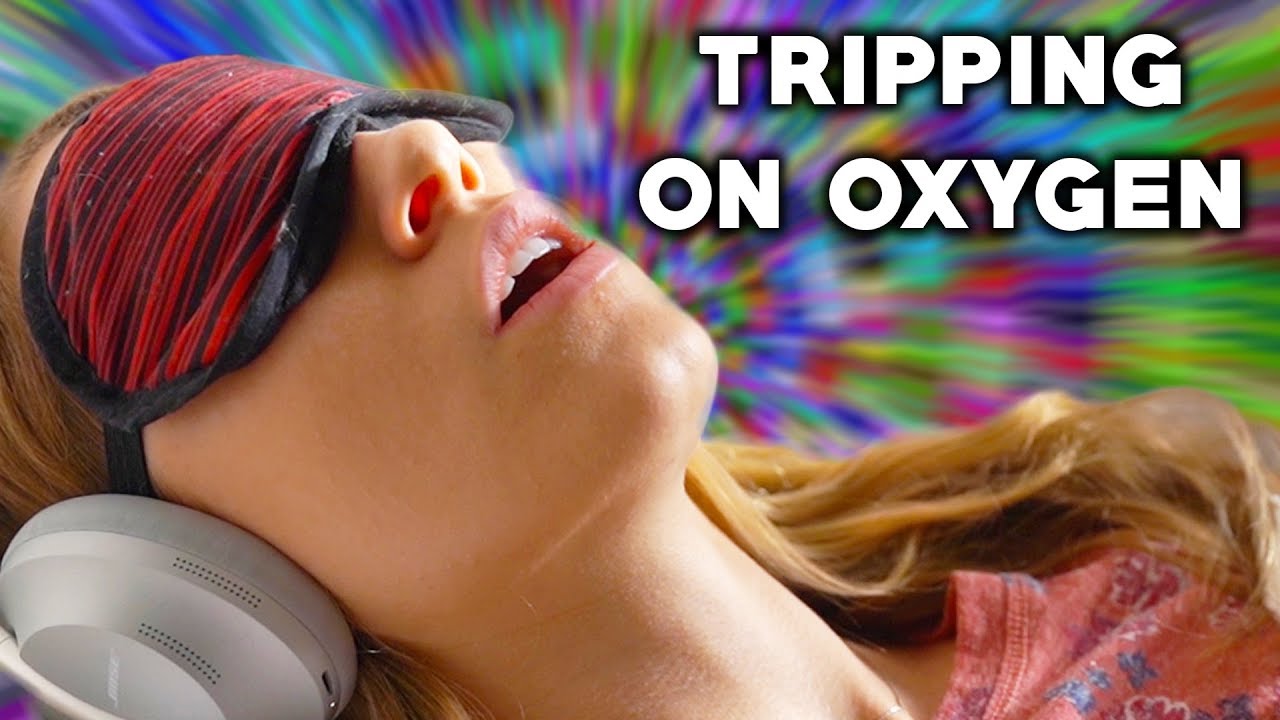
Sky Cowans, host of the Sky Life channel, has already logged time with the Wim Hof Method, heart-opening breathwork, and various pranayama techniques. For “I Tried Trippy Breathwork,” she turns her attention to NeuroDynamic Breathwork Online, a virtual version of a decades-old psychiatric technique that promises the same altered-state benefits as an in-person retreat — minus the retreat, the sitters, and the six-hour time commitment.
- NeuroDynamic Breathwork was created by facilitator Michael Stone, who trained directly under Dr. Stanislav Grof, the psychiatrist who developed Holotropic Breathwork in the 1970s.
- Traditional Holotropic workshops run six to eight hours in person with dedicated “sitters”; Stone’s virtual adaptation compresses the process into roughly a two-hour Zoom session.
- The online format includes a safety-focused orientation, about 60 minutes of continuous circular breathing performed lying down at home, and a closing group sharing circle.
From Grof’s Couch to a Zoom Window
Holotropic Breathwork traces back to Dr. Stanislav Grof, a pioneer of psychedelic-assisted psychotherapy research who, once legal access to those substances dried up, needed a way to reproduce similar breakthroughs without them. His answer was fast, sustained breathing paired with evocative music — a technique that reliably pushed patients into non-ordinary states of consciousness. Michael Stone studied under Grof and later asked a practical question: why does this have to happen in a room with dozens of strangers and a full day set aside? His answer became NeuroDynamic Breathwork Online, built specifically for people who, as Cowans notes, keep telling her they have no local practitioner and no way to access this kind of modality otherwise.
Session Procedures and Outcomes
Stone’s virtual sessions follow a set arc. Participants log into Zoom, sit through an orientation covering safety guidelines and what to expect physically and emotionally, then lie down for close to an hour of uninterrupted, fast circular breathing set to a driving musical soundtrack. The goal, according to the method’s logic, is to bypass what Cowans and Stone describe as the analytical “ego mind” — the same conscious filtering system explored in The Ego Is Betraying You From Being Your Genuine Self — long enough for the nervous system to shift into a different gear entirely.
The session doesn’t end when the breathing stops. A closing sharing circle lets participants talk through whatever surfaced — physical sensations, buried emotion, vivid imagery — while it’s still fresh, which practitioners treat as essential to actually integrating the experience rather than just having it.
The Physiology Behind the “Trip”
None of this relies on substances. The altered states practitioners and participants report — energy shifts, catharsis, imagery, sudden clarity — are attributed to real, measurable changes in blood oxygen and carbon dioxide levels combined with a nervous system pushed into a different regulatory state through sustained rapid breathing. It’s the same underlying territory that ancient pranayama practices and traditions like the ones covered in What is Qi Gong? Taoist Master explains power of Qi and philosophy have worked with for centuries, just delivered here through a Zoom call instead of a monastery.
Sixty minutes of circular breathing on your own living room floor, followed by a group sharing circle — that’s the entire in-person Holotropic workshop compressed into two hours over video call.
Motivations Behind Cowans’ Research
Cowans’ motivation was audience-driven. As she’s built out content on breathwork and other alternative healing modalities, she says viewers repeatedly message her about living somewhere without access to a facilitator or a workshop. NeuroDynamic Breathwork Online was, to her, a direct test of whether that gap could be closed — whether a modality built on all-day, in-person intensity could survive being shrunk down to a laptop screen without losing what makes it work.
Her verdict was that it held up. She reported genuine emotional release and a deeper sense of self-acceptance walking out of a session she did entirely from home, evidence that Stone’s Zoom format managed to deliver a self-guided journey substantial enough to match what she’d experienced in years of in-person breathwork.


Do You Often Wake Up Between 3 AM and 5 AM? Here Is What It Means..
A simple way to break a bad habit | Judson Brewer
Everything James McAvoy Ate to Get Massive For Glass
Healthy Breakfast Ideas for School! | Jessica Reid
The Enzyme Mask That Treats Acne And Contours Skin