

 InfoSearched
He wrestles able-bodied opponents on Ohio mats using nothing but his hands, his balance, and a mantra he lives by: no excuses.
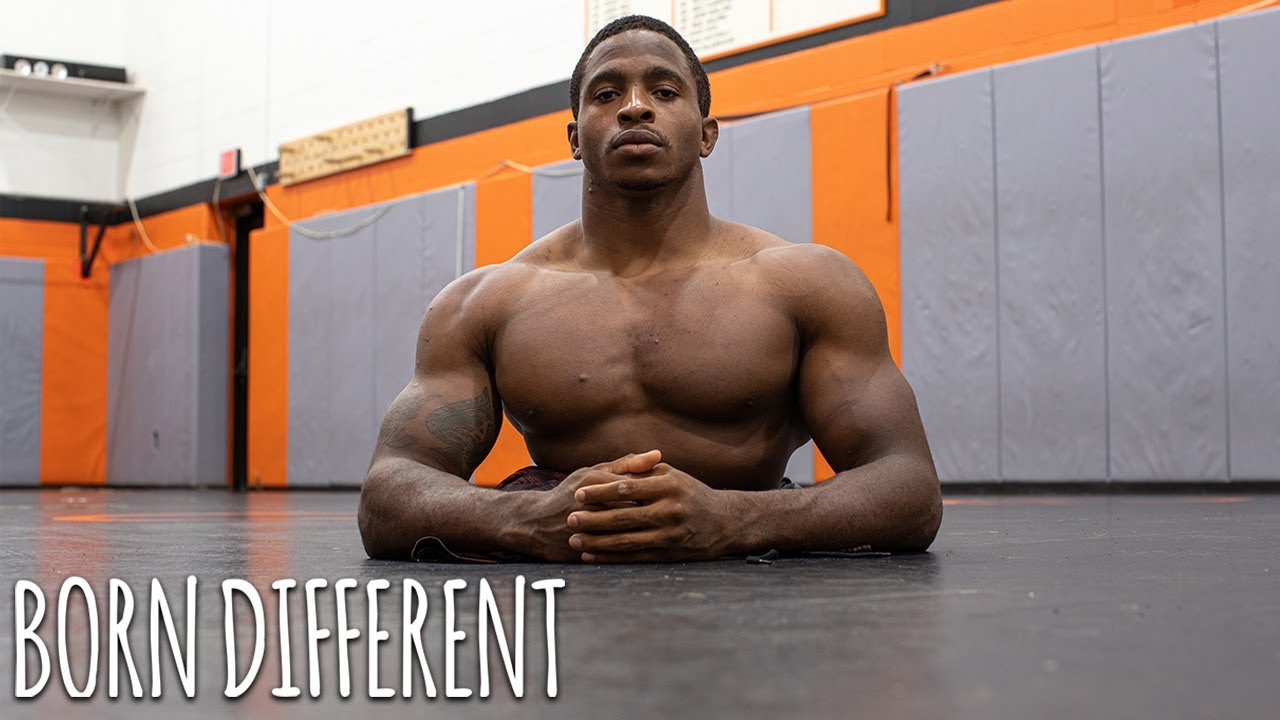
Zion Clark was born without legs and without the lower portion of his spine, a condition called caudal regression syndrome. He spent 17 years bouncing through foster care before finding a permanent home. Somewhere in between, he became a competitive wrestler good enough to take on able-bodied athletes at the college level — and the Truly “Born Different” documentary short lays out exactly how he got there.
- Clark, born September 29, 1997, in Columbus, Ohio, was given up at birth and endured 17 years in foster care marked by neglect and painful corrective braces before Kimberli Hawkins adopted him at age 17.
- He went 33-15 as a senior at Massillon Washington High School, one match short of qualifying for the Division I Ohio state wrestling tournament, and also won two Ohio state track titles in the 100-meter and 400-meter wheelchair racing events.
- Clark’s story reached a mass audience through the 2018 Netflix short documentary “Zion,” directed by Floyd Russ, and by June 2020 he was training with dual Olympic and Paralympic ambitions in freestyle wrestling and track.
A Diagnosis and a Decade in the System
Caudal regression syndrome is rare enough that most delivery rooms never see it. Clark’s version of it left him without legs and without the lower section of his spine, and rather than being raised by his birth family, he was given up at birth and routed into Ohio’s foster care system. He stayed there for 17 years, moving between homes where he says he faced neglect and abuse, and where caretakers forced him into corrective prosthetic braces that caused him real pain rather than progress. It took until he was 17 for that cycle to break, when Kimberli Hawkins adopted him and gave him a stable home for the first time.
Learning to Win by Losing First
Clark picked up wrestling around age eight in elementary school, and the results were brutal at the start — he lost match after match for years before anything clicked. What eventually clicked was a style built entirely around upper-body power, balance, and quickness, since he moves by walking on his hands rather than using a wheelchair or prosthetics in competition. That style turned into results at Massillon Washington High School, where he finished his senior season 33-15, missing a spot in the Division I Ohio state tournament by a single match.
No excuses.
That two-word mantra is the closest thing Clark has to a slogan, and it shows up in how he talks about training, competing, and getting through daily life — including walking on his hands and driving a car retrofitted with hand controls.
Wrestling Able-Bodied Competition at Kent State
High school wasn’t the ceiling. Clark kept wrestling at the collegiate level for Kent State University’s Tuscarawas campus, taking on able-bodied opponents on the same mat under the same rules. He also kept his wheelchair racing career going on the side, and it was strong enough on its own to produce two Ohio state championships in the 100-meter and 400-meter events during his high school years — a second sport, a second set of state titles, run in parallel with a full wrestling schedule.
From Netflix Short to Olympic and Paralympic Push
Clark’s profile jumped significantly after Floyd Russ directed “Zion,” a 2018 Netflix short documentary that put his foster-care-to-wrestling-mat story in front of a streaming audience far bigger than any dual meet in Ohio. That exposure lined up with where his training was actually headed: as of June 2020, Clark was working toward representing the United States in two entirely different disciplines — Paralympic track and Olympic freestyle wrestling — an unusual double bid that reflects the two sports he’d already been excelling at since high school. Anyone drawing motivation from that kind of grind might also find something in this story of a father of two with no arms or legs, or in Jordan Peterson’s advice on choosing your sacrifice, both built around the same refusal to treat a physical limit as a final answer.
Two Olympic-caliber tracks, one body that doctors initially framed as a limitation rather than an asset — that’s the split Clark was actually training for heading into 2020, freestyle wrestling on one side and Paralympic track on the other, with the mat in Tuscarawas as the proving ground for both.


Hooded Eyes Do’s & Don’ts!
Probiotics Benefits + Myths | Improve Gut Health | Doctor Mike
Hypnosis for Life Healing Sleep
Is This Cheating? “Little Known” Biohacks That Will Make You Superhuman
EASY HEALTHY BREAKFAST IDEAS (+ quick pancakes)