

 InfoSearched
The dinner-table warning about sipping water mid-meal turns out to be one of nutrition’s most persistent myths.
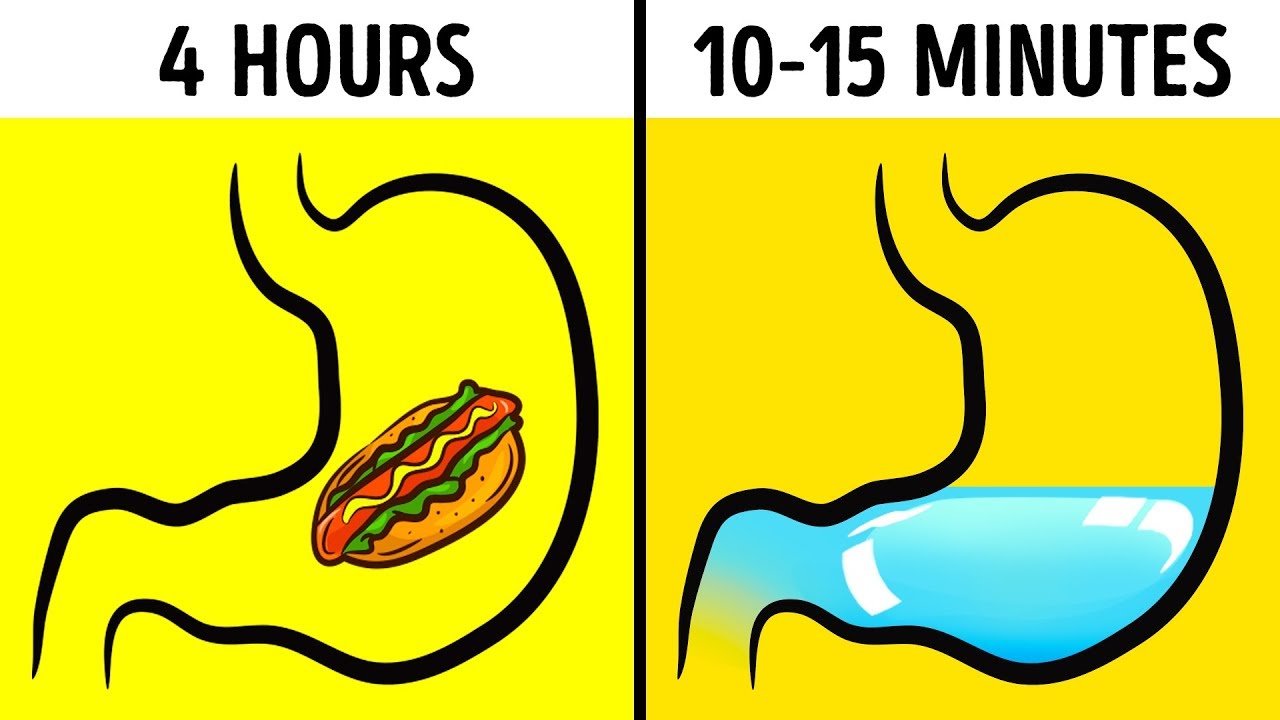
For years, a familiar piece of advice has circulated at family tables and gym locker rooms alike: don’t drink water while you eat, or you’ll dilute your stomach acid and wreck your digestion. In May 2018, the educational channel Bright Side tackled that claim head-on in its video “Can You Drink Water When You Eat?”, walking through the actual physiology of what happens when liquid and food hit your gut together. The short answer, backed by how digestion actually works, is that the fear is largely unfounded.
- Digestion doesn’t wait for the first bite — saliva production kicks in as soon as you smell or even think about food.
- Fruits like oranges, pineapples, and raspberries are already about 87% water, meaning your stomach handles diluted contents constantly with no ill effect.
- Gastric acidity dips briefly after eating or drinking but recalibrates quickly, since the stomach secretes additional hydrochloric acid and enzymes as needed.
The Diluted Acid Theory Doesn’t Hold Up
The core claim behind the “no water with meals” rule is that liquid weakens gastric juice to the point where it can’t properly break down food, supposedly leading to indigestion or weight gain. It’s a tidy theory, but it doesn’t match how the stomach behaves in practice. Research cited in the Bright Side breakdown shows that while pH levels do shift briefly after you eat or drink, they don’t stay diluted — the stomach is an adaptable organ that ramps up acid and enzyme secretion to compensate almost immediately.
That adaptability is the whole point. The stomach isn’t a fixed vat of acid sitting at one concentration waiting to be watered down; it’s a responsive system that adjusts output based on what’s inside it, whether that’s a steak, a smoothie, or a glass of water sipped between bites.
Digestion Starts Long Before the Fork Touches Your Mouth
One detail from the video undercuts the myth before it even gets to the stomach: digestion begins in the mouth, and mentally, even earlier than that. Saliva secretion is triggered by the sight, smell, or even the thought of a meal, which means the body is already preparing to process food before a single bite is chewed. On top of that, most food itself is already carrying substantial water weight into the stomach — oranges, pineapples, and raspberries clock in around 87% water, and plenty of other produce isn’t far behind.
Put those two facts together and the idea that a glass of water at dinner is somehow uniquely disruptive starts to fall apart. Your stomach is dealing with moisture-heavy contents at essentially every meal, water glass or not.
Fruits like oranges, pineapples, and raspberries are roughly 87% water — and the stomach handles that dilution without missing a beat.
Physiological Effects of Mealtime Hydration
Rather than working against digestion, water sipped during or after a meal does several concrete things for the body. It softens the food bolus, which makes swallowing easier and helps peristalsis move things smoothly through the esophagus. It also supports nutrient absorption and helps prevent constipation by keeping stool softer — a detail that matters for anyone paying attention to gut health, in the same way probiotic-rich foods do for the digestive tract.
There’s a behavioral upside too. Taking sips between bites naturally slows down eating pace, which gives satiety signals more time to catch up with intake — a small habit that plays into broader weight-management strategies the same way portion control and workout timing do.
Practical Takeaway on Mealtime Hydration
None of this means unlimited chugging is the goal — moderation still matters, and drowning a meal in liquid isn’t necessary to get the benefit. But the evidence Bright Side lays out lines up with the mainstream medical consensus: a glass of water with dinner isn’t sabotaging your gastric juices, it’s just water doing what water does, moving through a stomach built to handle it.
So the next time someone at the table insists you’re ruining your digestion by drinking with your meal, the science says otherwise — pour the glass and pass the bread.




20 MIN FULL BODY WORKOUT | At Home & Equipment Free!
10+ Best Exercises to Get Rid of Chest Fat
12 Bad Habits That Damage Your Brain
Is This Cheating? “Little Known” Biohacks That Will Make You Superhuman
Cholesterol Control