

 InfoSearched
Belly fat won’t budge until you shut off the one hormone that’s telling your body to store it.
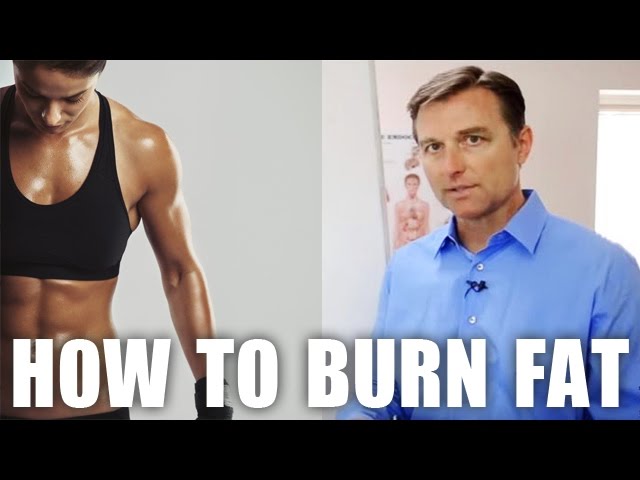
In “Burning Fat Made Easy: Tips and Tricks from Dr. Berg,” Dr. Eric Berg DC, director of The Health & Wellness Center in Alexandria, Virginia, and author of “The 7 Principles of Fat Burning,” tackles the myths that keep people spinning their wheels on stubborn belly fat. His argument is simple: the body only knows how to run on two fuels, and most people are stuck burning the wrong one without realizing it.
- The body operates on two competing fuel sources — stored sugar (glucose) and stored fat — and fat-burning hormones convert fat into ketones while fat-storing hormones lock surplus sugar away as body fat.
- Insulin is the single master switch: Berg says even minimal circulating insulin can completely shut down fat oxidation, so sugar intake needs to drop as close to zero as possible to burn belly fat.
- Nutritional ketosis, per Berg’s targets, requires 65% to 80% healthy fats, roughly 25% protein, and just 5% to 10% carbohydrates.
Two Fuel Tanks, One Body
Berg opens by explaining that the human body is never without fuel — it’s simply choosing which tank to draw from. When fat-burning hormones activate, stored fat gets broken down and processed into ketones, an efficient alternative energy source for both the brain and the heart. When fat-storing hormones take over instead, the body accumulates glucose and converts any sugar surplus directly into body fat. Most people, Berg argues, are stuck burning sugar and converting the rest to fat rather than tapping their fat reserves at all.
Insulin as the Master Switch
The hinge point in Berg’s explanation is insulin. He identifies it as the hormone that decides, moment to moment, whether the body burns sugar or taps stored fat — and he’s blunt about how sensitive that switch is.
Even minimal amounts of circulating insulin can completely shut down fat oxidation.
That’s why Berg insists sugar intake — and the insulin spikes that follow it — needs to be pushed toward zero for belly fat to actually burn. Anyone looking to pair that hormonal approach with movement can find complementary strategies in 10 HIIT Exercises to Lose Belly Fat FASTER, though Berg’s video keeps the focus squarely on what’s happening hormonally rather than in the gym.
The Macros Behind Nutritional Ketosis
To get the body into nutritional ketosis — the metabolic state Berg presents as optimal for fat burning — he lays out specific daily targets: 65% to 80% of calories from healthy fats, about 25% from protein, and only 5% to 10% from carbohydrates. He frames ketosis as the healthiest fuel state for the heart and brain, since ketones are a more efficient energy source than glucose. Readers weighing whether a low-carb approach fits their goals may find useful context in 3 Science-Based Tips to Lose Belly Fat.
Berg Recommends Strategic Ketosis Planning
Berg is careful to note that shifting into ketosis shouldn’t be done blindly. He stresses that the transition has to be approached with full knowledge of how the body will respond and what underlying health factors are in play — nutrition balance, fluid intake, and the specific mix of carbs, fats, and proteins a person needs. That individualized approach is what he folds into his proprietary Body Type System, which customizes fat-loss protocols rather than applying one blanket macro target to everyone.
He also flags a correction from earlier in the video: one egg yolk contains 138 grams of cholesterol, and it would take roughly 14 1/2 egg yolks to match the amount of cholesterol the body produces on its own in a single day — a detail he wanted cleaned up rather than left as an on-camera slip.
The Disclaimer Behind the Advice
Berg’s video carries a standard disclosure: he earned his Doctor of Chiropractic degree from Palmer College of Chiropractic in 1988, remains licensed in Virginia, California, and Louisiana, but no longer practices chiropractic or sees patients in any state. The content is presented as general information, not a substitute for a medical exam, diagnosis, or treatment, and Berg recommends consulting a physician before changing any diet or health regimen.
Berg’s bottom line stays the same one he opened with — insulin decides which tank you’re burning from, and until sugar intake gets pushed toward zero, the fat-burning switch stays off no matter how clean the rest of the diet looks.








30 Days of Alternate-Day Fasting – 10lbs of Body Fat (Before & After)
7 DAY CHALLENGE – 7 MINUTE WORKOUT TO LOSE BELLY FAT – HOME WORKOUT TO LOSE INCHES – START TODAY
How not to take things personally?
9 Models on the Pressure to Lose Weight and Body Image | The Models | Vogue
The gentle power of highly sensitive people