

 InfoSearched
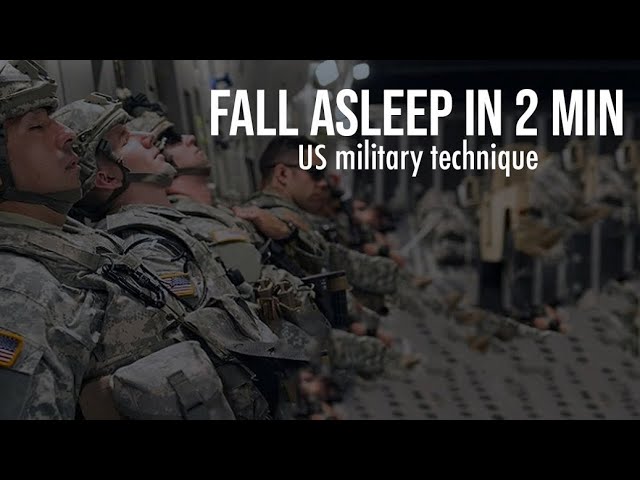
Two minutes is all the U.S. Navy allegedly needed to knock a fighter pilot out cold — even mid-gunfire.
The video making the rounds promises something almost too simple: a body-scan routine that supposedly lets anyone fall asleep in 120 seconds flat, no pills, no white noise, no melatonin gummies. It’s not a new discovery. The technique has been circulating since 1981, buried inside a book most people have never heard of, and it’s built around a claim that sounds more like a war story than a sleep study.
- The method traces back to the 1981 book Relax and Win: Championship Performance by Lloyd “Bud” Winter, which credits the U.S. Navy Pre-Flight School during World War II with developing it to help pilots sleep despite combat stress.
- Winter’s book claims 96% of pilots mastered the two-minute fall-asleep skill after six weeks of practice — reportedly even after drinking coffee or with simulated gunfire in the background.
- There’s no formal scientific validation behind the two-minute figure, and experts say it’s anecdotal, even though the underlying components — muscle relaxation, breathing, visualization — are legitimate relaxation tools.
Origin of the Narrative
Bud Winter wasn’t a sleep researcher — he was a track and field coach, best known for training Olympic sprinters at San Jose State. Relax and Win was aimed at athletes trying to perform under pressure, and the sleep technique shows up as a side anecdote about wartime pilots rather than a peer-reviewed protocol. That distinction gets lost every time the clip resurfaces as a “military hack,” but it’s the reason you won’t find the method listed in any official U.S. Navy training manual.
The story itself is specific enough to sound credible: pilots at Pre-Flight School allegedly needed to sleep on command because exhaustion was getting them killed, and the Navy wanted a repeatable drill rather than leaving it to chance. Whether that program existed exactly as described, or whether it’s been polished into legend over four decades of retelling, is impossible to verify from the outside.
The Step-by-Step Sequence
The routine itself is short enough to memorize in one read. Start by relaxing every muscle in your face — forehead, jaw, and the muscles around your eyes. Drop your shoulders as far down as they’ll go and let your arms go loose, one side at a time. Exhale slowly to release tension across your chest, then let that same heaviness spread down through your thighs and calves.
Once your body is down, the mind work begins. Winter’s version calls for 10 seconds of clearing your head completely, usually by picturing something specific and quiet — lying in a canoe on a still lake, or lying in a dark room wrapped in black velvet. If a stray thought creeps in, the instruction is to repeat “don’t think, don’t think” until it passes. That combination — physical shutdown followed by a mental blank slate — is the entire technique.
Evidence Supporting the Findings
Sleep researchers who’ve looked at the viral version of this technique generally agree on one thing: the individual pieces aren’t fringe science. Progressive muscle relaxation, controlled exhalation, and guided visualization are all used in legitimate insomnia treatment, and combining them can genuinely lower the physical tension and racing thoughts that keep people awake. For readers who already track how their nervous system responds to stress, that overlaps with breathing and grounding practices covered in pieces like what Qi Gong teaches about calming the body.
96% of pilots could fall asleep in under two minutes after six weeks — even with gunfire playing in the background.
What isn’t backed by evidence is the precision of that 96% figure or the exact two-minute window. No modern military branch lists this as a standard training protocol, and there’s no published study replicating Winter’s numbers under controlled conditions. It functions more as an origin story that makes a solid relaxation routine feel more authoritative than it needs to be.
Enduring Relevance of the Habit
None of that means the routine is worthless — it just means the marketing outran the evidence. Practiced consistently, this kind of body scan can shave real time off how long it takes to drift off, the same way habits like winding down at the same hour each night or cutting caffeine late in the day do. Readers looking to stack a few of those habits together might find useful overlap in why so many people wake up between 3 and 5 a.m. or in slower wind-down content like the videos designed specifically to help viewers unwind before bed.
Whether or not a real WWII pilot ever nodded off in under two minutes with anti-aircraft fire outside the window, the technique keeps spreading because it costs nothing to try and takes about the same two minutes it promises. Set a timer tonight, run through the face-shoulders-chest-legs sequence, and see if you’re still counting sheep when it goes off.









Sen. Kamala Harris unveils health care plan ahead of debates
TAOISM | The Fasting of the Heart (An Ultimate Detox)
5 Minute Covid Cardio Workout
The Secret of Becoming Mentally Strong | Amy Morin | TEDxOcala
Different Ways Of Fasting