

 InfoSearched
The way you fight with your partner tonight probably has less to do with them than with something that happened at your kitchen table thirty years ago.
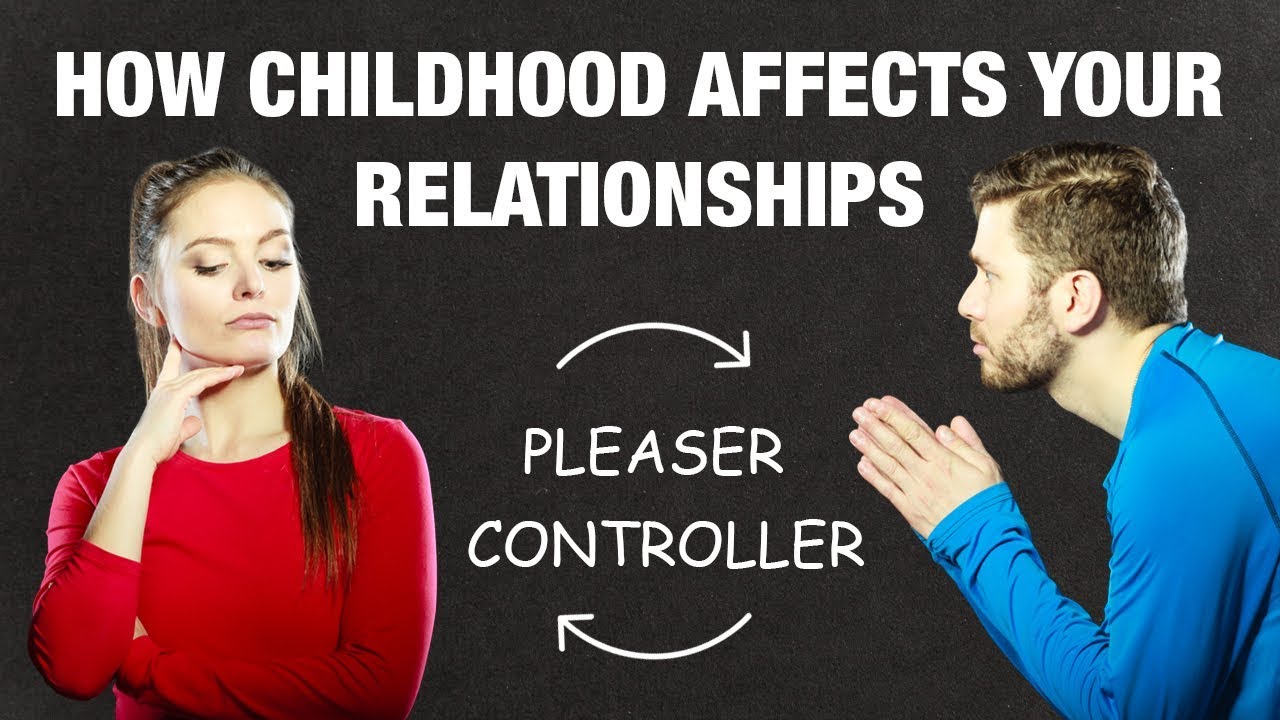
Brainy Dose released “How Your Childhood Affects Your Love Style” on September 7, 2019, breaking down a framework built by relationship experts Milan and Kay Yerkovich in their book “How We Love.” The core idea: the way your parents or caregivers handled affection, conflict, and consistency during your childhood gets copied into a behavioral template, and that template runs on autopilot in every romantic relationship you have as an adult.
The video walks through five distinct “love styles” — patterns of behavior, not fixed personality traits — and ties each one back to a specific kind of childhood home. It closes on the idea that naming the pattern is the first step toward replacing it with what the Yerkoviches call a “secure connector” attachment style.
- The framework identifies five dysfunctional love styles: the Pleaser, the Avoider, the Vacillator, the Controller, and the Victim, each traced to a distinct childhood environment.
- Pleasers come from anxious, high-conflict homes where the child had to comfort the parent; Avoiders come from performance-driven, emotionally detached homes.
- Controllers and Victims both emerge from chaotic, neglected, or abusive homes — but Controllers respond with intimidation and dominance, while Victims respond by becoming compliant and often end up paired with Controllers.
The Pleaser and the Avoider
The Pleaser, according to the video, is shaped by growing up in an anxious or high-conflict household where the child was regularly pulled into the role of comforting a distressed parent. That early job — managing someone else’s emotions to keep the peace — carries straight into adulthood. Pleasers avoid conflict at almost any cost, chase approval, struggle to say no, and consistently put a partner’s feelings ahead of their own.
The Avoider comes from the opposite kind of household: performance-driven and emotionally detached, where showing vulnerability wasn’t rewarded and affection wasn’t modeled. As adults, Avoiders lean hard on self-sufficiency, keep their emotions locked down, and pull back the moment a partner gets needy or emotionally expressive. The video frames this withdrawal not as coldness for its own sake, but as a defense mechanism built in a home where needing anyone was treated as a liability.
The Vacillator, the Controller, and the Victim
Vacillators grew up with inconsistent or unpredictable parents — sometimes warm, sometimes absent, with no reliable pattern to count on. That inconsistency produces a deep fear of abandonment in adulthood, and it shows up as a swing between idealizing a partner and then feeling sharp resentment or rejection the moment reality doesn’t match the fantasy.
Controllers and Victims both trace back to chaotic, neglected, or abusive homes, but the two adaptations move in opposite directions. Controllers, who felt unprotected as children, grow up using anger, intimidation, and rigid dominance to avoid ever feeling vulnerable again. Victims adapt the other way — going compliant, submissive, and nearly invisible to survive the same kind of environment.
Victims often tolerate mistreatment and suffer from low self-esteem, and as adults they gravitate toward Controllers — recreating the exact dynamic they grew up in.
That pairing is one of the more pointed observations in the video: two damaged patterns that seek each other out and reinforce the very dysfunction each partner is trying to escape. Anyone who’s cycled through the same toxic relationship shape more than once with different people might recognize the loop the video describes — the kind of pattern also broken down in 6 Signs of a Toxic Person.
Breaking the Cycle Toward Secure Connection
The video is careful to frame all five styles as conditioned behavior, not permanent character. The Yerkovich model holds that self-awareness of the original childhood wound is the mechanism that lets someone move away from Pleaser, Avoider, Vacillator, Controller, or Victim patterns and toward what’s called a secure connector — someone who can stay emotionally present without over-controlling, over-pleasing, or shutting down. That process of recognizing an inherited pattern before you can dismantle it lines up with the same self-reflection work covered in How To Eliminate Self Doubt Forever & The Power of Your Unconscious Mind.
Brainy Dose put the full breakdown up for free on YouTube the same day, no book purchase required to start matching your own behavior to one of the five styles. Whether that’s enough to actually change anything is a different question — the video itself says that part takes the work, not just the label.





Coronavirus Outbreak Update: Travel Ban, Spread Outside of China
HYDROTHERAPY. Overcoming a life changing illness through wild swimming
A heads up on Turmeric as a natural treatment for Arthritis
Ebola didn’t just disappear… It still kills today massively at an alarming rate…
The Most PAINFUL Thing a Human Can Experience?? | Kidney Stones