

 InfoSearched
The world’s most productive insomniac cracked his best ideas in the seconds before sleep, not after it.
Nikola Tesla built the foundation of alternating current power, filed hundreds of patents, and reportedly needed as little as two hours of sleep a night to do it. But according to the video “Nikola Tesla Was Doing It Before Sleep! TRY IT TONIGHT!” from the channel Be Inspired, his real edge wasn’t how little he slept — it was what he did in the minutes right before he did. Tesla treated the fuzzy borderland between waking and sleeping as a workshop, and the video argues anyone can walk into that same workshop tonight.
- Tesla claimed he could sleep as little as two hours a night and sometimes went multiple days in his lab without rest, breaking up the grind with short naps he described as recharging his batteries.
- He used the hypnagogic state — the transitional phase between wakefulness and sleep — to visualize and mentally test entire inventions before ever building a physical prototype.
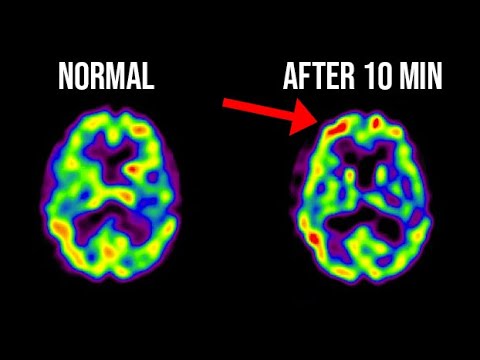
- The video links this practice to slow-wave theta brain activity, the pattern associated with spontaneous creative connections and sharper problem-solving.
The Hypnagogic State, Explained
The hypnagogic state sits in the narrow window between full alertness and true sleep — the point where thoughts start drifting on their own, imagery gets vivid, and the internal editor that usually filters out strange ideas goes quiet. Tesla, according to the video, treated this window as functional time rather than dead time. Instead of letting his mind wander aimlessly, he pointed it directly at unsolved engineering problems.
The video frames this as distinct from ordinary daydreaming. It’s a deliberate, repeatable technique: dim the room, get physically comfortable, quiet the mental noise, and then aim the drifting mind at a specific target before it tips over into unconsciousness. That targeting is what separates Tesla’s routine from simply lying in bed thinking.
Building Machines Without a Workshop
What made Tesla’s version of this practice remarkable, per the video, is the level of detail he claimed to work with. He didn’t just picture a rough shape of a machine — he said he could run it in his mind, watch it operate, check for wear or imbalance, and adjust the design entirely inside his head before a single part was machined. That meant fewer wasted prototypes and fewer trial-and-error cycles in the physical lab, because the failures had already happened — and been fixed — mentally.
Tesla used deep visualization to simulate complex inventions and resolve intricate engineering problems entirely in his mind, without needing a physical prototype.
That approach lines up with how Tesla is remembered by historians of invention: less a tinkerer who built by trial and error, and more an engineer who front-loaded almost all of his trial and error into his own imagination. Readers who’ve looked into other unconventional routines from history-changing minds may recognize the pattern from pieces like I Tried Da Vinci’s (Insane) Daily Routine: Here’s What Happened — eccentric habits that look bizarre from the outside but map onto a deliberate system underneath.
The Ball Bearing Trick
The video highlights a specific tool Tesla reportedly used to stay inside the hypnagogic window instead of sliding straight into unconsciousness: holding a ball bearing in one hand, arm draped over the edge of the bed. As his body relaxed toward sleep, his grip would loosen, the ball bearing would drop, and the small jolt would pull him back to the surface — just alert enough to remember what his mind had produced in that in-between state, without fully waking up and losing the thread.
It’s a low-tech version of what sleep researchers now study more formally with EEG monitoring: catching the theta-wave window on purpose instead of sleeping through it. For readers who’ve struggled with the opposite problem — falling asleep at all — the same territory gets covered from another angle in How to Fall Asleep Fast (US Military Technique).
Trying the Technique Tonight
The video’s pitch to viewers is straightforward: pick one unresolved problem, sit or lie down in a dim, quiet room, let the body relax fully, and hold that single problem in mind as consciousness starts to slip. No ball bearing required — just enough attention to notice what surfaces before sleep takes over completely. It’s a nightly rehearsal of the same borderland Tesla claimed to mine for decades of inventions, and it costs nothing but a few extra minutes before lights-out.
For anyone who wants to go a layer deeper on why the subconscious mind produces sharper answers than the conscious one grinding on a problem all day, the video’s logic pairs naturally with How To Eliminate Self Doubt Forever & The Power of Your Unconscious Mind.
Tesla never wrote a step-by-step manual for the technique — everything we know comes from his own later recollections and the engineers who worked around him. But the core move is simple enough to test on a random Tuesday night: no lab, no ball bearing even, just a dark room, one real problem, and a few minutes before the lights go out for good.






How To Never Be Boring In Conversation
30-Minute No-Equipment Cardio and Core Workout With Massy Arias
“Your Brain Will Change in a Few Seconds”
“The Billionaire Algorithm” | (it will change your future!)
6 Healthy Breakfast Recipes (What I Eat In The Morning)