

 InfoSearched
Four cooks, one chicken thigh, and a crash course in why crust actually crunches.
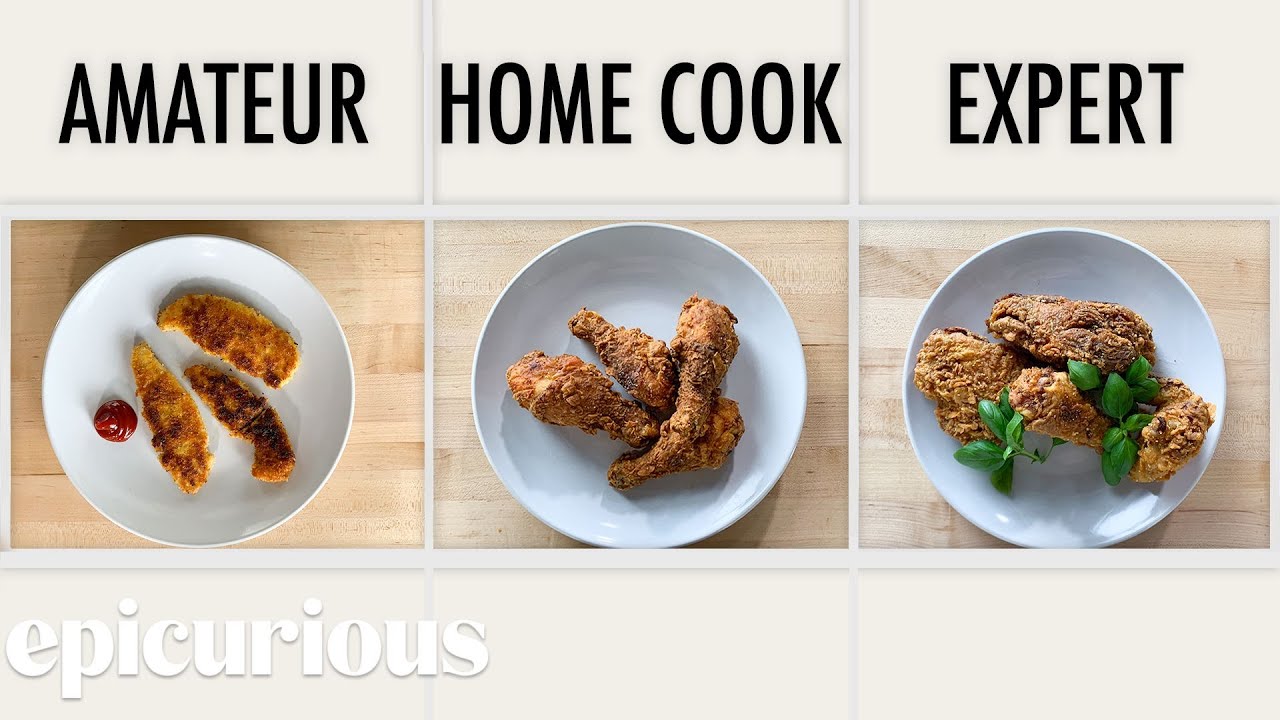
Epicurious dropped another entry in its “4 Levels of…” series on June 27, 2019, and this time the subject is fried chicken — arguably the dish every home cook thinks they’ve mastered until they see it done by someone with a thermometer and an actual plan. The video walks four cooks of escalating experience through their own method, then hands the last word to a food scientist who explains why each version turned out the way it did.
- Level 1’s amateur cook uses a straightforward flour, egg wash, second flour dredge, then pan-fries the pieces until golden.
- Level 2’s home cook brines the chicken in buttermilk overnight before frying, a step built around acid and enzymes tenderizing the meat.
- Level 3’s professional chef uses a custom spice blend, double-fries the chicken for extra crunch, and finishes it with herb-infused butter, while Level 4’s food scientist breaks down the Maillard reaction, starch gelatinization, and oil heat transfer behind all three approaches.
The Amateur’s Baseline
Level 1 is exactly the fried chicken most people grew up eating: chicken pieces dragged through seasoned flour, dunked in an egg wash, then dredged a second time before hitting the pan. It’s the version anyone can pull off on a weeknight, and it produces a legitimately golden, crispy crust — the video uses it as the control against which everything else gets measured.
Buttermilk Changes the Math
The home cook’s Level 2 entry is where the technique starts to separate from instinct. Marinating the chicken in buttermilk overnight isn’t just a flavor move — the brine’s acidity and enzymes break down proteins in the meat, which is what makes the chicken noticeably more tender and better at holding onto moisture once it hits hot oil. Layered seasoning on top of that brine gives the crust more to work with before it even touches flour.
The Chef’s Double-Fry and Butter Finish
Level 3 belongs to a professional chef who treats the recipe like a system to optimize rather than a checklist to follow. A secret spice blend goes into the dredge, and the chicken gets fried twice — once to cook through, once to shatter the crust — which locks in a texture the first two levels can’t touch. Finishing the pieces with herb-infused butter adds a layer of richness that plays directly against the crunch.
Each level builds on the last, but the food scientist is the one who explains why any of it actually works.
Food Scientist Explanations and Insights
Level 4 doesn’t add a new fried chicken recipe — it explains the three that came before it. The scientist walks through the Maillard reaction that browns the crust, how starch gelatinizes in the dredge to create structure, how buttermilk’s acid and enzymes tenderize the Level 2 chicken, and how oil heat transfer and moisture control ultimately decide whether a piece comes out crisp or soggy. It’s the same reason readers chasing kitchen technique elsewhere on the site — from everyday food science breakdowns to ingredient deep dives like the one on turmeric — tend to come away understanding not just what to cook, but why it behaves the way it does under heat.
Epicurious has run this format across dozens of dishes by mid-2019, but the fried chicken entry works because the stakes are so plainly visible in the crust itself — you can see the difference between a single dredge and a double fry before the food scientist even opens their mouth.







Be Calm & Sleepy ???? ASMR for Anxiety
Healthy Snacks For Back To School | Quick & Easy
The NEED for Acceptance Will Make You INVISIBLE – Jim Carrey
6 month Insane Calisthenics Transformation
Cecilia’s Life with Schizophrenia (Living with Hallucinations)