

 InfoSearched
Jordan Peterson’s near-year of silence ended with a story about doctors’ orders nearly killing him.
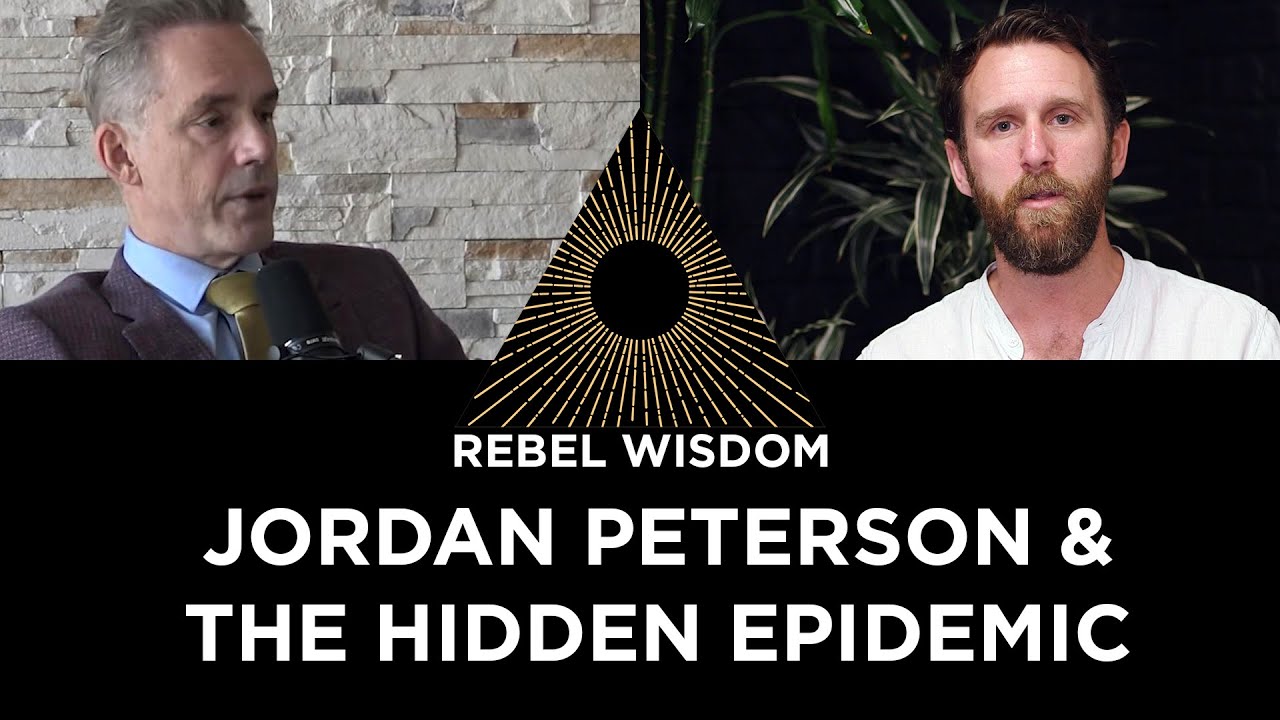
In June 2020, the Canadian clinical psychologist re-emerged after months out of public view to describe a medical ordeal that had nothing to do with cancel culture or online controversy. His family said he had become physically dependent on a benzodiazepine prescribed for anxiety, suffered severe withdrawal when he tried to taper off it, and ultimately required a medically induced coma in Russia to survive. Rebel Wisdom’s David Fuller uses that story as the spine of a new investigation, “On Jordan Peterson & The Hidden Epidemic,” that asks a harder question: how many other people are quietly going through the same thing.
- Peterson’s family disclosed he suffered akathisia and suicidal ideation after attempting to taper clonazepam (Klonopin) as prescribed by doctors, leading to a medically induced coma in Russia.
- Fuller interviews Robert Whitaker, a Pulitzer Prize finalist and author of Anatomy of an Epidemic, who argues mainstream psychiatry routinely downplays how long-term psychotropic use can produce severe physiological dependence and brutal withdrawal.
- The film applies Eric Weinstein’s “DISC” — Distributed Idea Suppression Complex — framework to explain how institutional and media incentives keep this pattern out of the mainstream conversation.
The Circumstances of Peterson’s Departure
Peterson had been open for years about struggling with anxiety, and at some point a doctor prescribed clonazepam, a benzodiazepine typically used for panic disorder and seizures. Benzodiazepines are effective short-term, but the clinical literature has long flagged a problem: taken for extended periods, they can produce physical dependence that makes stopping the drug dangerous rather than simply uncomfortable. According to his family’s account, when Peterson tried to come off the drug under medical supervision, he developed akathisia — a severe form of physical and psychic restlessness — along with suicidal ideation, and his condition deteriorated to the point that doctors abroad put him into a medically induced coma in Russia to manage the crisis.
Fuller’s point in laying this out isn’t to relitigate Peterson’s politics or his fame. It’s that a globally recognized psychologist, someone whose entire public brand rested on discipline and self-mastery, nearly died following exactly the instructions his doctors gave him. That’s the hook for the rest of the investigation: if this can happen to Peterson, with his resources and access to care, what’s happening to ordinary patients on long-term benzodiazepine prescriptions who don’t have a film crew documenting their story.
Robert Whitaker’s Case Against the Standard Narrative
Fuller brings in Robert Whitaker, the medical journalist and Pulitzer Prize finalist behind Anatomy of an Epidemic, who has spent years tracking outcomes data on psychiatric drugs. Whitaker’s argument, laid out across the interview, is that psychiatric medicine has a structural blind spot: drugs that are tested and approved for short-term symptom relief get prescribed for years or decades, and the physiological adaptations that follow — receptor changes, tolerance, dependence — get misread by clinicians as the return or worsening of the original illness rather than as a drug effect.
That misreading matters because it changes the treatment response. Instead of recognizing withdrawal or dependence, the clinical instinct is often to increase the dose or add another medication. Whitaker’s broader case, built out over multiple books and this interview, is that this pattern shows up across whole classes of psychotropic drugs, not just benzodiazepines, and that the long-term outcomes data rarely gets the same airtime as the short-term efficacy trials that get drugs approved in the first place.
Peterson followed his doctors’ advice to the letter — and it nearly killed him.
The DISC and Why This Story Doesn’t Get Told
To explain why this kind of long-term harm doesn’t dominate the health conversation, Fuller reaches for Eric Weinstein’s concept of the DISC — the Distributed Idea Suppression Complex. The idea isn’t that there’s a single conspiracy silencing critics of psychiatric medication; it’s that pharmaceutical industry funding, institutional liability, professional incentives, and media gatekeeping each independently push in the same direction, toward downplaying long-term drug harms, without anyone needing to coordinate it.
Applied to Peterson’s case, the DISC framework explains why a story with this much public interest still struggles to shift the underlying prescribing culture. Doctors keep prescribing benzodiazepines the way they were trained to. Media coverage treats Peterson’s illness as a personal medical drama rather than a systemic pattern. Fuller’s argument is that Peterson’s fame is precisely what breaks through that suppression, even briefly — because a public figure that visible can’t be quietly absorbed into the usual silence the way an anonymous patient’s story would be.
The investigation sits alongside a broader body of work examining how public figures process personal health crises under scrutiny — a theme Rebel Wisdom’s audience will recognize from other coverage of high-profile figures confronting serious mental health struggles in public view, or from Peterson’s own past commentary collected in pieces like Choose Your Sacrifice.
Fuller’s Outlook on Future Implications
Fuller doesn’t frame Peterson’s ordeal as a one-off cautionary tale about one drug or one doctor’s mistake. He frames it as the visible tip of a prescribing pattern that, according to Whitaker, has been building for decades across benzodiazepines, SSRIs, and other long-term psychiatric medications — patients started on a drug for a defined problem, kept on it far longer than the original trials ever tested, and left without a clear off-ramp if their body adapts to it.
Peterson’s own account, as relayed by his family, ends with the coma in Russia and a long recovery rather than a clean resolution. Fuller leaves the film’s real question open rather than answered: whether Peterson’s very public brush with benzodiazepine withdrawal actually changes how doctors prescribe these drugs, or whether it becomes just another story that flares up for a news cycle and then gets absorbed back into the same silence Whitaker spent the interview describing.






Why are people so Healthy in Japan?
Selma Blair Never Stopped Fighting
5 QUICK HEALTHY WEEKDAY BREAKFASTS | Easy ideas + recipes!
Tony Horton’s Insane Home Gym Tour
There’s a Mental Health Crisis Among Florida’s Kids