

 InfoSearched
A board-certified plastic surgeon is telling patients to try everything else before they ever book a hair transplant.
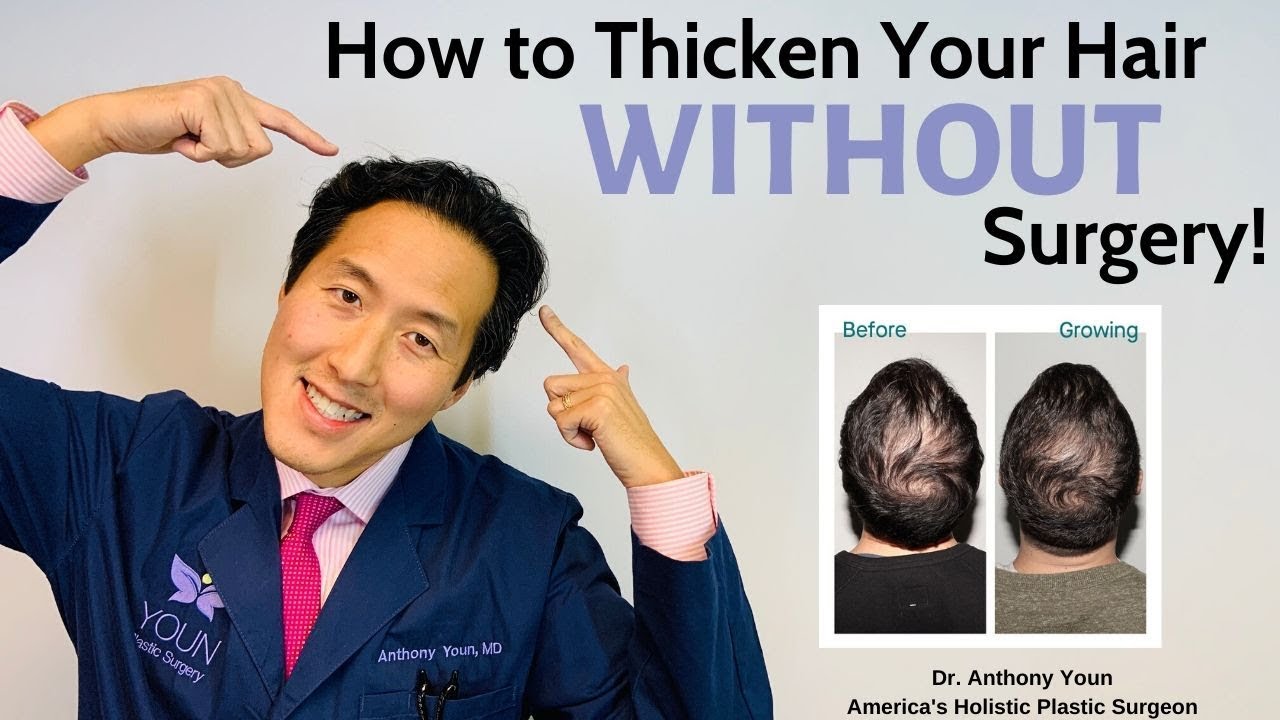
Dr. Anthony Youn, the Michigan-based plastic surgeon known for his social media breakdowns of cosmetic procedures, has released a video guide walking through how to treat thinning hair holistically before turning to surgery. In “How to Treat Your Thinning Hair Holistically and Thicken it Without Surgery,” Youn lays out five non-invasive strategies aimed at men and women dealing with hair loss, positioning them as the first line of defense against a problem that often gets treated with expensive transplants or prescription drugs instead.
- Dr. Youn outlines five holistic strategies for thinning hair: dietary changes, scalp massage, microneedling, red-light therapy devices, and hair-support nutraceuticals.
- Because hair is largely keratin protein, he recommends protein-rich foods like eggs, lean meats, and beans, plus biotin and vitamin B5.
- He names specific products as examples within his tiers, including the iRestore red-light therapy helmet and the nutraceutical brand Nutrafol.
Feeding the Follicle Before Treating It
Youn’s starting point isn’t a device or a serum — it’s the plate. Hair is composed primarily of keratin, a structural protein, so he argues that a diet light on protein is working against hair growth before any topical treatment even gets a chance. He points to eggs, lean meats, and beans as staples, alongside micronutrients like biotin and vitamin B5 that support keratin production. The same protein-first logic shows up across broader men’s nutrition guidance, including the picks in 8 Foods Men Should Eat Everyday (Science-Based), several of which overlap directly with what Youn recommends for hair health.
Mechanical Stimulation: Massage and Microneedling
The second tier in Youn’s regimen is physical rather than nutritional. He advocates scalp massages using essential oils to boost localized blood circulation, theorizing that better blood flow delivers more nutrients directly to dormant or miniaturizing follicles. Alongside massage, he recommends scalp-microneedling tools — small handheld devices covered in fine needles that create micro-injuries in the scalp, a technique some dermatology research has linked to increased follicle activity when paired with topical treatments.
Massage, microneedling, red light, targeted supplements, and diet — Youn’s whole pitch is that all five come before a scalpel ever enters the conversation.
Red-Light Therapy and Nutraceutical Support
Beyond diet and manual stimulation, Youn’s third tier leans on technology and supplementation. He points to low-level laser and LED therapy devices — citing the iRestore helmet by name — as a home-based option for stimulating follicles with red light. He pairs that with targeted nutraceuticals such as Nutrafol, formulated to address underlying triggers like oxidative stress and hormonal imbalance rather than simply masking symptoms. For readers building out a broader grooming routine around these fixes, the practical suggestions in 6 Beauty Tips To Look MORE Handsome *Game Changer* touch on similar territory of small, consistent habits compounding over time.
Role of Surgery and PRP
Youn doesn’t dismiss clinical intervention outright — he frames it as the next step, not the first one. Platelet-rich plasma (PRP) injections and surgical hair restoration remain on the table for patients who don’t see results from the holistic tier, but his video treats them as a fallback rather than a starting point, largely because of their cost and invasiveness compared to diet, massage, microneedling, red light, and nutraceuticals.
That order of operations is the whole thesis of the video: work through the five at-home tiers first, and only escalate to needles or a scalpel if the follicles don’t respond. Whether that holds up for advanced pattern baldness is a different question than the one Youn is actually answering — for early-stage thinning, his pitch is that the cheapest, least invasive options go first.







Robert Downey, Jr. – Don’t Chase That Thing | A Speech All Of Us Should Hear Once!
Things Only A True INFJ Would Understand
HIGH PROTEIN VEGAN MEAL PREP
Why Sitting Down Destroys You
How To Remember Everything You Learn