

 InfoSearched
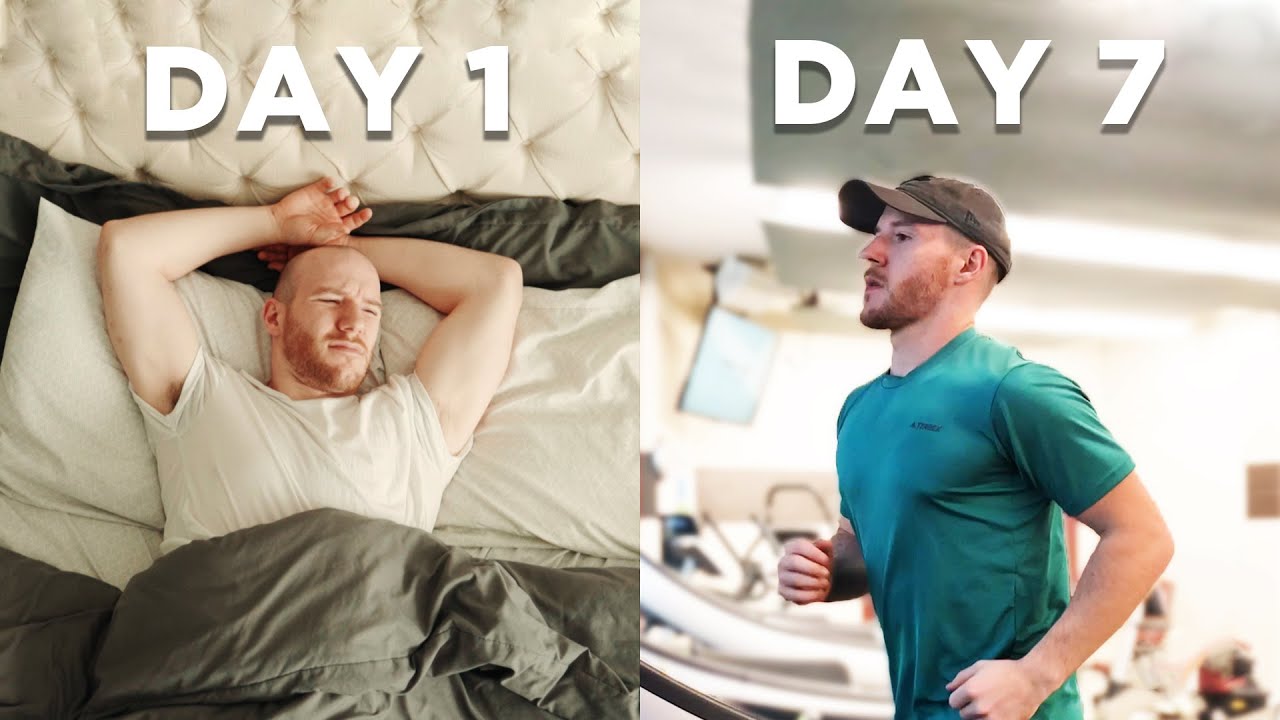
A YouTuber with 9 minutes and 42 seconds thinks he’s cracked the science of why you can’t get off the couch.
Joey Schweitzer, the founder and host of the YouTube channel Better Ideas, built his following on breaking down psychology and behavior into steps people can actually use. In “How to quickly get out of a rut,” he takes on one of the most common complaints in self-improvement: the feeling of being stuck, sluggish, and unable to start anything that matters. Schweitzer draws a hard line up front — this isn’t a video about clinical depression, which he flags as a separate and more serious condition that needs professional support — and instead zeroes in on the everyday motivational slump that hits almost everyone at some point.
- The video runs 9 minutes and 42 seconds and is built entirely around one core argument: waiting for motivation before acting is backward.
- Schweitzer explicitly separates a temporary rut from clinical depression, telling viewers the latter requires professional help rather than a motivational fix.
- His prescribed fix is lowering the threshold of action — taking a small, immediate physical or behavioral step rather than attempting a broad life overhaul.
The Motivation Trap
Schweitzer’s central point is that most people have the cause and effect backward. They assume motivation shows up first and action follows — so they sit around waiting to “feel like it” before they clean the apartment, hit the gym, or start the project that’s been sitting untouched for weeks. He argues the sequence actually runs the other way: action generates the momentum that produces motivation, not the reverse.
That reframe matters because it removes the excuse of waiting. If motivation were a prerequisite, a rut would be a waiting game with no clear end. Schweitzer treats it instead as a mechanical problem — something you can interrupt with a specific, small input, the same way you’d restart a stalled process rather than hope it fixes itself.
Lowering the Threshold of Action
Rather than urging viewers to overhaul their schedule, diet, or career in one sitting, Schweitzer pushes the opposite move: shrink the task until it’s almost impossible not to do it. A five-minute walk instead of a full workout. One paragraph instead of a finished chapter. The goal isn’t the outcome of that single small action — it’s breaking the inertia that’s been running the show.
Waiting for motivation to strike before taking action is fundamentally flawed — the small step comes first, the motivation follows.
That framing lines up with the broader behavioral-psychology idea that momentum compounds. It’s the same logic behind why psychologists studying boredom and laziness often prescribe tiny, almost trivial first steps rather than big resolutions — the size of the task matters less than the fact that it gets done.
Breaking the Feedback Loop
Schweitzer describes ruts as self-reinforcing loops: low output leads to guilt, guilt leads to avoidance, and avoidance leads back to more low output. The way out, in his framing, isn’t a single dramatic decision but a string of small wins that gradually rewire the pattern. Each completed micro-action chips away at the paralysis and replaces it with evidence that action is possible.
This is where the video’s practical advice diverges from the more common “just push through it” messaging. Schweitzer isn’t selling willpower — he’s selling a mechanism. The same principle shows up in habit-training content like retraining the brain to tolerate hard tasks, where the emphasis is on reducing resistance to starting rather than manufacturing more discipline.
Schweitzer wraps the video by circling back to his opening caveat: if what someone is feeling goes beyond a motivational slump — if it’s persistent, heavy, and doesn’t budge no matter how small the steps get — that’s a signal to talk to a professional, not a cue to watch another productivity video.








9 Healthy Lunchbox Hacks
Oats Pancakes | Healthy & Easy To Make Recipe For Kids | Oats Recipes for Breakfast
“Something Very Important Happens at 03:30 am”
Is Social Media Hurting Your Mental Health? | Bailey Parnell | TEDxRyersonU
My Plastic Surgery journey Part 2 (Recovery & Results)