

 InfoSearched
Small, boring, repeated actions—not willpower—are what actually build a life you want.
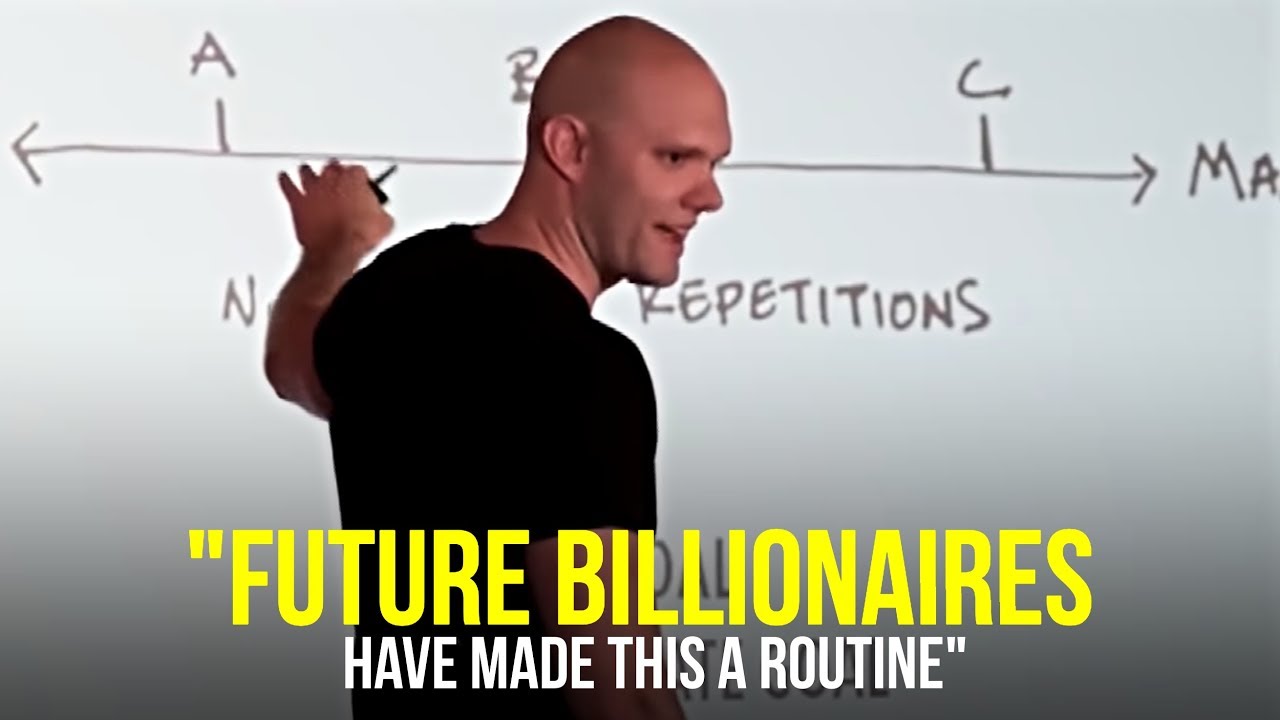
James Clear didn’t invent the idea that habits shape outcomes, but his October 2018 book “Atomic Habits: An Easy & Proven Way to Build Good Habits & Break Bad Ones” gave the concept a framework precise enough to actually use. A Video Advice presentation built around Clear’s material — sometimes shared online under titles promising to “change your future” — distills his core argument: you don’t need a dramatic overhaul, you need a system that compounds.
- Clear frames habits as the “compound interest of self-improvement,” where a 1% daily improvement — not a radical leap — drives long-term results.
- His central line: “You do not rise to the level of your goals; you fall to the level of your systems,” reframing success as a byproduct of process rather than ambition.
- He breaks every habit into a four-stage loop — cue, craving, response, reward — and converts that loop into the “Four Laws of Behavior Change”: make it obvious, make it attractive, make it easy, make it satisfying.
The 1% Argument Against Overnight Success
Clear’s pitch rejects the idea that transformation arrives in a single dramatic moment. Instead, he argues that habits function like financial compounding: a 1% gain repeated daily doesn’t look like much on day one, but stacked over months it separates people who stick to small systems from people chasing big, unsustainable swings. The framing matters because it removes the pressure of an all-or-nothing goal and replaces it with something trackable — did you do the small thing today or not.
This is also where Clear draws his sharpest distinction: goals versus systems. A goal is the outcome you want; a system is the process that produces it. Two people can share the identical goal — get in shape, build a business, save money — and get wildly different results because one has a system for showing up daily and the other is relying on motivation that runs out by February.
You do not rise to the level of your goals; you fall to the level of your systems.
The Habit Loop and the Four Laws
Clear’s structural contribution is the four-part loop — cue, craving, response, reward — a model that traces back to behavioral psychology but that he translates into an actionable checklist. A cue triggers a craving, the craving drives a response (the actual habit), and the response delivers a reward that reinforces the loop the next time the cue appears.
From that loop, Clear builds his “Four Laws of Behavior Change”: make it obvious, make it attractive, make it easy, make it satisfying. To break a bad habit, he flips each law — make it invisible, make it unattractive, make it difficult, make it unsatisfying. It’s a practical toolkit rather than an abstract theory, and it’s the section of the book most often quoted by people trying to apply it directly to money, fitness, or work routines — a lot like the trade-off logic covered in how I tricked my brain to like doing hard things.
Identity Over Outcome
The most quoted piece of Clear’s philosophy isn’t about productivity hacks at all — it’s about identity. He argues every small repeated action functions as a “vote” for the type of person you want to become. Skip the gym once and it’s a lapse; skip it consistently and it becomes evidence you’re using to redefine who you are. Clear’s argument is that behavior change sticks when it’s rooted in identity (“I am someone who trains”) rather than outcome (“I want to lose 20 pounds”), because identity survives bad days in a way that a scoreboard number doesn’t.
That framing lines up with a broader theme running through habit-and-productivity literature aimed at people trying to restructure how they spend their time, something explored from a different angle in how to hack time to be happier and more successful.
Clear doesn’t dismiss willpower and fixation on end goals as useless — he treats them as unreliable long-term engines. Willpower fades under stress; a well-designed system doesn’t need to be summoned, it just runs. That’s the pitch that turned “Atomic Habits” into a bestseller and turned Clear’s four-law framework into shorthand cited across fitness, finance, and self-improvement content well beyond the book itself.








Coronavirus Outbreak Update: Travel Ban, Spread Outside of China
The Future of Medicine
An Athlete Squatted 500 Reps In 20 Minutes – This Is What Happened To His Kidneys
The Benefits of Ashwagandha
Jamie Oliver’s principles for superb salads