

 InfoSearched
A former NASA engineer turned his YouTube audience into a 50,000-person science experiment, and the results explain why some people quit after five tries while others keep going for twelve.
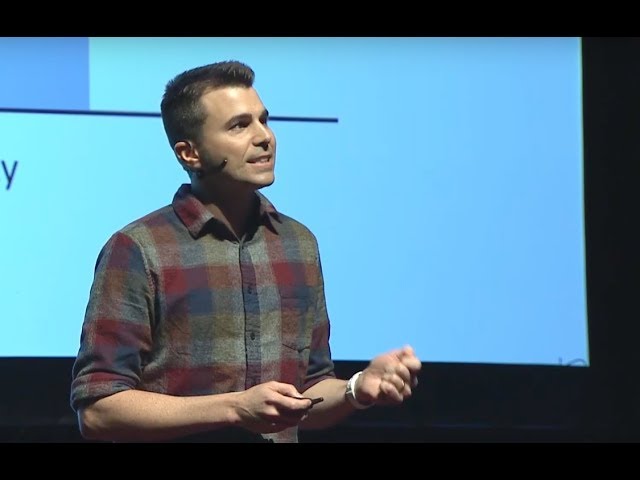
Mark Rober built the Mars rover Curiosity’s descent stage before he built a YouTube channel with 3 million subscribers and 400 million views. In an April 2018 talk at TEDxPenn, published by TEDx Talks on May 31, 2018, Rober laid out something he calls the “Super Mario Effect” — a mindset shift he tested not with a lab study but with tens of thousands of his own viewers solving a coding puzzle in real time.
- Rober recruited 50,000 of his 3 million subscribers to solve a programming puzzle guiding a car through a maze using if-else statements and while loops, with both groups starting on 200 points.
- The group penalized five points per failed attempt averaged only five tries and a 52 percent success rate, while the group that faced no point penalty for failing averaged twelve attempts and a 68 percent success rate.
- Rober tied the finding to his own engineering work, including an automated dartboard he built for “Jimmy Kimmel Live!” and a fluidized bed hot tub filled with liquefied sand to demonstrate buoyancy.
The Experiment Behind the Talk
Rober didn’t just theorize about failure aversion — he ran the numbers on a live audience. Splitting subscribers into two groups facing the identical maze-navigation puzzle, he varied only one thing: what happened when they failed. One group got a neutral prompt to simply try again. The other watched their score drop by five points every time they got it wrong.
The gap wasn’t subtle. Participants who lost points quit after an average of five attempts and solved the puzzle 52 percent of the time. Those who faced no penalty kept grinding — twelve attempts on average — and hit a 68 percent success rate. Same puzzle, same starting score of 200, wildly different outcomes based purely on how failure was framed.
Rober Names Invention After Mario
Rober’s explanation for the gap leans on something anyone who’s played a Mario game already knows instinctively: nobody agonizes over falling into a pit. You’re focused on Princess Peach, not the embarrassment of the fall. The game doesn’t dock your final score for dying — it just puts you back at the start of the level, still chasing the same goal.
Twelve attempts and a 68 percent success rate versus five attempts and 52 percent — the only variable was whether failure cost you points.
That framing, Rober argued, is the whole trick. Strip away the penalty for failing and the brain treats setbacks as frictionless steps toward the objective rather than evidence of inadequacy. It’s the same logic explored in how I tricked my brain to like doing hard things, where reframing effort itself changes whether people stick with something difficult.
From JPL to Jimmy Kimmel
Rober’s own career is the case study he keeps returning to. After earning mechanical engineering degrees from Brigham Young University and the University of Southern California, he joined NASA’s Jet Propulsion Laboratory in 2004, spending nine years there — seven of them on the Curiosity rover team, working on the Descent Stage that lowered the rover to the Martian surface and on sample-collection hardware for the rover’s top deck.
He left engineering for a public audience almost by accident: an iPad-based Halloween costume he built in 2011 launched both his costume company, Digital Dudz, and the YouTube channel that now carries his name. He’s since become a recurring guest on “Jimmy Kimmel Live!”, where he unveiled an automated dartboard rigged to never miss, and he built a fluidized bed hot tub — sand liquefied by pumped air — to physically demonstrate buoyancy for viewers. Both projects, he said, only got built because he let himself fail through dozens of prototypes without treating each miss as a defeat, a mindset that overlaps with the persistence themes in how falling behind can get you ahead.
Rober now splits his time doing research and development for a large tech company in Northern California, where he lives with his wife and son — still running the same playbook that got 68 percent of one YouTube experiment group through a coding maze they’d never seen before: give yourself permission to fail twelve times if that’s what it takes to reach Princess Peach.





20 MIN FULL BODY WORKOUT – Beginner Version // No Equipment I Pamela Reif
6 Healthy Breakfast Recipes (What I Eat In The Morning)
How craving attention makes you less creative | Joseph Gordon-Levitt
Dr. Wayne Dyer’s Life Advice Will Leave You SPEECHLESS
How to Hack Time to Be Happier & More Successful