

 InfoSearched
A Carnegie Mellon senior stood on the TEDxCMU stage and told 450 people that his ADHD isn’t broken wiring — it’s a different operating system.
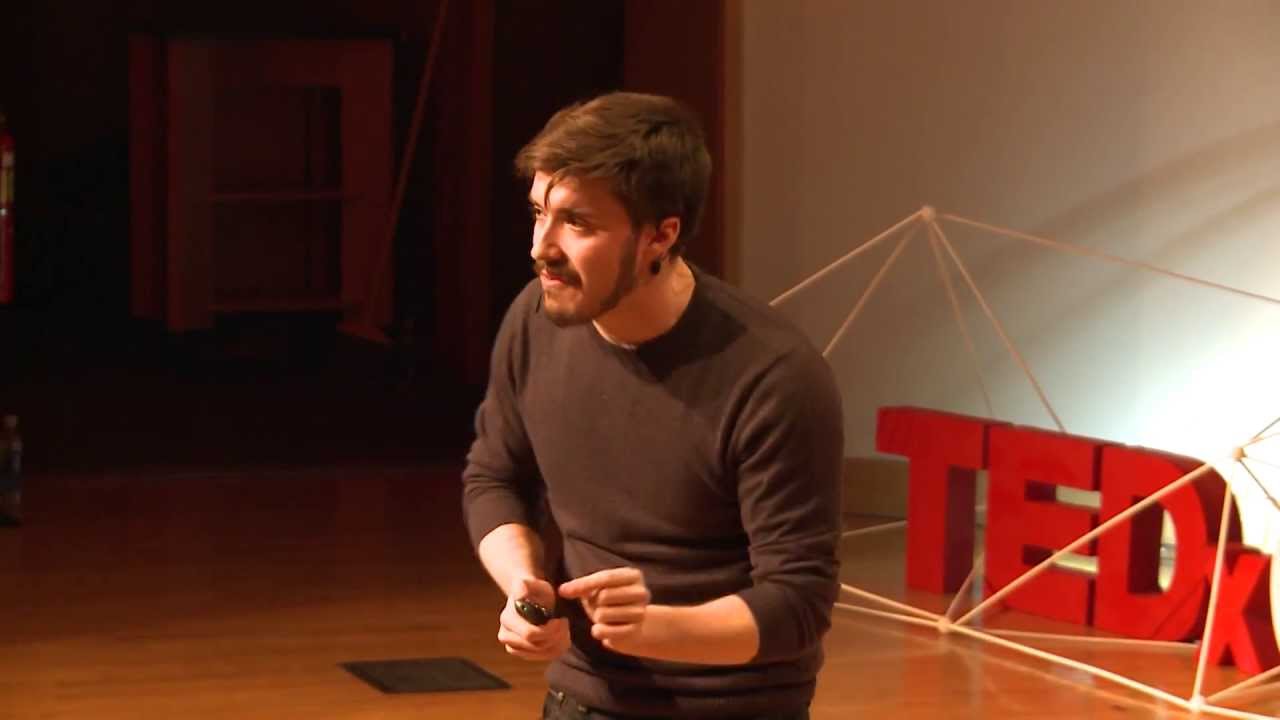
Stephen Tonti, a senior directing major and president of Carnegie Mellon’s Filmmaking Club, took the McConomy Auditorium stage in April 2013 for the fourth annual TEDxCMU conference. Speaking under the event’s “Spark” theme, Tonti used his own diagnosis to challenge the standard clinical framing of Attention Deficit Hyperactivity Disorder, arguing it should be understood as a difference in cognition rather than a disorder to be corrected.
- Tonti delivered his talk, “ADHD As A Difference In Cognition, Not A Disorder,” at the fourth annual TEDxCMU, organized around the theme “Spark” and emceed by Steven Das under event president Ketaki Desai.
- The conference, held in McConomy Auditorium, drew over 450 attendees for a lineup mixing professional speakers with selected student presenters.
- Tonti opened by listing his own resume — director, actor, writer, drummer, scuba diver, magician, and stopwatch repairer — before revealing his ADHD diagnosis, and drew on his recent thesis production of Mac Wellman’s “A Murder of Crows” to make his case.
An Unlikely Resume as the Opening Argument
Tonti didn’t start with statistics or diagnostic criteria. He started by rattling off everything he’s actually done: director, actor, writer, drummer, scuba diver, magician, even stopwatch repairer. Only after establishing that scattershot range of competence did he tell the room he’d been diagnosed with ADHD — flipping the expected narrative before anyone could reach for the usual assumptions about what an attention disorder is supposed to look like.
That structure was the argument in miniature. A resume built from wildly different disciplines, he suggested, isn’t a symptom of an inability to focus — it’s evidence of a cognitive style that moves differently between tasks than the conventional model assumes.
Reframing Focus Instead of Erasing It
The core of Tonti’s talk pushed back on the idea that ADHD means an absence of attention. Instead, he described it as a dynamic oscillation between two states: divided multi-attention, where focus splits across several inputs at once, and intense hyper-focus, where it locks onto a single task with unusual depth. Neither state is a deficit on its own, he argued — the mainstream clinical label just measures the condition against a baseline built for a different kind of mind.
ADHD isn’t a deficit of attention — it’s a difference in how attention moves.
That reframing carried a practical edge for Tonti, a working theater student balancing directing, acting, and running a student film club simultaneously. He pointed to his own creative output as evidence that the “difference in cognition” framework wasn’t abstract — it described how he actually worked.
The Classroom as Case Study
Tonti’s clearest example came from his own field: directing. He had just completed his thesis project in Carnegie Mellon’s School of Drama, staging Mac Wellman’s “A Murder of Crows,” a production that demanded the kind of intense, sustained hyper-focus he described in his talk. He used that experience to argue that creative and physically dynamic environments let his cognitive style operate at its strongest, while rigid, sedentary classroom structures do the opposite.
His conclusion pointed at institutions rather than individuals. Rather than treating ADHD as something to be managed into compliance with a fixed learning model, Tonti argued that schools and workplaces should build in more flexibility — accommodating different rhythms of attention instead of demanding everyone conform to one sedentary standard.
Building a Campus Film Community
Offstage, Tonti’s ADHD talk connected to a broader project he was already running: expanding Carnegie Mellon’s Filmmaking Club into a wider collective of film enthusiasts spanning multiple Pittsburgh-area colleges and universities. As the club’s president, he was using the same instincts he described on the TEDx stage — jumping between disciplines, chasing hyper-focused creative bursts — to build something collaborative rather than solitary.
Tonti’s talk was one entry in a student-heavy slate that TEDxCMU’s fourth conference built around “Spark,” and his angle stood out for being personal rather than clinical — a working director explaining his own mind to a packed McConomy Auditorium instead of citing someone else’s research. Whether his “difference in cognition” framing changes how Carnegie Mellon or anywhere else structures a classroom is a longer conversation, but for one afternoon in McConomy, it got 450 people rethinking a diagnosis most of them thought they already understood.






The SECRET to Super Human STRENGTH
BeFiT GO | Beach Body- 40 Minute Fat-Burning HIIT Workout
My Scars Won’t Kill My Bodybuilding Dreams | UNBREAKABLE ME
What Happens to Your Body While Fasting
We’re Inside A Larger Organism