

 InfoSearched
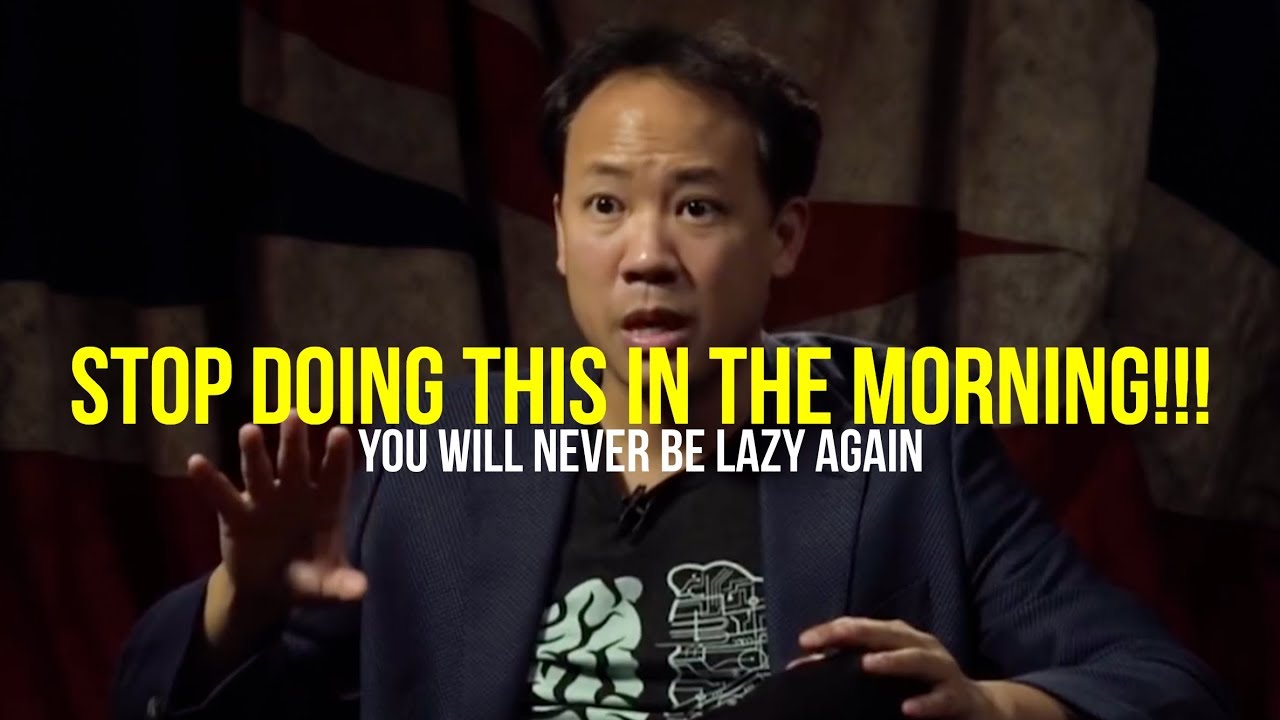
Jim Kwik says laziness isn’t a personality trait — it’s a systems problem.
In “You Will Never Be Lazy Again,” brain coach and accelerated learning expert Jim Kwik takes aim at one of the most common excuses people give themselves for not getting things done. He argues that chronic procrastination isn’t a character flaw baked into someone’s identity — it’s the predictable result of mismanaged energy, shaky beliefs about ability, and a total absence of structure. Fix the system, Kwik says, and the “laziness” tends to disappear on its own.
- Kwik frames unproductivity as a byproduct of mental fatigue, unclear goals, and overwhelm — not a fixed trait people are stuck with.
- He teaches breaking large objectives into bite-sized micro-actions so the brain registers immediate, tangible progress instead of stalling out.
- He points to deliberate daily routines and a deliberately arranged workspace as tools that cut decision fatigue and turn focus into a habit rather than a mood.
The Belief Behind the Behavior
Kwik’s starting point is that behavior is belief-driven. Someone who tells themselves “I’m just lazy” is operating from a story, not a diagnosis, and that story becomes self-fulfilling. He reframes the delay itself: what looks like laziness is usually mental fatigue, a lack of clarity about the next step, or sheer overwhelm at the size of a task. That distinction matters because a belief problem is solvable in a way that a supposed personality defect isn’t — a point he returns to often in his broader work on rewiring the unconscious mind around ability and self-image.
Breaking Goals Into Micro-Actions
Once the belief is reframed, Kwik’s practical fix is scale. Big, monolithic goals — write the book, launch the business, get in shape — trigger the exact paralysis he’s describing, because the brain can’t see a foothold. His answer is to chop the objective into micro-actions small enough that starting feels almost trivial. Each completed step gives the brain visible, immediate proof of progress, and that proof is what builds momentum, lowering the psychological barrier to the next action and the one after it.
The brain doesn’t need motivation to get moving. It needs proof it’s already moving.
That framing lines up with the same mechanism Kwik and other accelerated-learning coaches point to elsewhere — the idea that momentum, not willpower, is what actually gets people through hard tasks, a theme covered in how small wins retrain the brain to like difficult work.
Routine and Environment as Behavioral Triggers
The other half of Kwik’s prescription is structural rather than psychological. Fixed times for waking, working, and resting strip out decision fatigue — there’s no daily negotiation over when to start, because the schedule already decided. He pairs that with environmental design: a workspace arranged specifically for focus becomes a physical cue that triggers productive behavior automatically, so consistency stops depending on however motivated someone happens to feel that morning. It’s the same logic behind psychologists’ strategies for tackling boredom and low motivation — remove the friction before you ever have to rely on discipline to overcome it.








Is Social Media Hurting Your Mental Health? | Bailey Parnell | TEDxRyersonU
Fast & Dirty Circuit Workout | Alex Silver-Fagan
I Left Her Because Of This…HER REACTiON
Use This To Control Your Brain
LARRY WHEELS – EPIC BODY TRANSFORMATION – HARDCORE GYM MOTIVATION