

 InfoSearched
A Belgian referee walks onto the TEDx stage blowing a whistle, and the lesson isn’t about football at all.
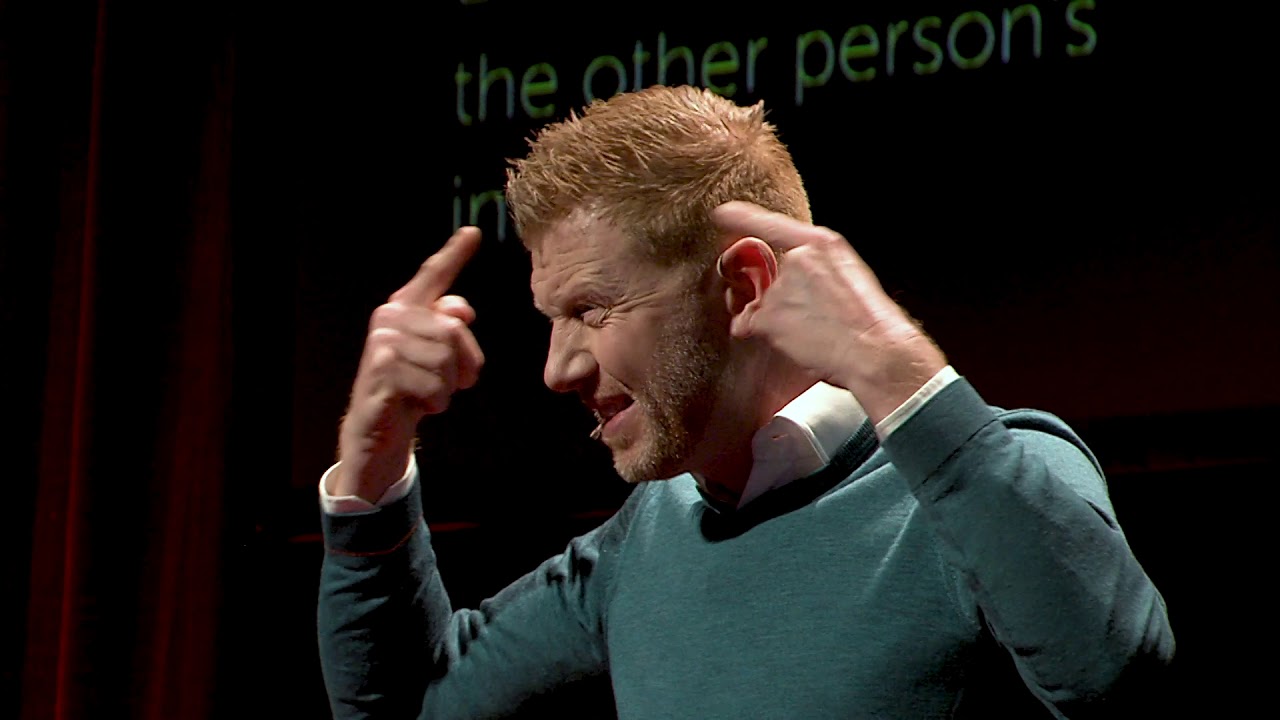
Frederik Imbo opens his TEDxMechelen talk, “How not to take things personally?”, dressed head to toe as an amateur football referee, whistle in hand. It’s a deliberate prop: Imbo, a Belgian actor and communication coach, explains that he actually took up refereeing on weekends — for roughly 20 euros a match — specifically to practice staying calm while players screamed in his face. From there he builds a talk about why criticism stings, and what to do about it, using a simple visual: a coin toss.
- Imbo took up amateur refereeing for about 20 euros a match purely to train himself to stay unruffled under verbal abuse and high stress.
- He frames the core choice as “Do you want to be right or do you want to be happy?” and uses a referee’s coin toss to represent two mental strategies: heads (“it’s not about me”) and tails (“it is about me”).
- Before founding his communication company Imboorling, Imbo studied theatre at the Royal Conservatory of Ghent, acted in television series, and trained in nonviolent communication.
The Critical Value of Whistleblowing
Imbo’s point in opening as a referee isn’t a gimmick for laughs. Referees absorb constant, personal-sounding abuse — a missed offside call, a yellow card, a bad bounce — and have to keep the match moving without internalizing any of it. Imbo treats that job as a training ground: if you can stand on a muddy pitch getting shouted at for 20 euros and not take it home with you, you’ve built a skill that applies to every meeting, family dinner, and argument with a partner.
He traces the reflex to take things personally straight to the ego — the part of us that endlessly wants acknowledgment, insists on being right, and burns emotional energy defending itself. That framing lines up with the argument he lays out in more detail elsewhere, that the ego is betraying you from being your genuine self, constantly hijacking situations that were never about you in the first place.
Two Sides of the Same Coin
Imbo’s central device is a literal coin toss, with each side representing a different mental move.
Heads — “It’s not about me.” This side shifts focus off the defensive “me, myself, and I” and onto the other person’s actual situation. Someone checking their phone during your presentation, or tailgating you on the highway, is far more likely acting out of their own stress, deadline, or emergency than making any statement about you. Reading the moment through their circumstances rather than your ego drains the sting immediately.
Tails — “It is about me.” Sometimes criticism does land hard, and Imbo says that’s worth paying attention to rather than dismissing. When a comment cuts deep, it’s usually because it touched an insecurity that was already there. His advice is to name the vulnerable feeling, extend yourself some empathy, and then say the boundary out loud instead of stewing on it — which mirrors the work of learning to eliminate self-doubt rather than let it run quietly in the background.
Do you want to be right or do you want to be happy?
From the Pitch to the Boardroom
Imbo’s credibility on this isn’t just theoretical. He studied theatre at the Royal Conservatory of Ghent, spent years acting in television series, and later trained specifically in nonviolent communication before founding his company, Imboorling. That combination — performance training plus communication technique — is what now shows up in the workshops, corporate trainings, and one-on-one coaching sessions he runs, all built around the same question he poses on stage: whether a comment, a slight, or a tailgating driver is actually about you, or just passing through.
Imbo still puts on the referee kit when he tells this story, whistle and all — it’s the detail that makes the talk land, because nobody forgets that the guy teaching them not to take things personally spent his weekends getting screamed at by amateur footballers for 20 euros a game.








Fast & Dirty Circuit Workout | Alex Silver-Fagan
Tony Horton’s Insane Home Gym Tour
5 Primal Movements you NEED to do
Living with Schizoaffective Disorder (Experiencing Psychosis, Paranoid Delusions and Hallucinations)
BEAUTY TIPS