

 InfoSearched
Peace of mind, After Skool argues, isn’t something you build — it’s something you stop covering up.
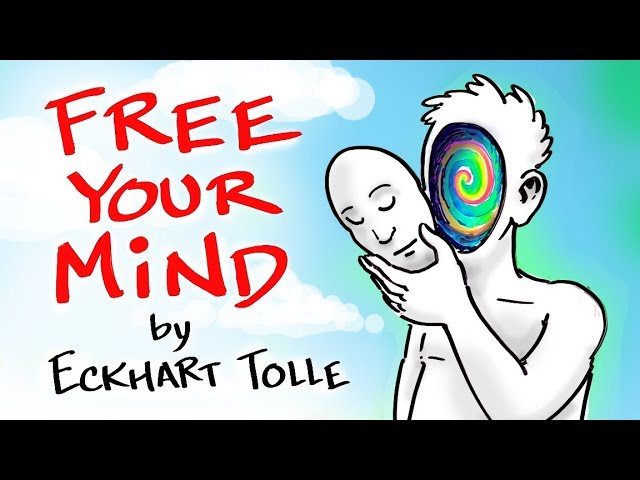
After Skool, the animation channel known for turning philosophy and psychology into hand-drawn whiteboard explainers, released “How to be Completely Carefree – Teachings from Eckhart Tolle” to break down one of the central claims in Tolle’s 1997 best-seller The Power of Now: that the anxiety most people carry around isn’t caused by their circumstances, it’s caused by their relationship to their own thoughts. The video skips the productivity-hack approach entirely and goes straight to Tolle’s core argument about identity, ego, and the present moment.
- The animation is built directly on Tolle’s teachings from The Power of Now, not general self-help advice.
- Its central claim is that suffering comes from over-identifying with the ego and the nonstop stream of thoughts running through the mind, rather than from external circumstances themselves.
- The video presents three practical moves: observe mental chatter without attaching to it, redirect attention into the present moment (what Tolle calls “the Now”), and accept what is happening rather than resisting it.
Consciousness Versus the Thinking Mind
The animation’s starting point is a distinction Tolle repeats throughout his work: you are not your thoughts. Most people, the video explains, run on autopilot — reacting to a nonstop internal monologue about the past and future as if that voice were their identity. After Skool illustrates this as two separate layers: the compulsive thinker running commentary, and the quieter awareness underneath that’s actually watching it happen.
That gap matters because it’s where freedom lives, according to Tolle’s framework. The moment you can observe a worried thought instead of becoming it, the thought loses its grip. It’s less about eliminating thoughts and more about no longer mistaking the noise for the self.
Ego as the Source of the Burden
The video ties this directly to Tolle’s concept of the ego — not vanity in the everyday sense, but the mental construct built from memories, labels, grievances, and imagined future scenarios that a person clings to as “who I am.” After Skool’s drawings show this ego as a kind of backpack loaded with old resentments and hypothetical disasters, weight that has nothing to do with what’s actually happening right now. The heavier that pack gets, the harder it becomes to feel carefree, no matter how good someone’s actual circumstances are.
“Realize deeply that the present moment is all you ever have.”
That line, drawn from The Power of Now, is the hinge the whole video turns on. Readers looking at similar territory around thought patterns and identity may recognize the overlap with the piece on how the ego can betray you from being your genuine self — both trace psychological weight back to the same root: mistaking constructed identity for reality.
Presence as the Practical Exit
Where the animation gets useful rather than abstract is in describing how to actually shift into “the Now.” Tolle’s method, as After Skool renders it, isn’t meditation retreats or hour-long rituals — it’s noticing, mid-thought, that attention has drifted into a memory or a hypothetical, and pulling it back to whatever is physically happening in that second: breath, sound, the body. Repeated enough times, that redirection becomes less effortful and worry loses its usual runway to spiral.
This is also where the video separates itself from generic advice about “staying positive.” It’s not asking viewers to think happier thoughts — it’s asking them to notice thinking itself as an activity they can step back from, which lines up with the broader argument made in why excessive worrying is a habit that can be broken rather than a fixed personality trait.
Accepting What Is
The final piece After Skool draws out is acceptance — not passive resignation, but dropping the internal fight against circumstances that have already happened or can’t currently be changed. Tolle’s framing, as the video lays it out, is that resistance to the present moment is what generates most of the felt suffering, more than the situation itself. Accept the traffic jam, the diagnosis, the argument, whatever it is, and the mental noise around it quiets considerably faster than trying to argue it out of existence.
After Skool built the video the same way it’s built its catalog on Stoicism, Taoism, and Jungian psychology: strip a dense philosophical text down to its clearest through-line and hand it to viewers in under ten minutes of whiteboard drawing. For Tolle’s readers, the value of this particular one is that it doesn’t dumb down The Power of Now so much as it gives people who’ve never opened the book a direct line to the argument that made it a fixture on best-seller lists in the first place.





6 Signs of a Toxic Person
11 Optical Illusions That’ll Reveal Your Personality Type
SPINE SURGEON reacts to Chiropractic Y-Strap Manipulations
Terry Crews on intermittent fasting
Why are people so Healthy in Japan?