

 InfoSearched
Your body can’t actually tell the difference between panic and excitement — Mel Robbins says that confusion is the whole key to shutting down anxiety.
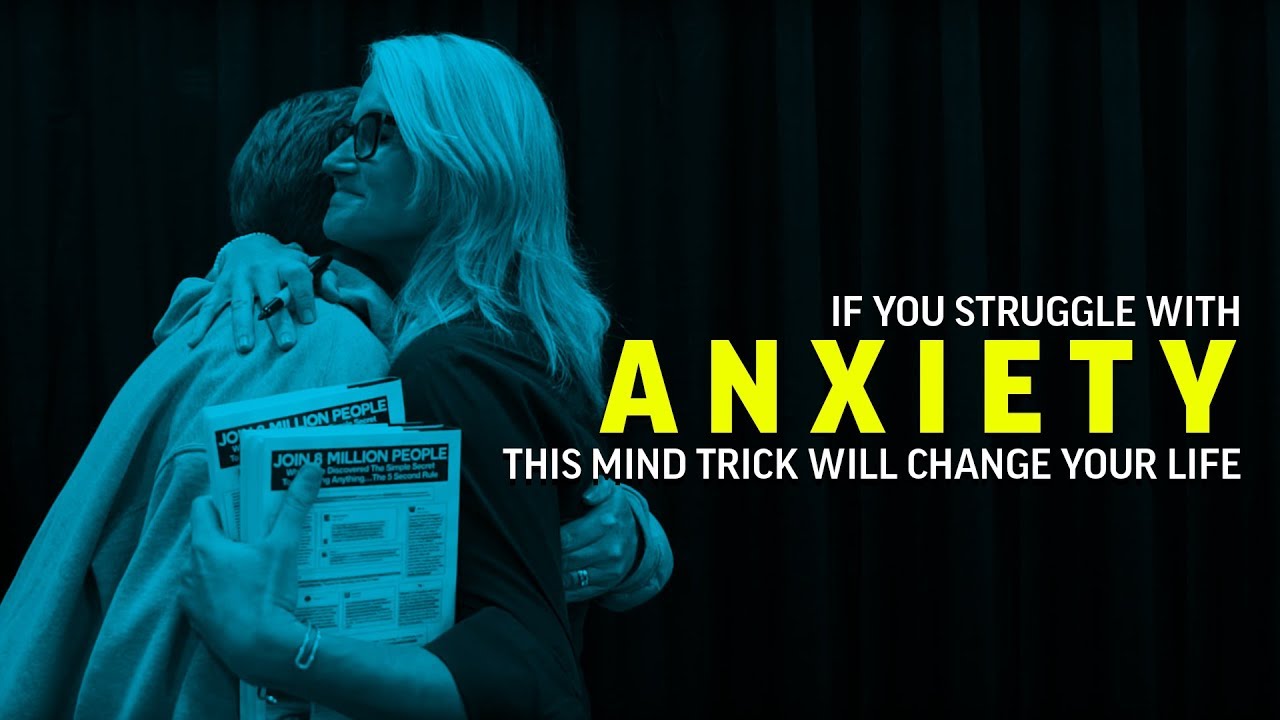
Mel Robbins, the motivational speaker and author who built a following on the strength of her 2017 bestseller The 5 Second Rule, has released a video breaking down what she calls a “mind trick” for anxiety sufferers. Titled If You Struggle With Anxiety, This Mind Trick Will Change Your Life, the presentation walks through the physiology of a panic response and offers a specific mental technique — anxiety reappraisal — for interrupting it before it spirals. Robbins frames the fix not as calming down, but as relabeling what’s already happening in the body.
- Robbins explains that the physical markers of anxiety — elevated heart rate, a tightening chest, adrenaline spikes, and blood flow redirected away from digestion — are physiologically identical to the body’s response to excitement.
- She cites behavioral research out of Harvard and UCLA supporting “anxiety reappraisal,” the practice of relabeling nervous arousal as excitement rather than trying to suppress it.
- Her method combines three tools: the 5-4-3-2-1 countdown from her signature 5 Second Rule, saying aloud “I am excited,” and building a vivid “anchor thought” of a positive outcome after the stressful event.
The Physiology Behind the Panic
Robbins starts from a simple observation: your nervous system doesn’t have a separate setting for fear and a separate setting for excitement. Whether you’re about to walk into a job interview or step onto a stage, the sympathetic nervous system fires the same way — heart rate climbs, the chest tightens, adrenaline floods in, and blood shifts away from digestion toward the muscles. The body is prepping for action either way. What changes is the story your brain tells about why it’s happening.
That distinction matters because most people’s default response to anxiety is to try to force themselves to calm down — telling themselves to relax, breathe slower, stop shaking. Robbins argues that instruction fights directly against what the body is already doing physiologically, which is why it so often fails in the moment it’s needed most. Readers who’ve explored how quickly the brain can shift gears under the right cue may recognize the logic from Your Brain Will Change in a Few Seconds.
Reframing Fear as Excitement
Instead of suppressing the arousal, Robbins teaches viewers to relabel it. If the heart-pounding, chest-tightening sensation is identical whether you’re terrified or thrilled, the brain will accept either interpretation — it just needs a nudge toward the more useful one. That’s the core of anxiety reappraisal: verbally declaring “I am excited” in the moment gives the brain a competing narrative to attach to the same physical signals, rather than letting the mind default to catastrophic “what-if” thinking.
Your body doesn’t know the difference between anxious and excited — only the story you tell it does.
Robbins frames this as reclaiming agency at the exact moment the brain would otherwise hand control over to a panic loop. The technique doesn’t ask the body to power down; it asks the mind to catch up with a truer, more constructive interpretation of what’s already occurring.
The 5 Second Rule and the Anchor Thought
To actually interrupt the spiral before reappraisal can take hold, Robbins deploys her own 5 Second Rule — counting down 5-4-3-2-1 to jolt the prefrontal cortex back into control before the more primitive, reactive parts of the brain take over. That countdown, she explains, is a physical override switch, not a metaphor: it’s a few seconds of deliberate focus that breaks the automatic momentum of a rising panic response.
From there, she teaches viewers to build what she calls an anchor thought — a specific, vivid mental picture of a positive outcome on the other side of the nerve-wracking moment. That could be walking out of an interview room having nailed the answers, or hugging a loved one at the gate after a flight lands safely. The point is specificity: a concrete image gives the brain a constructive story to pair with the arousal it’s already feeling, which crowds out the vague, catastrophic “what if this goes wrong” loop that anxiety runs on. The approach echoes ideas explored in How To Eliminate Self Doubt Forever & The Power of Your Unconscious Mind, where redirecting the unconscious narrative does the heavy lifting instead of willpower alone.
Robbins is explicit that this isn’t about denying the anxiety exists or pretending the stakes aren’t real. It’s about giving the nervous system’s already-activated state a direction to run in — toward the countdown, the declaration, and the anchor image — before it runs toward panic on its own.







7 Signs You Are A Heyoka, The Most Powerful Empath
The gentle power of highly sensitive people
Hooded Eyes Do’s & Don’ts!
Jamie Oliver’s principles for superb salads
Six Lies That Block Your Spiritual Awakening & Keep You Trapped In The Third Dimension