

 InfoSearched
A teenage plot to shoot up his school or a mall in 1996 wasn’t stopped by police — it was stopped by a friend who offered him a shower and a bed for the night.
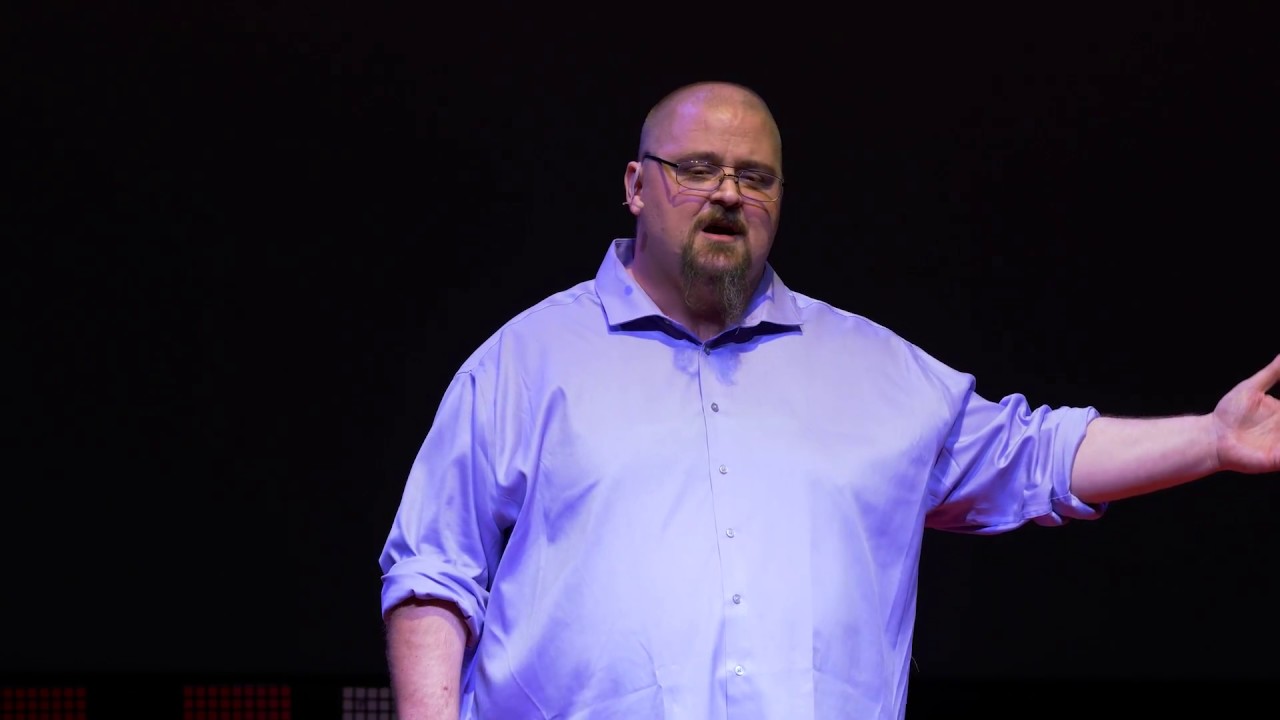
Aaron Stark spent his teenage years bouncing through roughly 40 schools, watching domestic violence unfold at home, and sometimes sleeping without a roof over his head. By the time he was a teenager, he had a plan to attack either his high school or a local mall and then kill himself. In his TEDxBoulder talk, “I Was Almost A School Shooter,” delivered June 26, 2018, the now-39-year-old Stark walks through exactly how close he came — and the ordinary act of kindness that pulled him back.
- Stark attended roughly 40 different schools growing up in an unstable, violent household, and by 1996 he had settled on a plan to attack his high school or a nearby shopping mall before turning the gun on himself.
- His friend Mike Stacey — with no idea what Stark was planning — invited him in for food, a shower, and a place to stay for several days; Stark’s inability to get his hands on a gun and Stacey’s hospitality combined to break the spiral.
- Stark went public with his story after the February 2018 shooting at Marjory Stoneman Douglas High School in Parkland, Florida, sending an open letter to Denver’s 9News (KUSA) that aired on “Next with Kyle Clark,” which led to a March 2018 Washington Post op-ed titled “I would have been a school shooter if I could’ve gotten a gun.”
A Childhood Built on Instability
Stark doesn’t dress up his upbringing. He describes an environment defined by domestic abuse, homelessness, and constant relocation — roughly 40 schools by his own count, which meant he was almost always the new kid, almost always a target. Relentless bullying compounded the instability at home, and he developed a self-hatred severe enough that, by his own telling, he stopped feeling like a person at all.
That combination — no stability, no friends, no adult intervention — is the same territory covered in reporting on what actually drives isolation and depression in young people, and it’s the foundation Stark returns to again and again in his talk: kids don’t arrive at violence out of nowhere.
The Plan That Almost Happened
By 1996, Stark had moved from suicidal thinking into an actual plot. He wanted to punish the people around him, and he’d decided the target would be either his high school or a local mall, followed by killing himself. He was actively trying to acquire a firearm to carry it out. This wasn’t an abstract fantasy — it was a specific plan with a specific goal, and Stark says he was close enough to execution that only two things stood in the way: he couldn’t get a gun, and one friend didn’t turn him away.
One Night at Mike Stacey’s House
Stark’s plot unraveled at a friend’s front door. He went to Mike Stacey’s house intending it to be a final goodbye before carrying out his plan. Stacey, who had no idea what Stark was actually there for, simply let him in — offering a shower, food, and a place to crash for several days. That ordinary hospitality, Stark says, is what broke the momentum toward violence.
“When someone treats you like a person when you don’t even feel like a human, it’ll change your entire world.”
It’s the same principle underlying a lot of the writing on how isolation and mistreatment shape someone’s mental state — Stark’s argument is the inverse of that: one person’s basic decency reversed a trajectory that was headed toward mass murder.
From Silence to a Viral Letter
Stark kept his story to himself for more than two decades. That changed after the February 2018 shooting at Marjory Stoneman Douglas High School in Parkland, Florida, which killed 17 people and reignited the national argument over school safety and gun access. Stark wrote an open letter and submitted it to Denver’s 9News (KUSA), where it aired on “Next with Kyle Clark.” The letter went viral, and by March 2018 he’d written an op-ed for The Washington Post headlined “I would have been a school shooter if I could’ve gotten a gun.”
That op-ed is what put him on stage at TEDxBoulder in June 2018, where he laid out his central message: the kids who seem least deserving of attention and warmth are frequently the ones who need it most, and reaching them before they reach a breaking point is cheaper, simpler, and more human than anything else on the table.


After watching this, your brain will not be the same
Fighting back against fake health news
Choose Your Sacrifice – Jordan Peterson’s Best Advice to Young Adults
Man Who Survived Jump From Golden Gate Bridge Shares His Story
How I Tricked My Brain To Like Doing Hard Things