

 InfoSearched
A failed grade twice, a grocery-bagging job in California, and a TEDx stage — Ricardo Lieuw On’s path to teaching memory tricks started with academic failure, not talent.
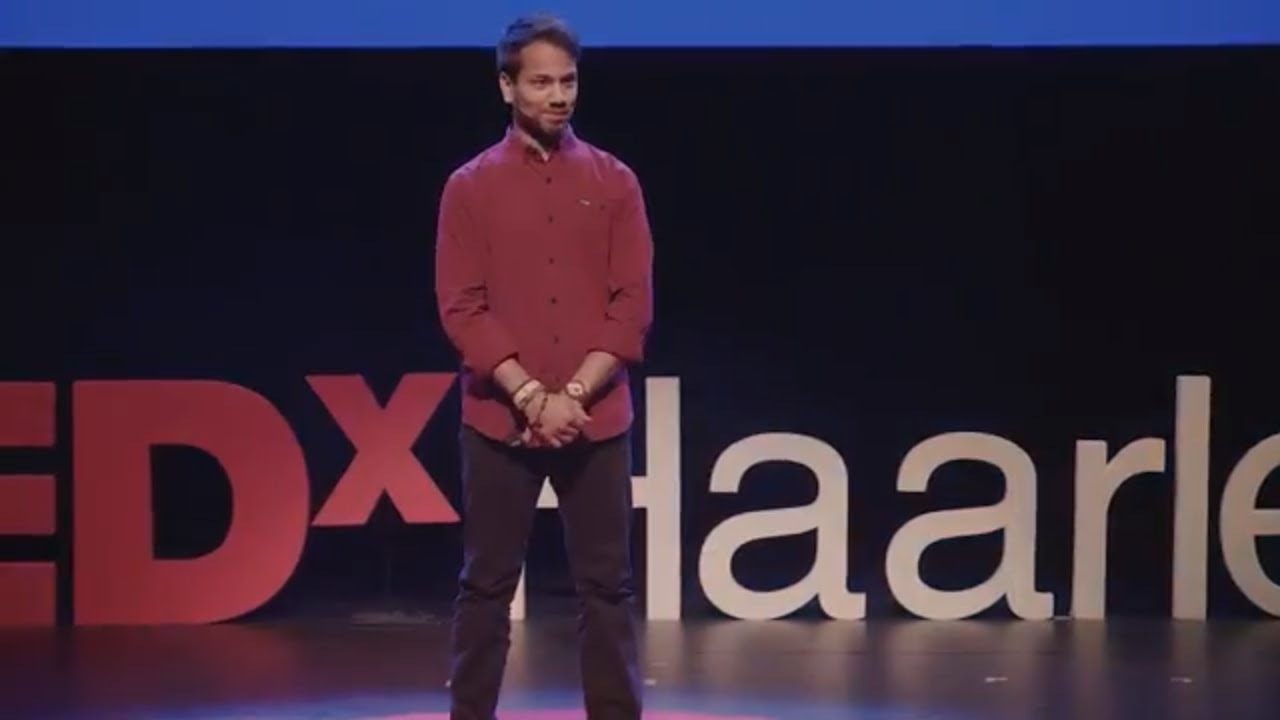
Ricardo Lieuw On stood in front of the TEDxHaarlem crowd on November 24, 2017, and opened with a confession most speakers would bury: he failed a grade twice in high school and needed seven years to get his diploma. His talk, “How to triple your memory by using this trick,” walked the audience through the same method of loci technique he now teaches through the Dutch educational organization REMIND, where he also co-organizes the Dutch National Memory Championships for high school students.
Rather than lecture from a slide deck, Lieuw On turned the room into a live experiment. He had attendees attempt to memorize a 10-word list in order within 30 seconds using ordinary rote effort, then ran them through the same list using vivid, absurd imagery pinned to parts of their own bodies — a technique memory athletes have used for decades to hold long sequences in order.
- Lieuw On failed a grade twice and took seven years to finish high school, then spent nine months bagging groceries at a supermarket in California before deciding to study psychology.
- He experimented with his own study habits enough to cut his textbook chapter reading time from three hours down to one hour, which helped him complete an honors degree.
- His live demonstration used the method of loci — linking list items to body parts through absurd imagery, such as a burning sun dropped on someone named John’s feet or miniature basketball players on kneecaps — to show a measurable jump in recall accuracy over plain memorization.
From Grocery Bagger to Memory Trainer
Lieuw On’s backstory is the spine of the talk. After two failed grades and a diploma that took seven years instead of the usual six, he moved to California and spent nine months as a supermarket grocery bagger. It was there, away from a school system that had repeatedly told him he wasn’t cutting it, that he realized he actually liked learning — just not the way it had been forced on him in a classroom. That realization sent him into a psychology degree, where he started treating his own study routine as a testable system rather than a fixed habit.
The payoff he cites is concrete: cutting his per-chapter reading and retention time from three hours to one, a change that let him finish an honors-level degree. That number — three hours down to one — became the credibility hook for the rest of the talk, proof that the techniques he was about to teach weren’t just theory.
The Baseline Test and the Memory Palace
Lieuw On built the demonstration around a direct comparison. First, the TEDxHaarlem audience tried to memorize a 10-word list, in order, in 30 seconds using whatever method they’d normally use — mostly repetition. Then he introduced the method of loci, sometimes called a memory palace, but with a twist: instead of imagining rooms in a house, he had the audience anchor each word to a part of their own body, in sequence.
The images he supplied were deliberately ridiculous — a person named John dropping a burning sun onto his own feet, tiny basketball players dribbling on someone’s kneecaps. That absurdity is the mechanism, not a joke on the side: vivid, illogical, sensory-heavy images stick in memory far better than plain words or numbers, and attaching them to a body part gives each one a fixed, ordered slot to hang from. Recall accuracy on the second pass jumped noticeably compared with the rote-memorization baseline.
The point was never memorizing ten words. Learning how to experiment with your own brain is the actual skill.
Substantial Benefits Beyond Simple Tricks
Lieuw On was careful to head off the obvious objection: in an age of smartphone cameras and instant search, why train memory at all? His answer reframed the whole talk. He argued the value isn’t in holding grocery lists in your head — it’s in the meta-skill of experimentation, the same instinct that let him personally test his way from three-hour study sessions down to one-hour sessions in college. Readers chasing similar productivity gains in their own routines might find useful parallels in pieces like How I Tricked My Brain To Like Doing Hard Things, which covers a comparable approach to rewiring habitual resistance to effort.
He closed the framework down to three words: awareness, experience, experimentation. Awareness that conventional study habits are rarely optimized for the individual, experience gained by actually testing alternatives, and experimentation as the ongoing practice of refining what works. For readers interested in the broader psychology of self-directed learning and belief change, How To Eliminate Self Doubt Forever & The Power of Your Unconscious Mind touches similar territory on retraining default mental patterns.
The Homework: A Card in Every Wallet
Lieuw On didn’t end on a slide. He had cards distributed to the TEDxHaarlem audience and instructed everyone to write down one personal mnemonic experiment they’d commit to trying, then carry that card in their wallet as a physical reminder. It was a small, deliberately low-friction ask — the same kind of incremental behavior change he credited for his own jump from three-hour chapters to one-hour chapters years earlier.
That’s the whole pitch, boiled down to a wallet card: pick one experiment, run it on yourself, and see if it actually cuts your time down the way his did. No app, no course — just the burning sun on John’s feet, and whatever image you come up with for your own list.








The Most PAINFUL Thing a Human Can Experience?? | Kidney Stones
3 Science-Based Tips to Lose Belly Fat
ASMR Sound & Visual Hypnosis Therapy | Help For Seasonal Depression
How to stay calm when you know you’ll be stressed
Ebola didn’t just disappear… It still kills today massively at an alarming rate…