

 InfoSearched
A Roman slave who became one of history’s sharpest philosophers left behind a one-line test for every thought that enters your head.
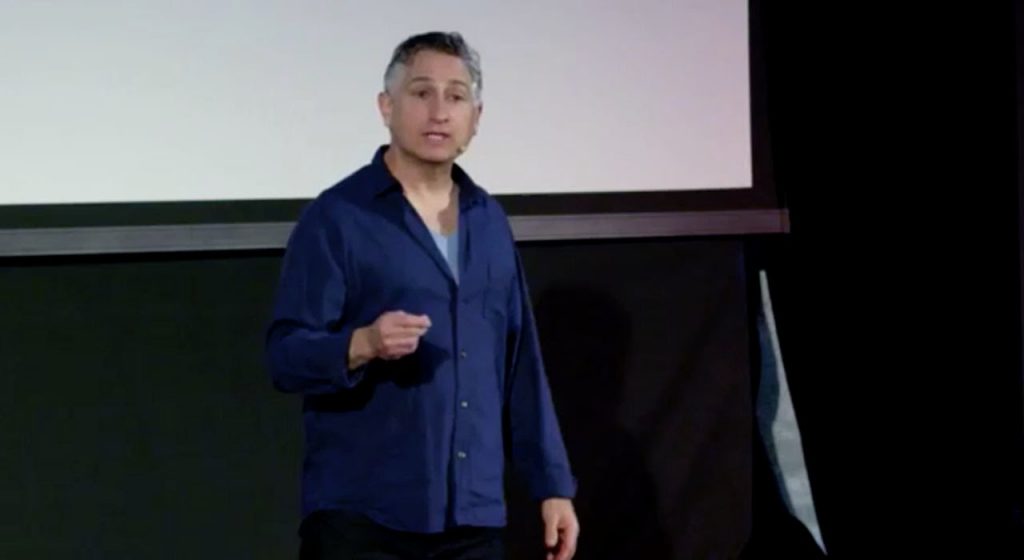
Epictetus was born around 50 AD into slavery in Hierapolis, in what is now Turkey, and he spent his life teaching a method for separating what a person can control from everything they cannot. He never wrote a word of it down himself — his student Arrian transcribed the lectures into the Discourses and the shorter Enchiridion, or Handbook, which together became the clearest surviving manual of Stoic practice. The video “MASTER Your Mind with this Technique | Epictetus (Stoicism)” from Stoic Journal walks through that manual’s central move: the dichotomy of control.
- Epictetus divides all of existence into what is “up to us” (eph’ hemin) — judgment, desire, aversion, and moral character — and what is “not up to us” (ouk eph’ hemin) — the body, reputation, wealth, and external events.
- His governing line, recorded in the Discourses: “What disturbs men’s minds is not events but their judgements on events.”
- The practical test he teaches is a single question applied to every impression before reacting to it: “Is it concerned with what is in our power or with what is not in our power?”
The Dichotomy That Started It All
Epictetus opens the Enchiridion by drawing a hard line most people never think to draw. Some things belong to us completely — our opinions, our impulses, our desires, our aversions, in short, everything that is our own doing. Everything else — our body, our property, our reputation, our office — belongs to others, or to chance, and lies outside our command no matter how much we wish otherwise. He calls this internal territory prohairesis, roughly translated as moral character or the faculty of choice, and argues it is the one thing no external force can ever seize.
That framing sounds simple until you apply it to something you actually care about. Lose a job, get insulted, watch a plan collapse — Epictetus says none of that is the disturbance itself. The disturbance is the story you tell yourself about it a half-second later. This is the same terrain covered in the network’s own rundown of the philosopher’s sharpest one-liners, collected in a separate piece on his most enduring quotes.
The Gap Between Impression and Reaction
The actual technique the video walks through is less a mood trick than a discipline of timing. Epictetus instructs his students to insert a pause between the initial sensory impression — the raw data hitting the senses — and the judgment the mind normally slaps onto it a moment later. Insult, injury, loss, praise: each arrives first as neutral information, and only becomes “good” or “bad” once a judgment is attached.
Inside that pause, the student is supposed to run the impression through the one-line filter: is this thing in my power, or is it not? If it isn’t — someone else’s opinion of you, the outcome of an illness, the behavior of a stranger — Epictetus says treat it as “indifferent” and let it pass without disturbance. If it is within your power — how you respond, what you choose to value, how you carry yourself — that’s where the actual work of Stoic practice happens.
“What disturbs men’s minds is not events but their judgements on events.”
Training the Mind as a Daily Exercise
Epictetus never treats this as a one-time realization. He frames it as a repeated exercise, closer to physical training than to a philosophical insight absorbed once and filed away. Students of his school were told to run through anticipated events each morning — a difficult conversation, a delayed journey, a rude colleague — and pre-sort them into “up to me” and “not up to me” before they even happened, so the judgment doesn’t get made in the heat of the moment.
The aim of that repetition is what Epictetus and the broader Stoic tradition call eudaimonia, a flourishing life built on aligning one’s character with nature rather than chasing outcomes that were never guaranteed in the first place. It’s the same discipline of running an internal audit before reacting that shows up in the network’s coverage of unconscious thought patterns, including the piece on eliminating self-doubt through control of the unconscious mind, and in the older traditions covered in the roundup of history’s sharpest proverbs.
Enduring Relevance of the Handbook
Arrian’s transcription survived roughly nineteen centuries because the advice doesn’t require believing in anything supernatural — it’s a method, not a creed. Epictetus tells his students plainly that they are not disturbed by their master, their illness, or their poverty, but by their own judgment about those things, and that judgment is the one lever a person never loses access to, right up until the mind stops functioning altogether.
That’s the whole technique the video is built around: catch the impression before the judgment lands, run it through the one question, and let go of anything that was never yours to hold in the first place. Arrian didn’t add commentary to that line in the Enchiridion — he just wrote it down and moved on, which is probably the most Stoic edit in the whole text.





What you didn’t know about coffee
Living with Schizoaffective Disorder (Experiencing Psychosis, Paranoid Delusions and Hallucinations)
Why Sitting Down Destroys You
THE BEST Healthy Food Prep!! Protein Granola, Healthy Carbs, Snacks & MORE!
How to know your life purpose in 5 minutes