

 InfoSearched
Focus isn’t a talent you’re born with — it’s a muscle you train one mundane task at a time.
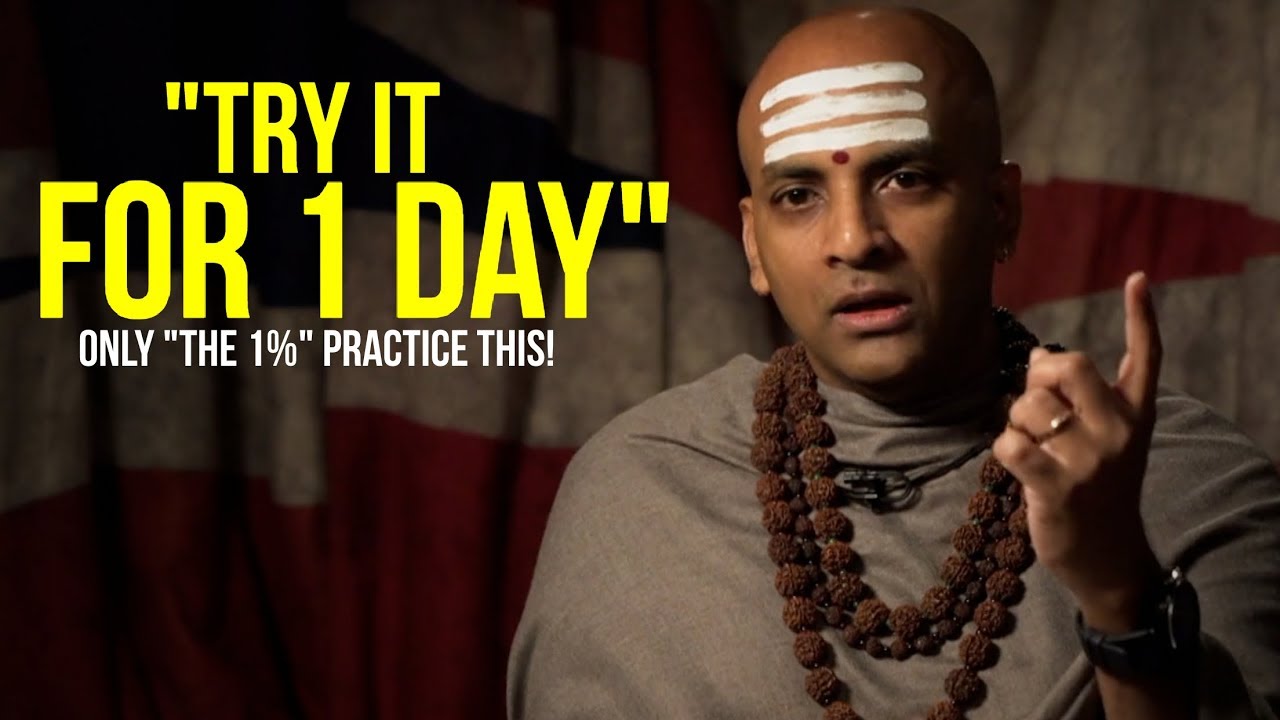
Dandapani spent ten years as a Hindu monk at a monastery in Hawaii before becoming a keynote speaker on focus, energy, and the mind. In “TRY IT FOR 1 DAY! The Billionaires Do This Everyday!” from the Be Inspired channel, he strips away the mystique around high performers and lands on something almost embarrassingly simple: they practice concentration on purpose, every single day, starting with the least glamorous tasks imaginable.
- Dandapani draws a hard line between the mind — a vast territory containing regions like anger, jealousy, happiness, and even technology — and awareness, which he describes as the glowing orb of light that moves through those regions.
- His central claim: wherever awareness goes, energy follows, and because most people practice distraction for twelve to sixteen hours a day, they’ve unintentionally trained themselves to become experts at it.
- His prescribed fix is a single daily discipline — making the bed, holding a conversation without glancing at a phone, or washing dishes with total presence — repeated until sustained focus becomes automatic.
The Mind Versus Awareness
Dandapani’s framework treats the mind less like a single organ and more like a landscape with distinct neighborhoods. There’s a region for anger, one for jealousy, one for happiness, even one for scrolling through a phone. Awareness, in his telling, is the point of light that travels between those neighborhoods, and it can only occupy one region at a time.
That distinction matters because it reframes distraction as a location problem rather than a character flaw. If awareness has wandered into the “worry” region for the tenth time in an hour, the fix isn’t self-criticism — it’s redirecting the orb of light back to wherever the person actually wants their energy to go.
Widespread Proficiency in Distraction Management
Dandapani’s math is blunt: if awareness spends twelve to sixteen hours a day bouncing between notifications, half-finished tasks, and idle scrolling, then a person has effectively logged more practice hours at being distracted than most professionals log at their actual craft. Repetition builds skill — it just doesn’t discriminate between skills worth building.
Wherever awareness goes, energy flows.
That’s the mechanism underneath the whole teaching. Change where the point of light sits, and the energy that would have leaked into anxiety or scrolling gets rerouted somewhere useful instead.
The One-Day Test
Rather than prescribing a complex morning routine, Dandapani hands viewers a single experiment: pick one ordinary task and do it with unwavering attention for a full day. Make the bed without letting the mind drift to the day’s schedule. Have breakfast with a partner without checking a phone. Wash the dishes without mentally rehearsing an email. The task itself is irrelevant — the discipline is holding awareness in one place while every old habit tries to pull it elsewhere.
He argues this is exactly what separates people who function at a high level from everyone else: not raw intelligence or luck, but a trained ability to lock awareness onto one thing and keep it there. Readers looking to build that same kind of daily structure around mental clarity may find useful parallels in how the unconscious mind shapes self-doubt, since both teachings treat mental patterns as trainable rather than fixed.
From One Task to a Governed Mind
Once someone can hold focus through a single mundane chore without the mind hijacking the moment, Dandapani says the same discipline scales upward — into meetings, negotiations, creative work, whatever the goal happens to be. The claim is that entrepreneurs and leaders who seem to have an unusual gift for concentration actually built it through unglamorous repetition, the same way an athlete builds a muscle through sets that never look impressive from the outside. For readers who want a broader mental-discipline framework alongside this one, the monastic habits covered in “Monks do this all the time” cover similar ground on ritual and daily practice.
Dandapani doesn’t ask viewers to overhaul their calendar or adopt a monk’s schedule. He asks for one chore, done with full presence, for one day — and lets the boredom of that exercise make his point better than any billionaire anecdote could.








8 Foods Men Should Eat Everyday (Science-Based)
How To Be Confident In Any Situation
I Tried Da Vinci’s (Insane) Daily Routine: Here’s What Happened
11 Optical Illusions That’ll Reveal Your Personality Type
THE PERFECT LEG WORKOUT TO BUILD BIG STRONG LEGS | My Top Tips