

 InfoSearched
The ancient Chinese sages figured out something modern life still refuses to accept: trying harder often makes things worse.
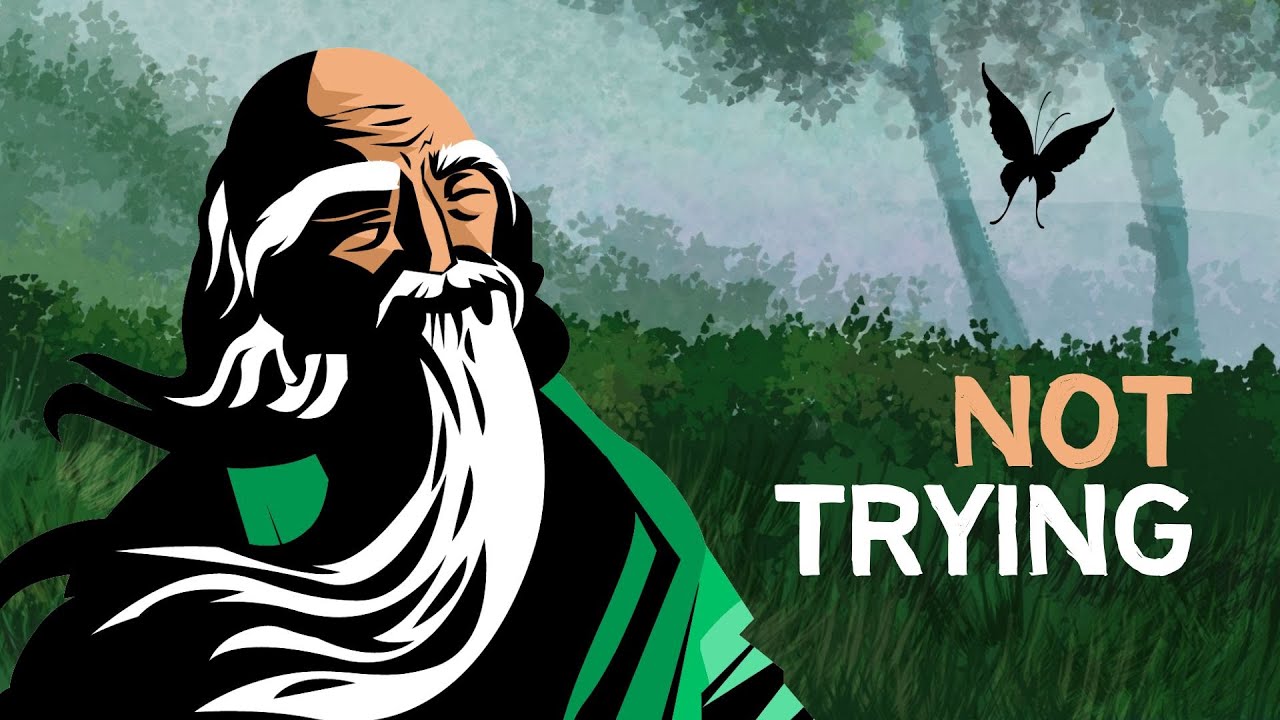
Einzelgänger’s April 30 video essay, “TAOISM | The Art of Not Trying,” breaks down the philosophy’s central puzzle — how a tradition built around Lao Tzu’s Tao Te Ching came to champion wu-wei, or “non-action,” as the smartest way to live. The video isn’t arguing for laziness. It’s making the case that forcing outcomes, whether through rigid ethics, manufactured rules, or sheer willpower, pulls people further from the Tao, the underlying current the Taoists believed runs through everything.
- The video centers on wu-wei (無為), drawn from Lao Tzu’s Tao Te Ching, defined as “effortless action” rather than passivity or indifference.
- Einzelgänger compares fighting against nature’s flow to swimming against a strong current — exhausting effort that accomplishes nothing.
- The thesis, lifted straight from Taoist doctrine, is that unlearning artificial societal constructs allows a person to “gain the world” by leaving nothing undone.
The True Meaning of Wu-Wei
Wu-wei gets mistranslated constantly as simply “doing nothing,” and the video pushes back hard on that reading. It’s closer to acting without imposing your will on a situation that already has its own momentum. Lao Tzu put it plainly in the Tao Te Ching: “Nature does not hurry, yet everything is accomplished.” That’s the whole doctrine in one line — the sun doesn’t strain to rise, rivers don’t grind their way downhill through effort, and the Taoist argument is that human affairs work the same way when people stop micromanaging them.
The video draws a direct line between this idea and the broader Taoist suspicion of manmade systems — rules, ethics, rigid values — that get built with good intentions but end up dragging people away from the Tao rather than toward it. Every layer of artificial structure, in this framing, is another rope pulling against the current.
Trying to alter what nature has intended is like swimming against the stream: it’s exhausting and gets us nowhere.
Unlearning as Daily Practice
What separates this from generic self-help advice is the emphasis on subtraction. The ancient sages didn’t tell followers to accumulate new habits or frameworks — they told them to strip away the ones they already had. Einzelgänger frames this as a daily discipline: unlearning artificial constructs to realign with the Tao, rather than adding another productivity system on top of an already overloaded life.
That framing puts Taoism in direct tension with a culture built on hustle and optimization, and it’s the same territory the channel has mined in related pieces like TAOISM | The Fasting of the Heart, which tackles a parallel Taoist practice of emptying the mind rather than filling it.
Practical Applications of Wu-Wei
The video walks through how non-action plays out across ordinary domains — work, relationships, personal growth — without ever suggesting checking out entirely. At work, it means following the shape of a task instead of forcing a rigid process onto it. In relationships, it means releasing the compulsion to control another person’s choices and letting things unfold. In personal development, it means loosening the ego’s grip long enough to trust a kind of internal wisdom the Taoists assumed everyone already carries.
This isn’t a call to indifference — the video is explicit that wu-wei still requires awareness and presence, just redirected away from control and toward response. That distinction is also why Taoist practice gets grouped alongside disciplines like Qi Gong, where physical stillness is paired with an active internal state rather than pure inertia, a connection explored further in What is Qi Gong? Taoist Master explains power of Qi and philosophy.
The Payoff Lao Tzu Promised
The video closes on the paradox that gives Taoism its staying power after more than two thousand years: give up the compulsion to force outcomes, and outcomes tend to arrive anyway. Lao Tzu’s own language — gaining the world by leaving nothing undone — is the inversion of the Western instinct to grind toward every goal. Einzelgänger’s essay doesn’t ask viewers to abandon ambition; it asks them to stop swimming against a current that was never going to be beaten by effort alone.







9 Exercises To Get Flat Stomach In Just A month
How To Turn Anxiety Into Charisma
A simple way to break a bad habit | Judson Brewer
What is Qi Gong? Taoist Master explains power of Qi and philosophy
Man Who Survived Jump From Golden Gate Bridge Shares His Story