

 InfoSearched
A psychiatrist explains why willpower alone can’t kill a bad habit — and what actually works instead.
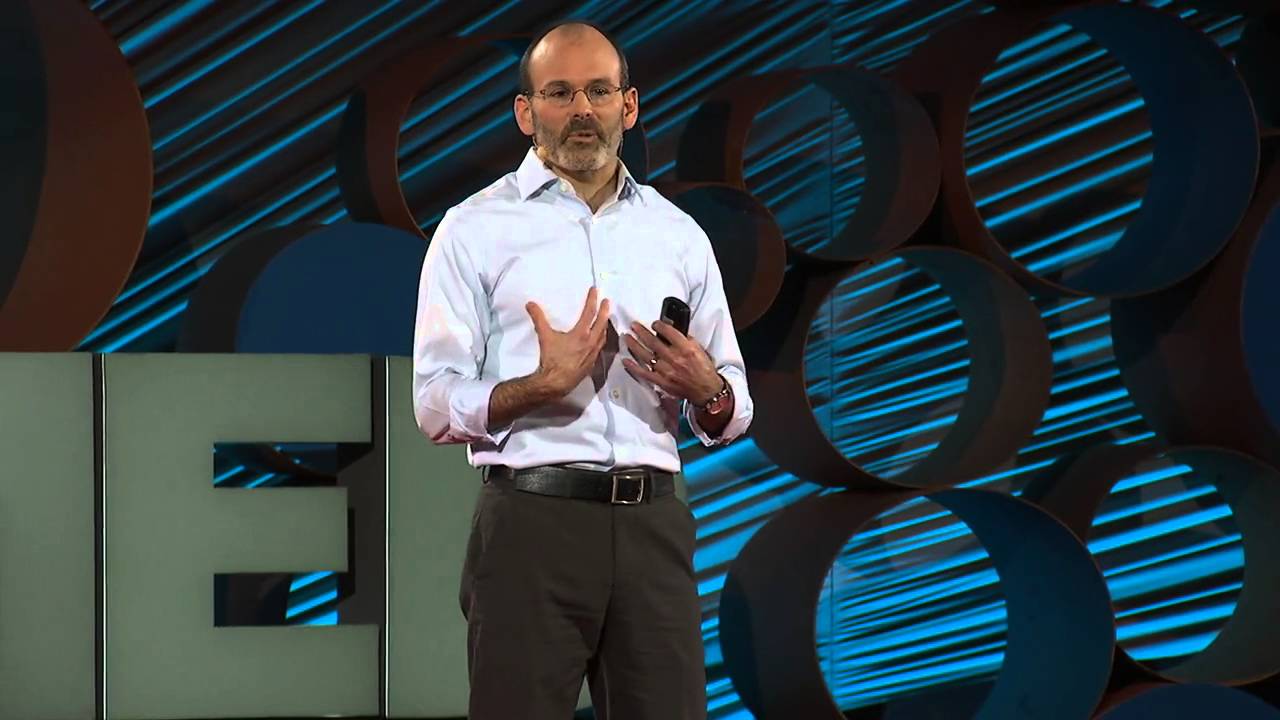
Judson Brewer spends his days studying addiction at the neuron level, and his November 2015 TEDMED talk, released online by TED in February 2016, boils that research down to one counterintuitive idea: the fastest way to quit smoking, stress-eating, or scrolling your phone at a red light isn’t to fight the urge. It’s to get curious about it. Brewer, a psychiatrist and addiction neuroscientist, walks through the brain circuitry behind cravings and the clinical trial that found his method beat the standard smoking-cessation program by a factor of five.
- Brewer frames every habit as a three-part loop — trigger, behavior, reward — an ancient survival mechanism now hijacked by smoking, overeating, and compulsive phone-checking.
- His research shows the prefrontal cortex, the seat of willpower, goes offline under stress, which is why cognitive control keeps failing smokers and dieters alike.
- In his smoking-cessation trials, mindful attention to cravings produced a quit rate five times higher than the gold-standard program, with one participant describing mindful smoking as tasting like “stinky cheese and chemicals.”
The Loop Evolution Built for Survival
Brewer’s starting point is basic neuroscience: reward-based learning didn’t evolve to make us miserable, it evolved to keep us alive. A trigger — say, hunger — leads to a behavior, like remembering where the berries grow, which delivers a reward: calories, dopamine, a mental note to repeat the action next time. That trigger-behavior-reward loop is efficient and ancient, and it works exactly the same way whether the reward is a berry bush or a cigarette.
The problem, Brewer argues, is that modern life keeps feeding the same circuitry with far more potent triggers. A stressful email becomes the cue, a cigarette or a bag of chips becomes the behavior, and the dopamine hit becomes the reward that locks the loop in place. The mechanism doesn’t distinguish between a habit that keeps you alive and one that’s slowly killing you — it just reinforces whatever gets rewarded.
The Limitations of Human Willpower
Brewer’s clinical work points to a specific reason diets and quit-smoking pledges collapse under pressure: the prefrontal cortex, the part of the brain responsible for planning and self-control, is also the first part to go offline when someone is stressed. That’s precisely the moment cravings hit hardest, which means the brain’s control center checks out right when it’s needed most. Telling someone to just use willpower, in Brewer’s telling, is asking them to rely on a system that stress has already disabled.
That mismatch is why he built his intervention around something that doesn’t require the prefrontal cortex to stay online at all — paying attention. Readers who’ve dug into the mechanics of compulsive behavior before may recognize the overlap with pieces like how dopamine loops get rewired through deliberate attention rather than force.
Trading Craving for Curiosity
Instead of telling smokers to quit outright, Brewer’s studies had them smoke while paying meticulous, non-judgmental attention to what was actually happening in their body — the taste, the smell, the physical sensation of the drag. No suppression, no shame, just close observation.
The effect was that participants stopped finding the behavior rewarding on its own terms. Brewer’s data shows this “curiosity over craving” approach outperformed the American Lung Association’s gold-standard cessation program by five times the quit rate, a gap large enough to reframe how cessation programs think about the mechanism of change rather than just the motivation to change.
One participant, paying close attention to a cigarette for the first time in years, described it simply: it tasted like “stinky cheese and chemicals.”
Updating the Brain’s Reward Value
That “stinky cheese and chemicals” moment is the whole mechanism in one sentence. Brewer’s point is that the brain runs on updated information, not intentions — once smoking actually registers as unpleasant rather than satisfying, the reward value attached to the habit drops, and the loop weakens on its own. No lecture about cancer risk does that; direct, curious attention to the sensation does.
Brewer extends the same logic to any urge: pause at the trigger, examine the bodily sensation of the craving with curiosity instead of resistance, and let it run its course. Cravings, he notes, are time-limited — they rise and fall whether or not you act on them, and noticing that fact is often enough to break the automatic chain from trigger to behavior. It’s a framework that dovetails with broader work on mindfulness and stress reduction, including approaches covered in breaking the habit of excessive, reactive thinking.
Brewer’s team has since built the mindful-attention model into an app-based program for smoking and overeating, but the core move requires no software at all — just the willingness to sit with an urge for a few seconds instead of automatically acting on it, and to notice, honestly, what the habit actually feels like once you’re paying attention.






20 MIN FULL BODY WORKOUT | At Home & Equipment Free!
12 Bad Habits That Damage Your Brain
12 Ways To Be Healthier
Is Social Media Hurting Your Mental Health? | Bailey Parnell | TEDxRyersonU
45 Life Lessons Written By A 90 Year Old