

 InfoSearched
Mental strength isn’t about never falling apart — it’s about knowing which habits to quit.
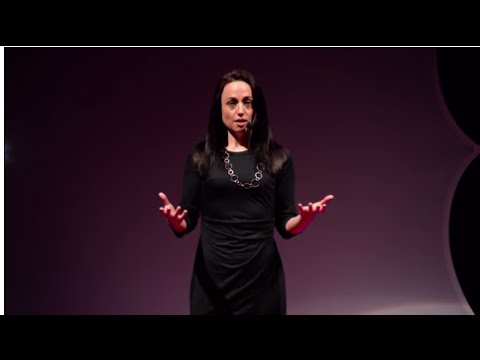
Amy Morin walked onto the stage at the Ocala Civic Theatre on November 7, 2015, and opened with the kind of story most speakers avoid: the day her 51-year-old mother died suddenly of a brain aneurysm. The psychotherapist and author didn’t use the moment for sympathy — she used it to make a point about the gap between knowing psychological concepts and actually living them when a crisis hits. Her TEDxOcala talk, “The Secret of Becoming Mentally Strong,” argues that resilience has less to do with willpower and more to do with which mental habits you’re willing to give up.
- Morin frames mental strength as the product of eliminating bad mental habits, not just adding good ones.
- She identifies three categories of destructive beliefs: unhealthy beliefs about ourselves, about others, and about the world.
- She anchors the talk in her own grief after her mother’s sudden death from a brain aneurysm, drawing a line between clinical knowledge and lived practice.
The Three Categories of Destructive Beliefs
Morin, a licensed clinical social worker who has counseled children, teens, and adults since 2002, breaks self-defeating thinking into three buckets. Unhealthy beliefs about ourselves show up as self-pity and magnifying misfortunes — turning a bad week into proof that nothing ever goes right. Unhealthy beliefs about others involve giving away personal power or resenting other people’s success instead of examining your own choices. Unhealthy beliefs about the world include expecting life to be fair and feeling entitled to rewards simply for putting in effort.
She ties this back to something as ordinary as opening a phone. Scrolling social media feeds and feeling envy, she argues, is a small but real psychological cost that most people never account for — a habit that quietly drains mental strength the same way skipping workouts drains physical strength. Readers looking to build the kind of self-awareness Morin describes may find useful ground in How To Eliminate Self Doubt Forever & The Power of Your Unconscious Mind, which covers similar territory on unlearning automatic negative thought patterns.
Grief as the Test Case
The most striking part of Morin’s talk isn’t the framework — it’s her admission that having the framework didn’t make grief easier. As a counselor, she’d spent years teaching clients exactly the tools she needed after her mother’s death. She uses that experience to draw a hard distinction: understanding a concept intellectually and actually practicing it during a crisis are two different skills, and only one of them matters when the crisis actually arrives.
Knowing what to do and actually doing it in the middle of a crisis are two entirely different things.
That distinction is why Morin’s approach, developed through her counseling career, leans on small, repeatable behavioral shifts rather than one-time insights. She treats regulating thoughts, managing emotions, and behaving productively regardless of circumstances as three separate, trainable skills — not a single trait some people simply have and others don’t.
Replacing Habits Instead of Fighting Them
Morin’s clinical background shows in how practical her recommendations are. Rather than telling audiences to simply “think positive,” she describes replacing a specific self-defeating habit with a specific alternative behavior — the same incremental approach that shows up in her bestselling book, 13 Things Mentally Strong People Don’t Do, which has been translated into more than 20 languages. It’s an approach that overlaps with the kind of habit-swapping strategies discussed in Reasons To Stop Worrying (Break The Habit of Excessive Thinking), and it dovetails with her broader warning about giving away personal power to people who don’t deserve it, a theme also explored in 6 Signs of a Toxic Person.
Her media footprint reflects how widely this message has traveled — Time, Fast Company, Business Insider, Elle, Cosmopolitan, Success, Glamour, Oprah.com, and Fox News have all featured her work, and she writes regularly for Forbes, Inc., and Psychology Today, in addition to serving as About.com’s Parenting Teens Expert and Discipline Expert.
Morin closes the talk the way she opened it: with the reminder that mental strength isn’t a fixed trait you’re born with, it’s a set of habits you actively maintain — and the habits worth cutting are usually the ones that feel the most natural to keep.







Can This Chef Make A 3-Course Meal With A Rice Cooker? • Tasty
5 More Easy Healthy Breakfast Ideas | In Under 5 Minutes
8 MINUTE AB WORKOUT | 2018
How Steroid Abuse Affected This Korean Bodybuilder
What Brain and Sperm Share and Why Care