

 InfoSearched
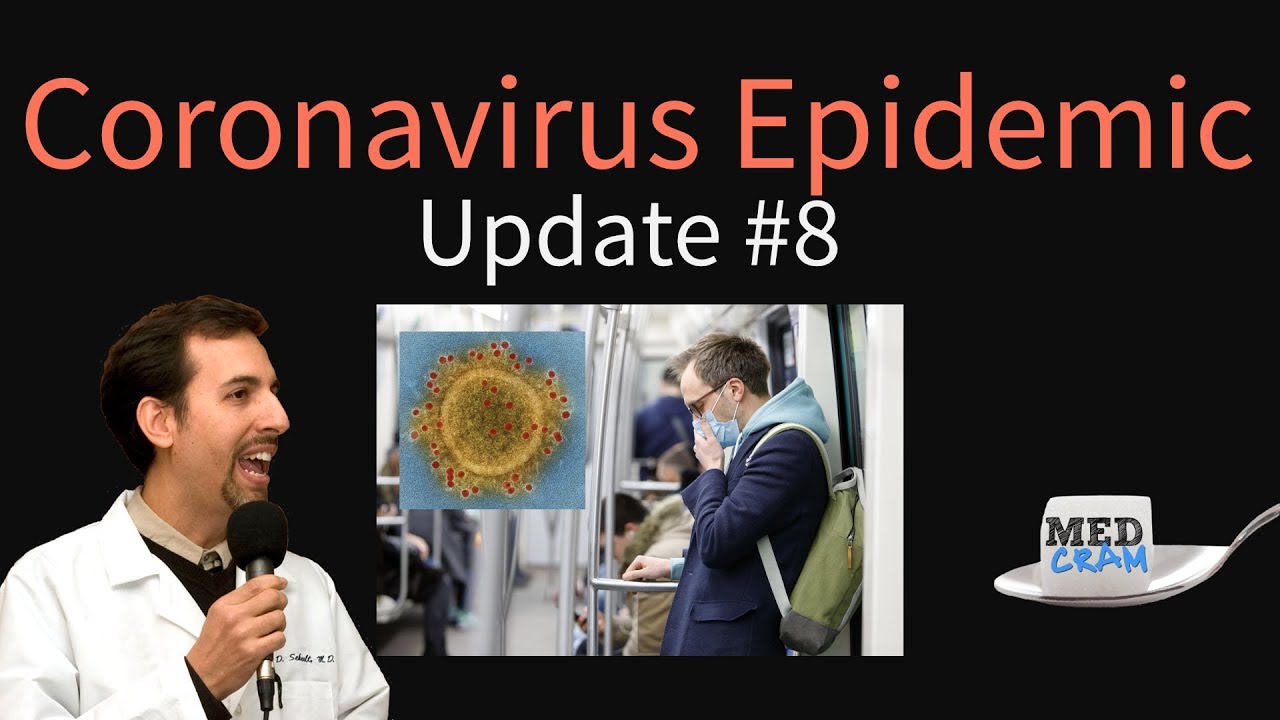
Dr. Roger Seheult walks through the numbers behind the first U.S. travel ban of the outbreak.
Two weeks after the first cases surfaced out of Wuhan, the response has moved from monitoring to hard containment. In his eighth video update on the 2019-nCoV outbreak, pulmonologist and critical care specialist Dr. Roger Seheult breaks down the newly announced U.S. travel restrictions, the first confirmed coronavirus death outside of China, and why doctors are now watching for a second, more familiar threat riding along with the virus: opportunistic bacterial infection.
- The United States has barred entry to foreign nationals who recently traveled to mainland China and is requiring a mandatory 14-day federal quarantine for returning U.S. citizens arriving from Hubei Province.
- A 44-year-old man from Wuhan died in the Philippines, marking the first coronavirus fatality reported outside of China.
- Dr. Seheult compares the virus’s transmission metrics against seasonal influenza, the 1918 Spanish flu, and measles to explain the clinical case for aggressive early quarantine.
The Travel Ban and Federal Quarantine
Dr. Seheult opens Update 8 with the policy shift that changed the tone of the U.S. response: a travel ban on foreign nationals who had recently been in mainland China, paired with a 14-day mandatory quarantine for U.S. citizens returning specifically from Hubei Province, the epicenter of the outbreak. He frames the 14-day window not as an arbitrary number but as a figure tied directly to the virus’s estimated incubation period — the stretch of time public health officials believe covers nearly all cases before symptoms show up. It’s the same logic that underpins the guidance in Dr. Grant Tarling’s tips on staying healthy while traveling, where limiting exposure windows during an active outbreak is treated as a first line of defense.
The First Death Outside China
The update’s most sobering data point is the case out of the Philippines: a 44-year-old man from Wuhan died there, the first confirmed coronavirus fatality reported outside mainland China. Dr. Seheult uses the case to underline that the outbreak’s reach was no longer a Hubei-only story — it had already produced a fatal outcome on foreign soil, and that shift in geography is precisely why governments were moving from advisories to enforceable travel restrictions.
The 14-day quarantine window matches the outer edge of the virus’s estimated incubation period — not an arbitrary number, but a clinical cutoff.
Comparing the Numbers to Known Outbreaks
Dr. Seheult puts the outbreak’s spread into context by walking through reproductive numbers — how many new people, on average, each infected person goes on to infect — for seasonal influenza, the 1918 Spanish flu, and measles. Laying the emerging 2019-nCoV estimates alongside those historical benchmarks, he explains why epidemiologists were treating early containment as urgent rather than reactive, since even modest differences in reproductive number compound quickly across a population once sustained person-to-person transmission takes hold.
MRSA and the Danger of Secondary Infection
On the clinical side, Dr. Seheult turns to a threat that gets less attention than the virus itself: secondary bacterial superinfection. Patients hospitalized with severe viral pneumonia are vulnerable to opportunistic bacteria moving into already-damaged lung tissue, and he singles out methicillin-resistant Staphylococcus aureus — MRSA — as a specific concern in critical care settings. For readers tracking the broader immune-support conversation around the outbreak, that clinical thread connects to the kind of preventive thinking covered in at-home bodyweight exercises to help avoid coronavirus, where staying generally healthy is framed as one small piece of reducing risk during an active outbreak.
Dr. Seheult’s point is a clinical one: a patient’s outcome with 2019-nCoV pneumonia isn’t just about the virus itself — it’s also about whether a secondary bacterial infection takes hold once the lungs are already compromised, which is exactly why hospitals were paying close attention to antibiotic stewardship and infection control even before case counts climbed further.







5 BEAUTY TIPS NO ONE TOLD YOU
I Left Her Because Of This…HER REACTiON
Never, Ever Give Up. Arthur’s Inspirational Transformation!
The Ego Is Betraying You From Being Your Genuine Self
Schizophrenic in 2020 (Coping with the Chaos)