

 InfoSearched
Jordan Page just proved you can quit cereal cold turkey and still get out the door on time.
The FunCheapOrFree founder built her reputation on stretching a family budget without stretching patience, and her freezer breakfast batch-cooking session does exactly that. In one sitting, Page turns out three grab-and-go staples — crunchy French toast sticks, savory baked egg muffins, and a stovetop buttermilk syrup she calls “Nana’s Buttermilk Syrup” — all designed to outlast a box of Frosted Flakes in both nutrition and shelf life. The pitch is simple: spend an hour once, eat well for weeks.
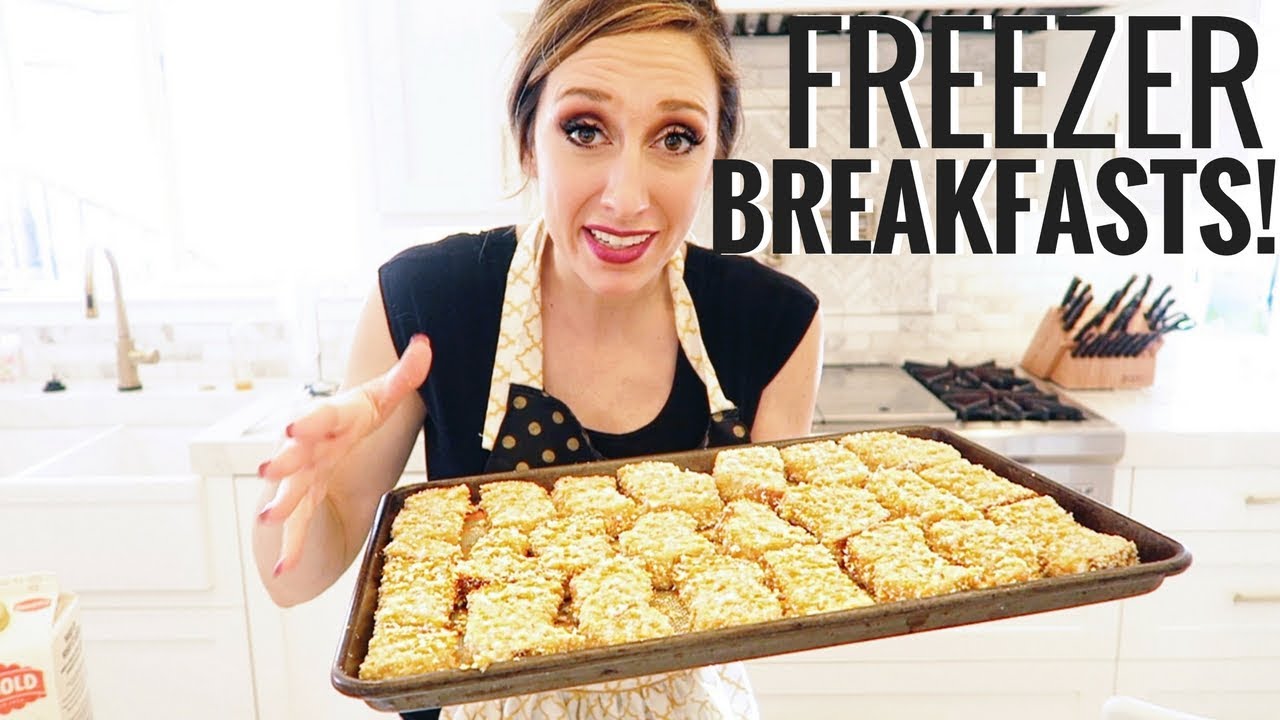
- Page’s French toast sticks are dipped in an egg-milk custard, coated for crunch, and baked directly on sheet pans before being flash-frozen so they reheat crisp in a toaster oven or microwave.
- The recipe is inspired by Ree Drummond’s crunchy French toast method, adapted into a stick shape built specifically for freezer storage and quick morning reheating.
- Her egg muffins are baked in bulk muffin tins with whisked eggs and customizable leftovers — vegetables, diced meats, cheese — then frozen and reheated in 30-second microwave bursts.
The French Toast Stick Assembly Line
Page’s process starts with a basic custard — eggs and milk whisked together — into which bread slices get soaked before being cut into sticks. That stick shape isn’t cosmetic; it’s the whole point of the recipe, since sticks reheat faster and more evenly than full slices and travel better in a lunchbox or a car cupholder tray. She credits the crunch factor to a technique borrowed from Ree Drummond’s version of crunchy French toast, then bakes the sticks on sheet pans rather than frying them individually, which is what lets her produce a freezer’s worth in a single batch.
Once out of the oven, the sticks don’t go straight into a bag. Page cools them on a wire rack first, a step she treats as non-negotiable because stacking warm French toast sticks directly into freezer bags traps steam that turns into ice crystals and soggy bread later. After cooling, she flash-freezes the sticks on the sheet pan itself before bagging them, which keeps individual sticks from fusing into one frozen brick — meaning a parent can pull out exactly four sticks instead of thawing the whole bag.
Egg Muffins Built for Whatever Is in the Fridge
The second component in Page’s lineup is the baked egg muffin, and she frames it less as a fixed recipe than a template. The base is whisked eggs poured into a greased, bulk-capacity muffin tin, then loaded with whatever needs using up — chopped vegetables, diced ham or sausage, shredded cheese. Because the ratio is flexible, the same batch can produce a dozen different flavor combinations depending on what leftovers are sitting in the produce drawer that week.
The reheating math is what makes the muffins the workhorse of the whole system: a frozen egg muffin only needs about 30 seconds in the microwave to be breakfast-ready, which is faster than pouring a bowl of cereal and arguably more filling. Like the French toast sticks, the muffins get cooled on a wire rack before freezer storage, protecting them from the same condensation problem that can turn a protein-packed breakfast into a rubbery, watery one.
A frozen egg muffin needs about 30 seconds in the microwave — faster than pouring a bowl of cereal, and it actually keeps you full.
Nana’s Buttermilk Syrup Ties the Spread Together
No batch-cooked breakfast lineup is complete without something to pour over it, and Page’s answer is a stovetop buttermilk syrup passed down as a family recipe — “Nana’s Buttermilk Syrup.” Built around buttermilk and vanilla, the syrup is rich enough to dress up plain pancakes or French toast sticks that have just come out of the microwave, and it’s made in a batch large enough to store in the freezer alongside everything else. Unlike the boxed maple-flavored syrups most families default to, this version brings a tangy, dairy-forward depth that plays specifically well against the cinnamon-custard flavor of the French toast sticks.
Because the syrup is cooked on the stovetop rather than assembled cold, it holds together in storage without separating, which is the same durability Page is chasing with the rest of the menu. The whole appeal of the freezer-breakfast approach — a swap-in for kids who’d otherwise reach for a quick cereal bowl before school — depends on every component surviving weeks in a freezer bag without losing texture, and the syrup is no exception.
The Significance of Flash-Freezing
Page repeats one piece of technique across all three recipes: cool completely on a wire rack, then flash-freeze individual pieces on a tray before bagging them together. Skip that order and the batch turns into a solid block that has to be thawed all at once, defeating the purpose of make-ahead cooking in the first place. Done her way, a family can grab exactly two French toast sticks and one egg muffin on a Tuesday and leave the rest untouched in the freezer until the following week.
That single habit — cool, flash-freeze, then bag — is the difference between a genuinely convenient freezer breakfast system and a frustrating one, and it’s the detail Page leans on hardest in her guide.
Page’s whole case rests on the toaster-oven test: pull a bag from the freezer on a school morning, run the sticks through in a few minutes, and you’ve beaten the cereal box on both taste and protein without touching a skillet. That’s the tradeoff she’s selling — an hour of batch cooking now for a month of mornings where nobody’s standing over a stove.







Oats Pancakes | Healthy & Easy To Make Recipe For Kids | Oats Recipes for Breakfast
The Wrestler With No Legs
Everything James McAvoy Ate to Get Massive For Glass
10 HEALTHY SNACKS EVERYONE NEEDS TO KNOW! EASY AND QUICK!
4 Healthy Breakfast Ideas For Weight Loss